
UK law sets fire safety requirements for new and second-hand upholstered furniture, in the Furniture and Furnishings (Fire) (Safety) Regulations 1988. In short, the filling, the cover and the way they work together must pass set tests, and the piece carries a permanent label. Here is what that means in plain terms.
What do the furniture fire safety regulations cover?
The rules apply to upholstered furniture supplied in the course of business, whether it is new or used. A council trading standards leaflet lists the kinds of piece included:
- Armchairs, sofas, sofa beds and footstools
- Upholstered headboards and footboards
- Children’s furniture, floor cushions and bean bags
- Scatter cushions and seat pads (the filling)
- Permanent, loose and stretch covers
Mattresses and bed-bases are handled separately. Because the regulations are amended from time to time, council guidance and the legislation itself are the places to check the current position.
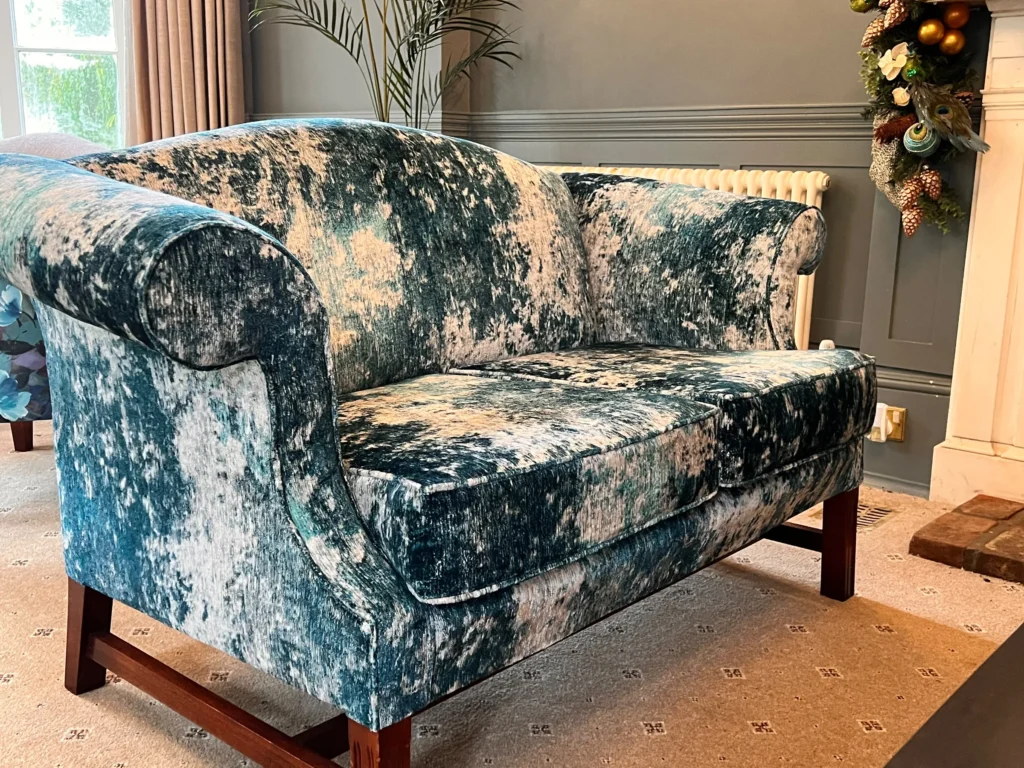
Which tests do the filling and the cover have to pass?
The regulations set separate tests for each part of a piece, then look at them together. The standard references below come from the regulations as summarised by trading standards.
| Part | What it has to meet |
|---|---|
| Foam filling | A fire resistance test set out in Schedule 1 |
| Non-foam filling | A separate test set out in Schedule 2 |
| Filling and cover together | The cigarette test (a smouldering cigarette, based on BS 5852) |
| The cover | The match test, set out in Schedule 5 |
In everyday words, the first two tests ask how the filling behaves when exposed to a flame. The cigarette test checks the finished upholstery against a smouldering cigarette, and the match test checks the cover against a small flame.
Does the fabric have to pass on its own?
Not always. Guidance describes covers as needing to resist a match, and notes that in some cases a match-resistant interliner can be used under the cover. An interliner is a layer fitted between the filling and the fabric. So a fabric that does not pass on its own may still be used with one, where the rules allow it.
This is also why the same fabric can be fine on one piece and need extra thought on another: the result depends on the whole combination, not the cloth alone.
What does the permanent label tell you?
Every piece of upholstered furniture, apart from mattresses and bed-bases, should carry a permanent label fitted to an outside surface. There is a full label and a short label. Both include:
- A caution about fire
- The supplier’s name and postcode
- A batch or identification number and the date of manufacture or import
- A summary showing the piece complies
The full label goes further and describes the filling and cover materials, and says whether an interliner is included. Do not remove it: it is how a piece can be traced.
Do the rules apply when a piece is reupholstered?
Trading standards guidance says anyone in the supply chain can be covered, and that includes re-upholsterers and re-covering services. The regulations also contain an exclusion for goods made before 1950 and for materials supplied to re-upholster furniture made before that date, so the age of a piece matters.
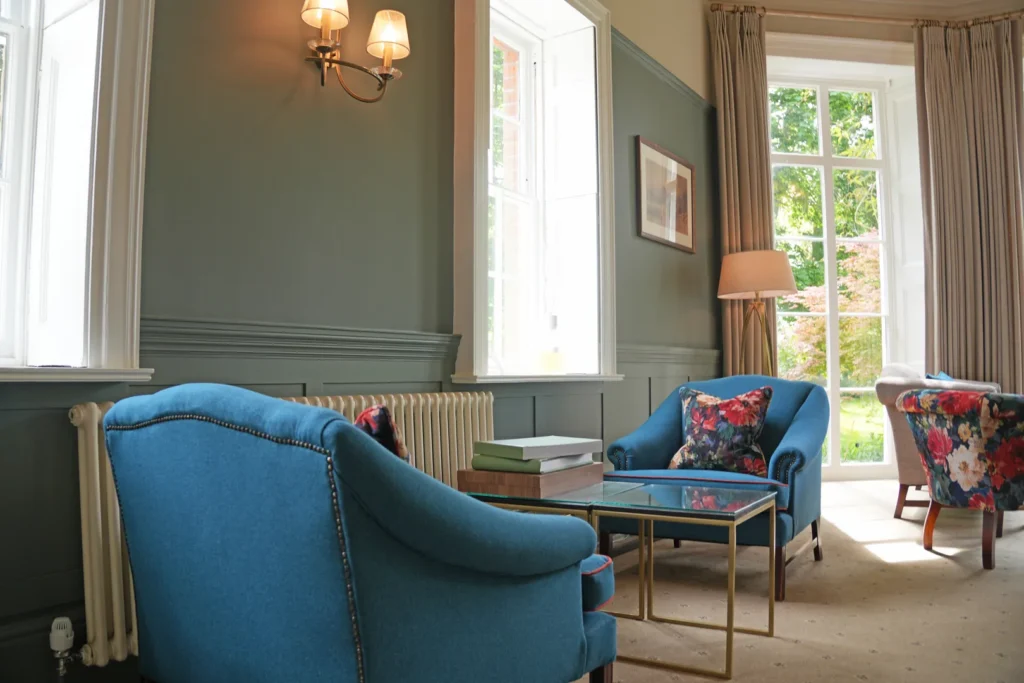
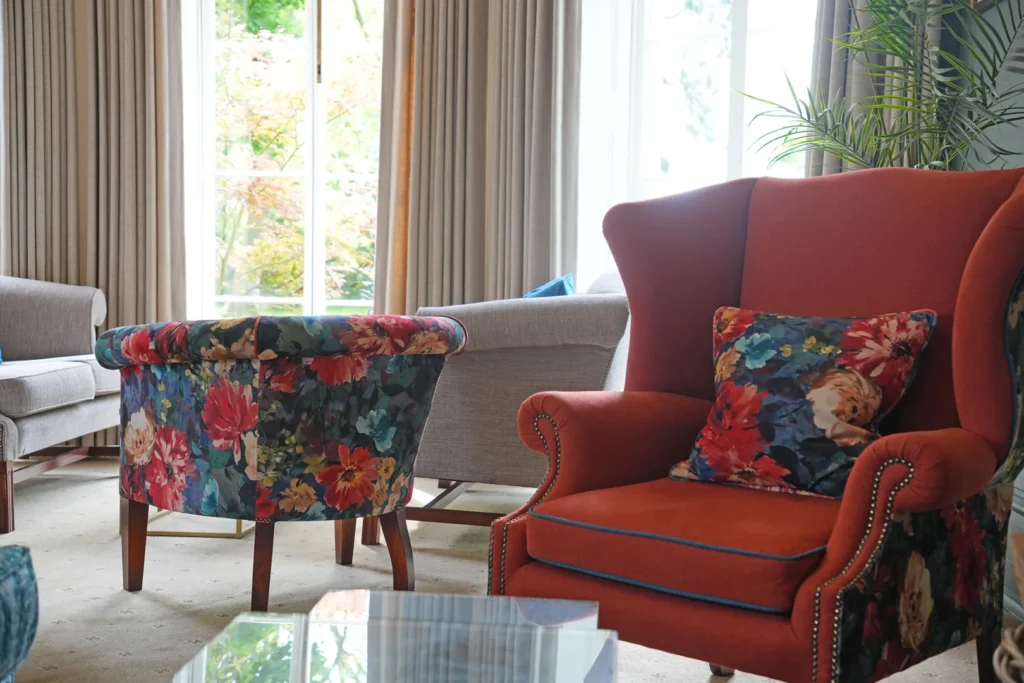
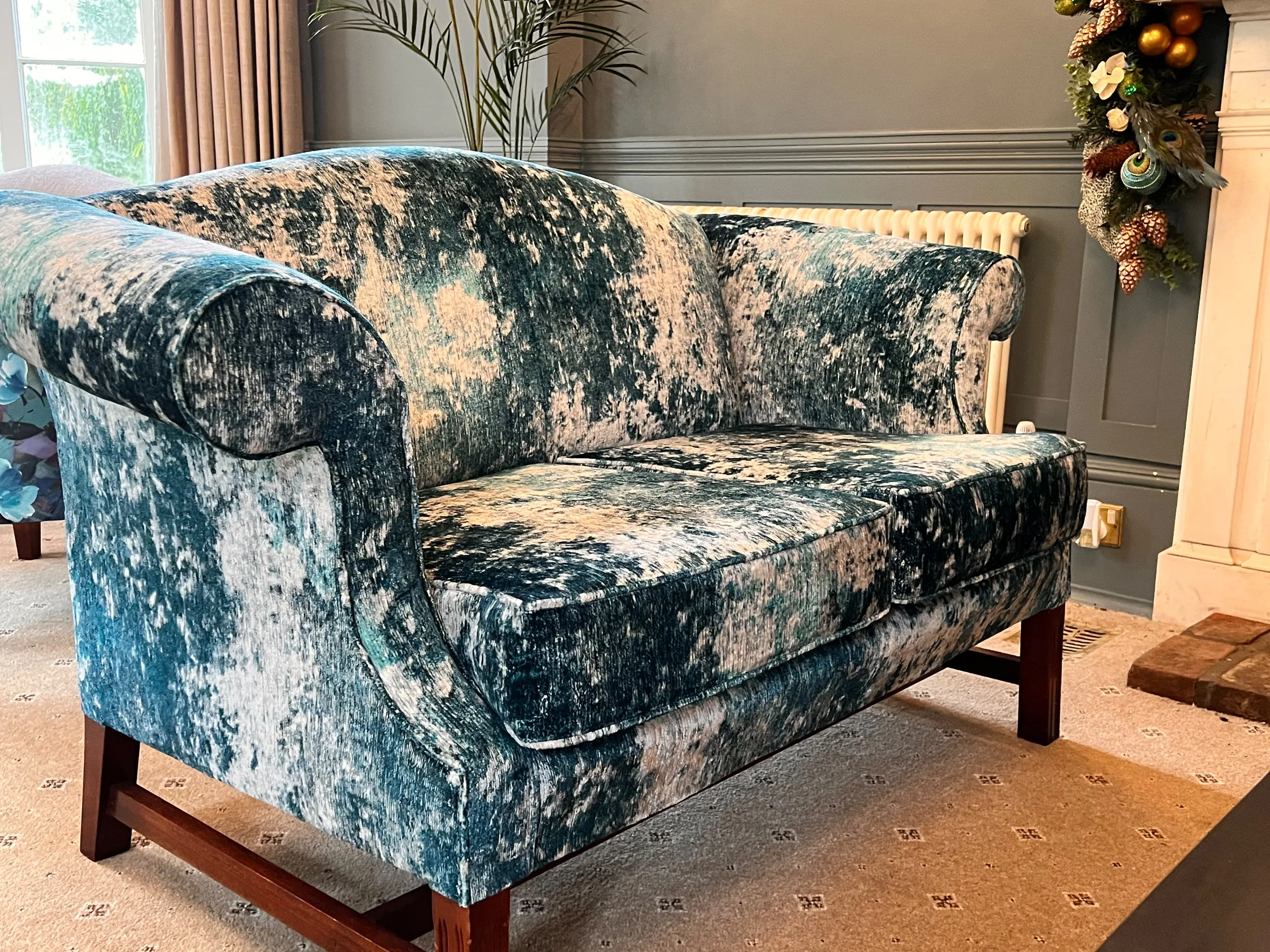
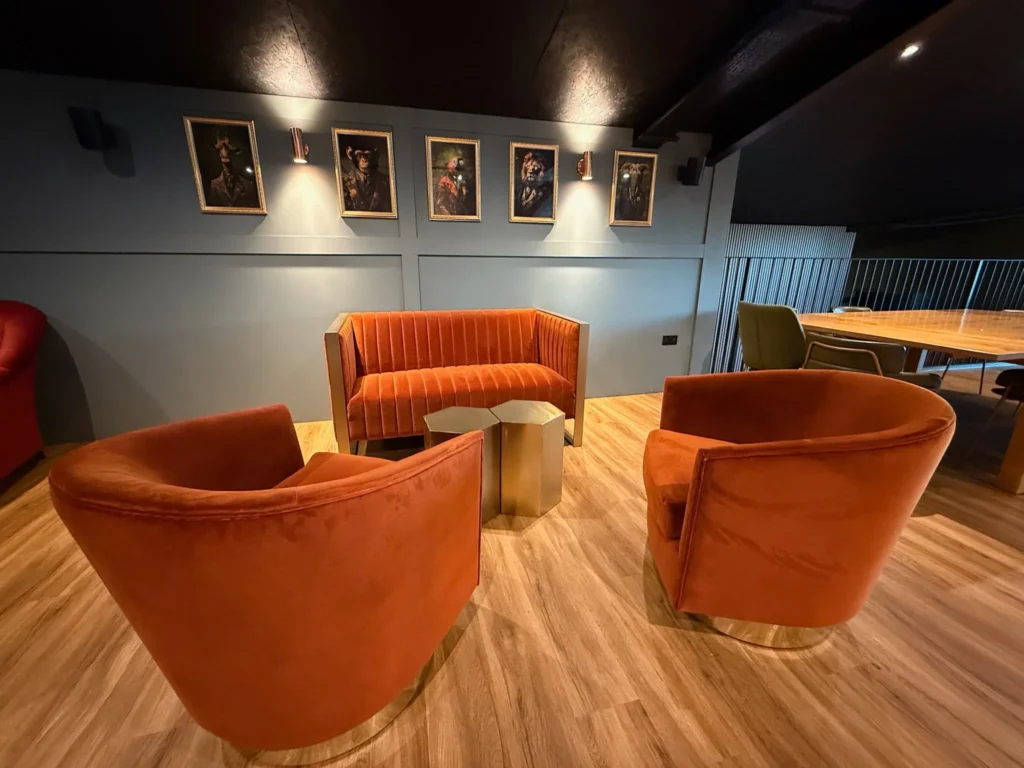
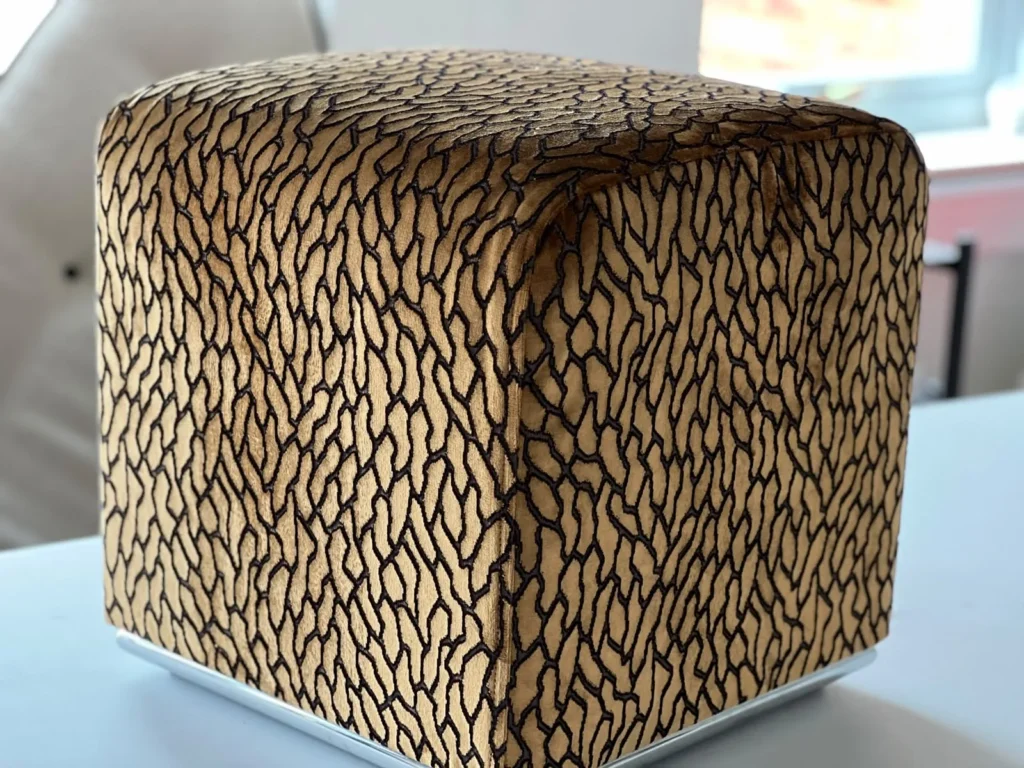
If you are thinking of having a chair or sofa re-covered, our upholstery service is done in our own workroom, and it is sensible to ask how these rules apply to your particular piece before a fabric is chosen. You can see reupholstered pieces in our armchairs and footstool project.
What should you ask before choosing a fabric?
Fire safety is one question among several. A few that help:
- Is the fabric intended for upholstery rather than curtains or cushions?
- Will it be used with an interliner, and is that recorded on the label?
- Is the piece for a home, or will it be supplied to others in the course of business?
- How old is the piece, and does the pre-1950 exclusion come into it?
For how a cloth wears, our guides to the Martindale rub test, performance fabrics and wool upholstery fabric cover the other half of the decision.
Where have we seen reupholstered pieces work well?
Reupholstery suits pieces with a good frame and a shape you like. Our work at Mulberry House Hotel, High Ongar shows chairs and a lounge re-covered in the workroom.
This post is a plain-English summary, not legal advice. For the exact requirements, read the regulations themselves or ask your local trading standards service.