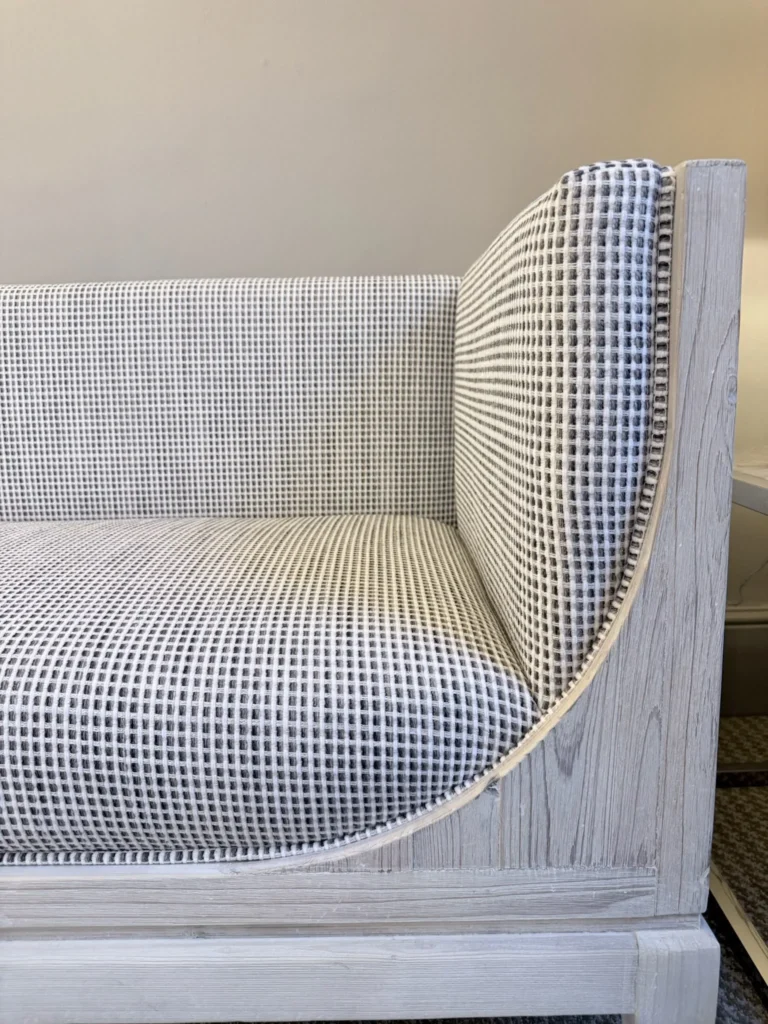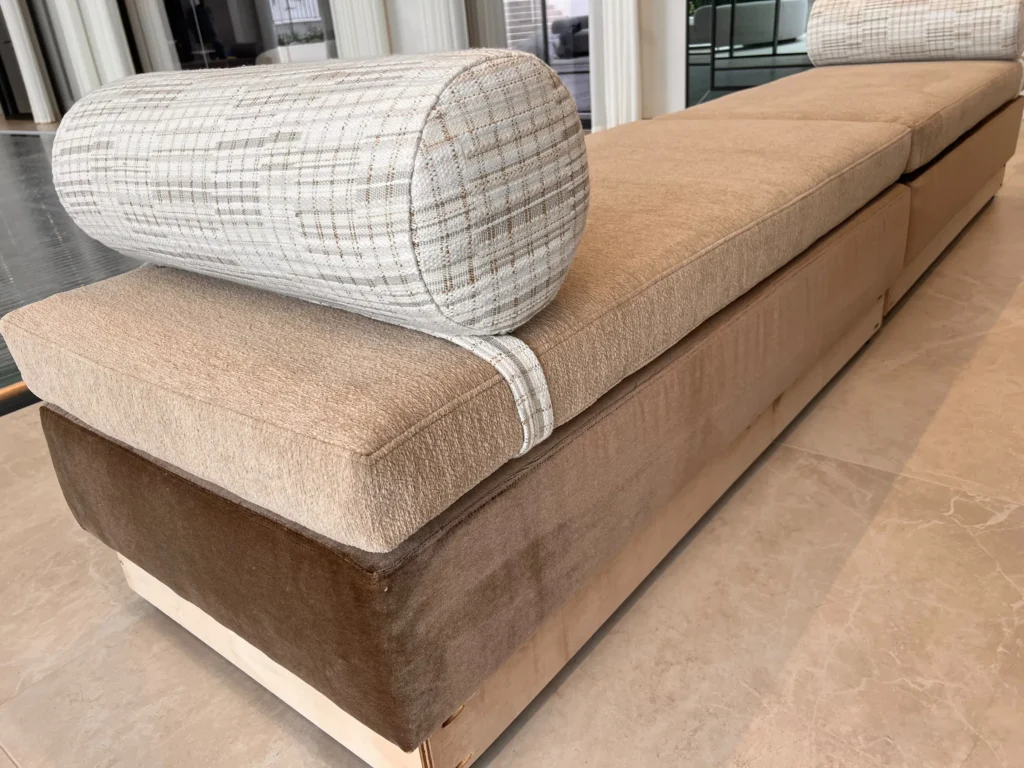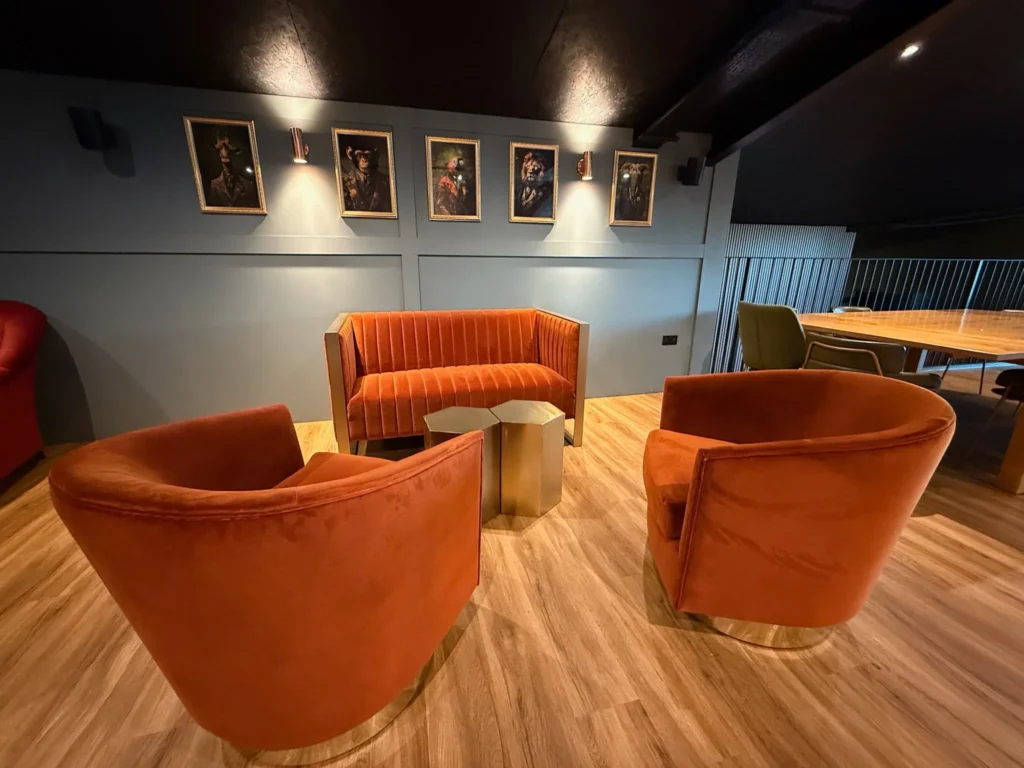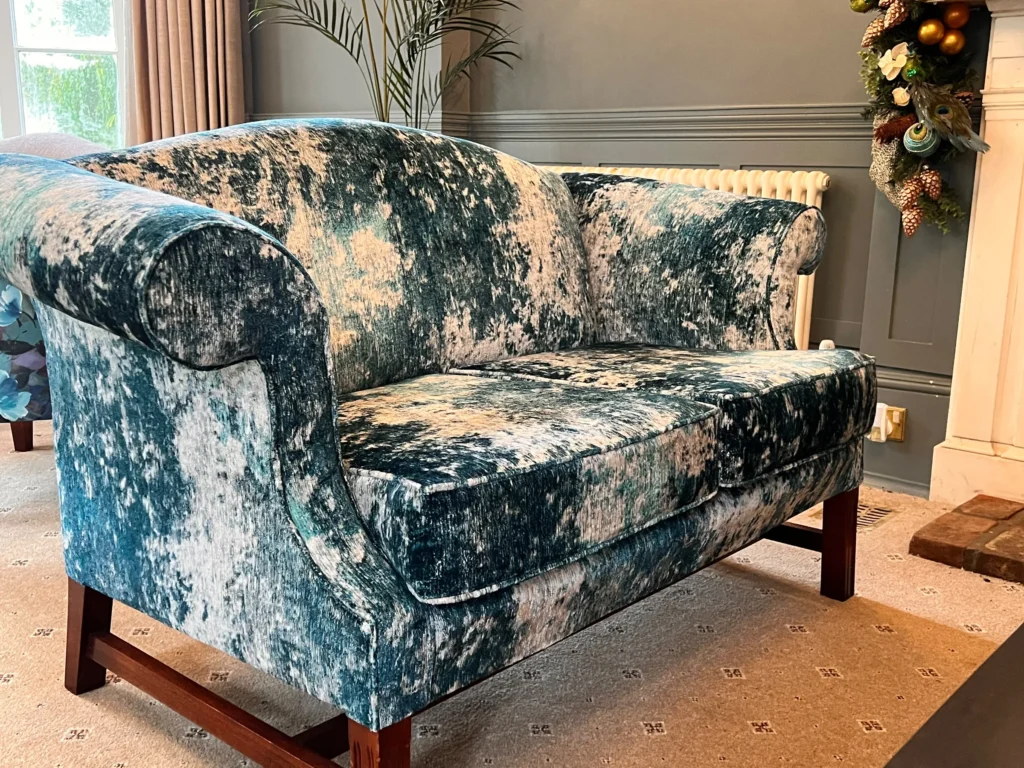


A performance fabric is an upholstery or curtain cloth made or finished to cope better with everyday life, usually spills, marks and general wear. The performance comes from the fibre, from a finish applied to the cloth, or from both. It suits busy rooms, though it can look and feel different from a natural weave.
What does performance fabric actually mean?
There is no single legal definition, so the phrase is a description rather than a standard. Suppliers use it for cloths that are designed to shrug off spills, resist marking or stand up to heavy use.
Because the term is loose, the useful question is always what a particular cloth has been made or treated to do, and how the supplier knows.
Is a treated fabric the same as a woven-in one?
Not quite. In broad terms, there are two routes:
- A finish applied to the cloth. A natural or blended fabric is treated after weaving so that liquids bead or marks lift more easily.
- A fibre chosen for the job. Some synthetic yarns are used because they handle marks and cleaning well, so the behaviour is part of the cloth itself.
Either can work well. What matters is asking the supplier which route a fabric takes and how they recommend cleaning it.
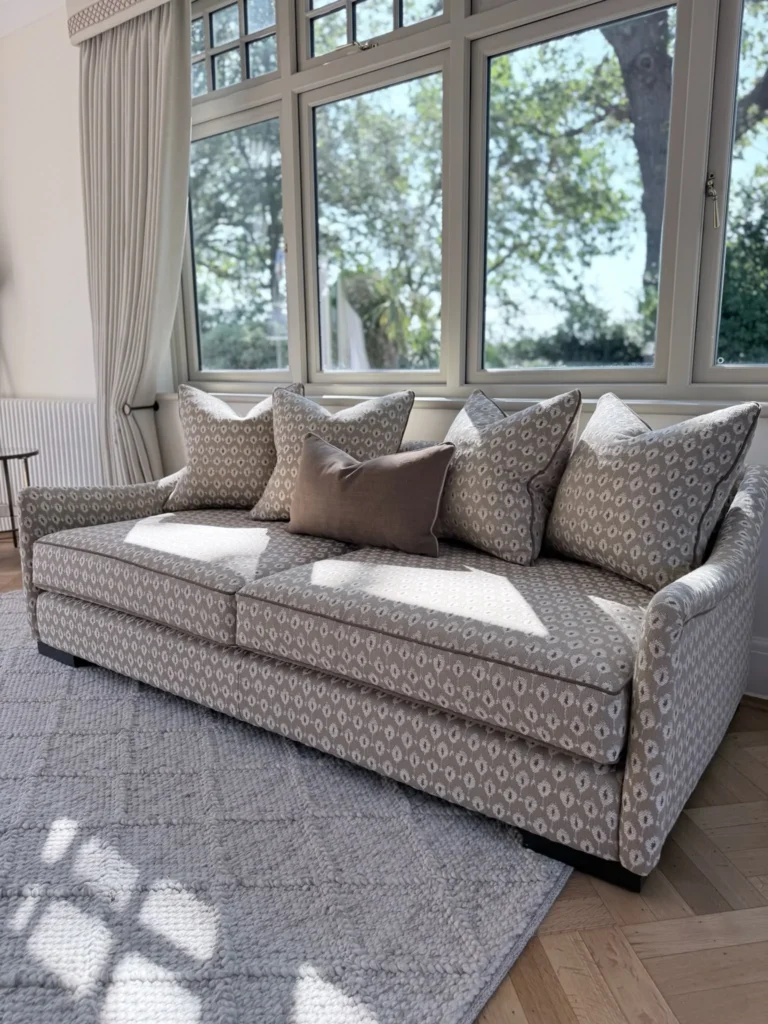
What does a Martindale rub count tell you?
The Martindale test measures abrasion: how many rubs a fabric takes before it shows wear. It is run dry, so it says nothing about how a cloth copes with a spilt drink. A high rub count and good stain behaviour are two separate things.
Our guide to the Martindale rub test explains the numbers, and this supplier explanation of rub counts covers the same ground from the fabric side.
Where do performance fabrics make sense?
They are worth considering wherever a piece of furniture gets daily use or the occasional accident:
- A family sofa that doubles as a dining-table overflow and a film-night perch.
- Chairs in a home with children or pets.
- Seating in a holiday let or a guest room that changes hands often.
- Dining chairs and window seats, where crumbs and drinks are part of life.
For a quiet bedroom chair, a natural cloth you love may be the better choice, since the extra protection would rarely be needed.
What are the trade-offs in look and feel?
Some performance cloths feel smoother or slightly firmer than a soft natural weave, and a few have a subtle sheen. Others are woven to look and feel much like linen or wool, so it is worth handling samples rather than judging from a photograph.
Colour and pattern matter too. A busy print or a mid-tone texture hides life better than a plain pale cloth, whatever the finish.
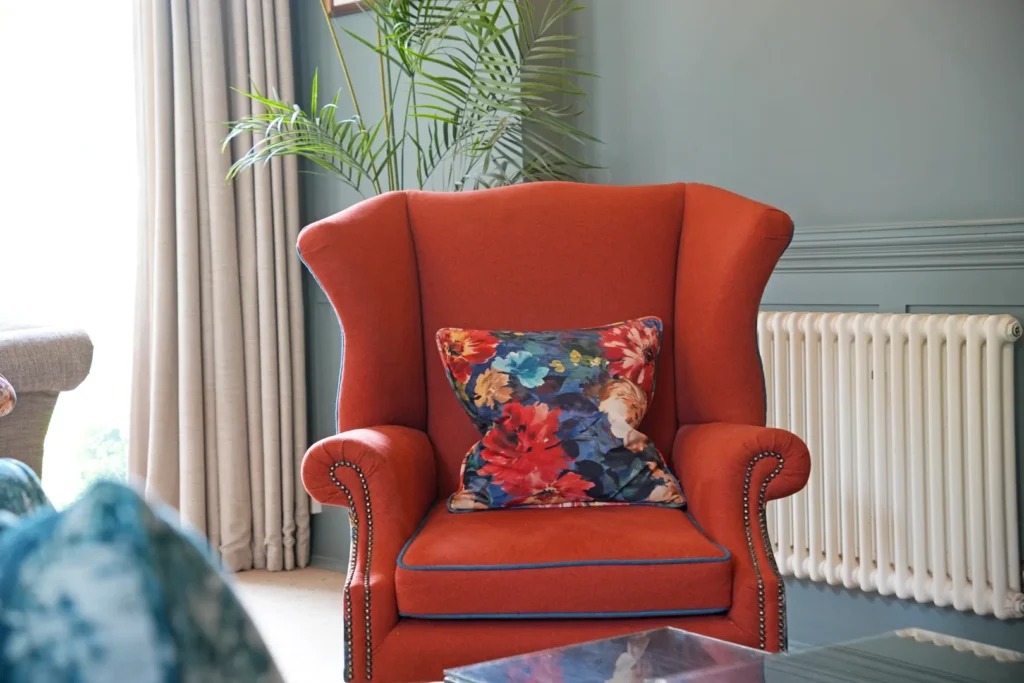
How should you look after one?
Follow the supplier’s cleaning guidance first. As a general habit:
- Blot spills quickly with a clean, dry cloth. Rubbing pushes the liquid into the weave.
- Vacuum regularly so grit does not sit in the cloth.
- Test any cleaner on a hidden corner before using it on a visible area.
No fabric is stain-proof. Strongly pigmented spills such as red wine can still mark, so speed matters more than the label. For pile cloths, our notes on cleaning a velvet sofa cover brushing and pile direction.
What should you ask before choosing one?
| Ask the supplier | Why it matters |
|---|---|
| Is the performance in the fibre or in a finish? | It tells you what to expect when the cloth is cleaned. |
| What is the Martindale rub count? | It shows resistance to abrasion for the kind of use you have in mind. |
| How should it be cleaned? | Some cloths need specific products or professional cleaning. |
| Can I see a large sample? | Feel and sheen are hard to judge from a small swatch. |
If you are choosing a cloth for a chair or sofa to be re-covered, we upholster everything in our own workroom, and you can see armchairs reupholstered in our workroom or read about our upholstery and headboards. For comparison, our piece on chenille fabric looks at another cloth often chosen for family seating.