
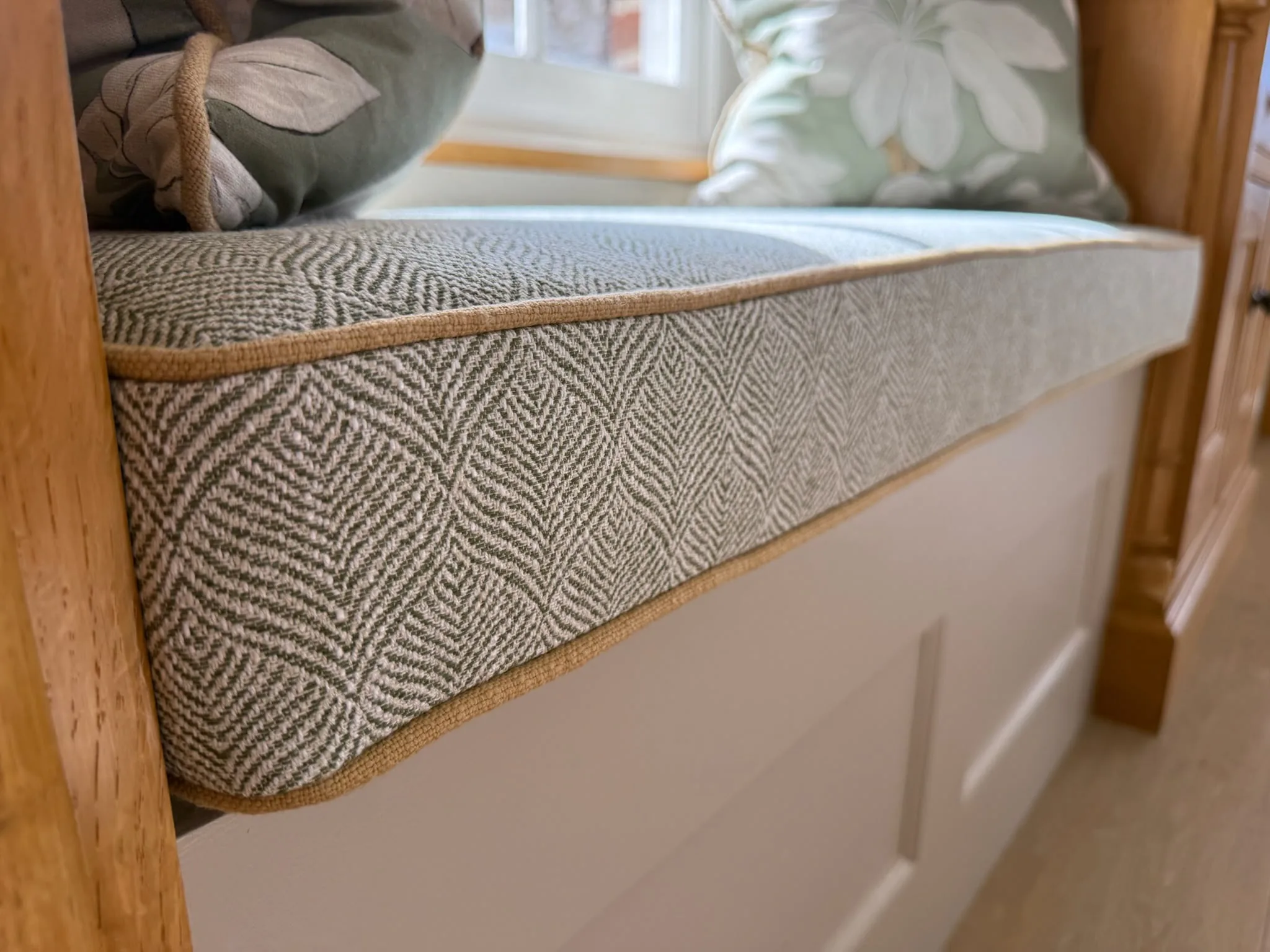
A good window seat cushion is a seat pad cut to the exact shape of your seat, filled with foam that suits how you sit, and covered in a fabric that copes with daily use. Get the depth, the edge and the fabric right and the seat will be used, not just looked at.
What is a window seat cushion, and how is it different from a scatter cushion?
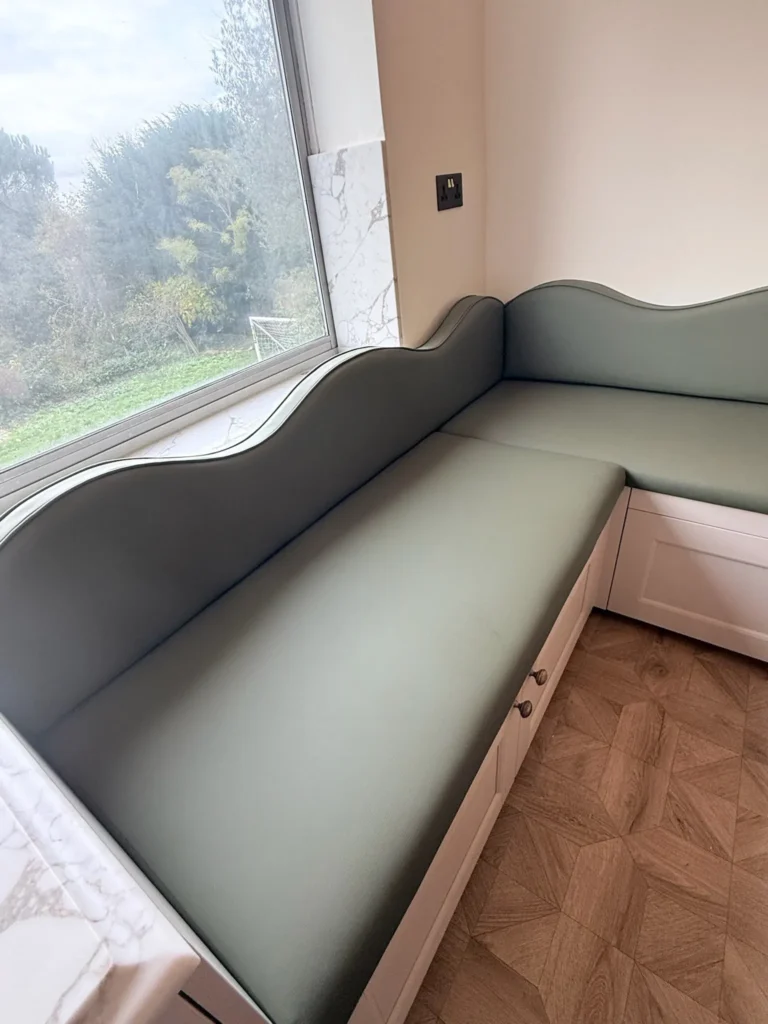
A window seat cushion, or seat pad, lies flat on the seat itself. It is usually made to follow the seat’s outline, including any angled bay corners, so there are no gaps at the edges. Scatter cushions and bolsters then sit on top for backs and arms.
Because a seat pad is made to fit one particular seat, an off-the-shelf rectangle rarely suits it. That is why most window seats are worth making to measure. See our made-to-measure cushions and soft furnishings for what we make in the workroom.
How deep should the foam be?
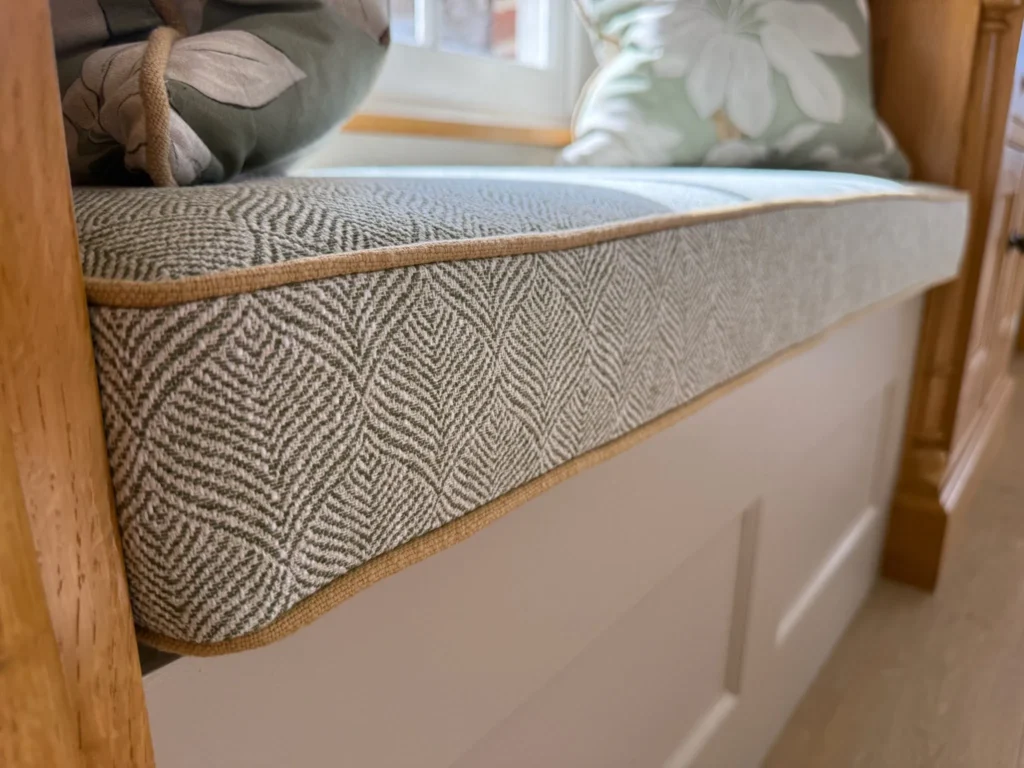
Think about how the seat will be used before you choose the foam.
- Reading and lounging: thicker foam is more comfortable for long sits, but it raises the seat and lowers the window sill, so allow for that.
- Perching and occasional use: thinner foam looks neater and keeps the seat low, which suits a narrow bay or a hallway seat.
- Storage underneath: if the seat lifts, a lighter pad is easier to move.
If the seat is built in, check the depth of the seat itself too. A seat that is very shallow gains little from a thick pad.
Which edge finish suits a window seat: piping or boxed?
The edge is what people notice most. Both finishes are common, and they suit different looks.
| Finish | Look | Good to know |
|---|---|---|
| Piped edge | A fine cord line round the top and bottom edge, in self or contrast fabric | Crisp and tailored, and it suits both traditional and modern rooms |
| Boxed edge | A straight side panel gives the pad a clean block shape | Shows the foam depth, so it sits well in a deep seat |
| Piped and boxed | A boxed pad with piping where the top meets the side | The most defined finish, and the one that shows off a pattern |
A contrast piping can pick up a colour from your curtains or blinds, which ties the seat to the rest of the window.
What fabric should I choose for a window seat?
A seat pad is sat on, slid across and often sunlit, so it needs more from its fabric than a scatter cushion does. Look at these points:
- Weave: a close, firm weave holds its shape better than a loose one.
- Sunlight: a seat in a bright window can fade some fabrics, so ask about light fastness for the fabric you like.
- Cleaning: if the seat is used by children or pets, choose a fabric you can look after easily, or ask about a removable cover.
- Pattern: a pattern hides marks better than a plain, but keep the scale in step with the seat.
Our post on performance fabrics explains what those fabrics offer and where they differ in feel.
How do I plan a window seat with scatter cushions?
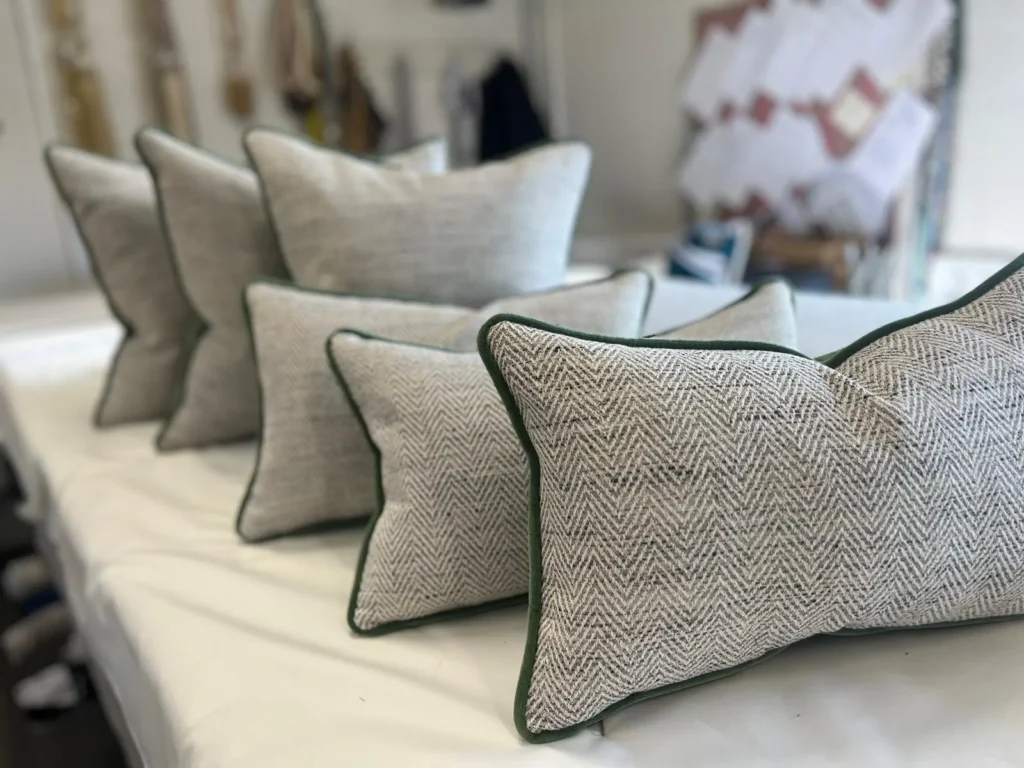
Choose the seat pad first, then add scatter cushions and bolsters in the same palette. A few cushions look better than a heap, and a bolster at each end gives a window seat its classic shape.
For ideas on mixing sizes and patterns, our guide to choosing cushions for a sofa works just as well for a seat in a bay.
What do I need to check before the seat pad is made?
Settle these points first, so the pad fits and looks as you intend.
- The exact outline of the seat, including every angle in a bay window.
- Whether the seat has a back or sides that the pad must fit against.
- How it opens, if there is storage underneath.
- Where the radiator, sockets or vents sit near the seat.
- How the curtains or blinds hang above it, so nothing catches on the cushions.
We have a separate page on how to measure your windows for curtains and blinds.
Can the seat be part of the whole window?
Yes. A window seat sits right under the curtains or blinds, so it helps to plan them together. In a bay, a curtain layout that suits the bay will decide how much of the seat stays visible. If the seat is built in and needs covering as well, our upholstery team can do that in the same fabric family.