
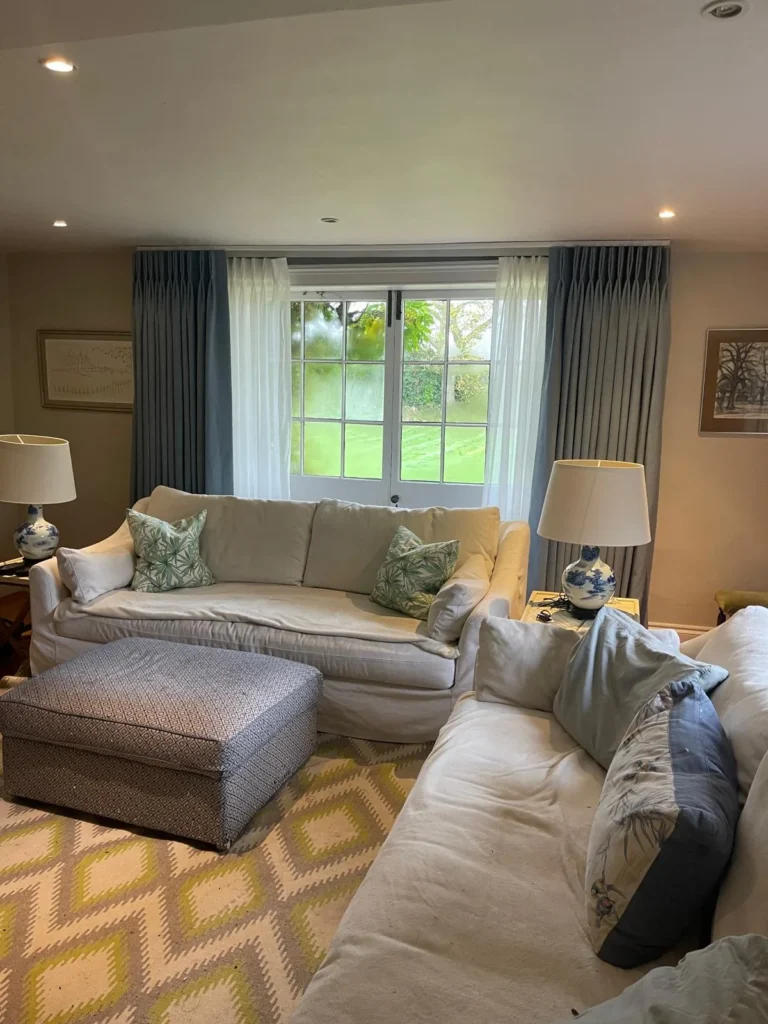
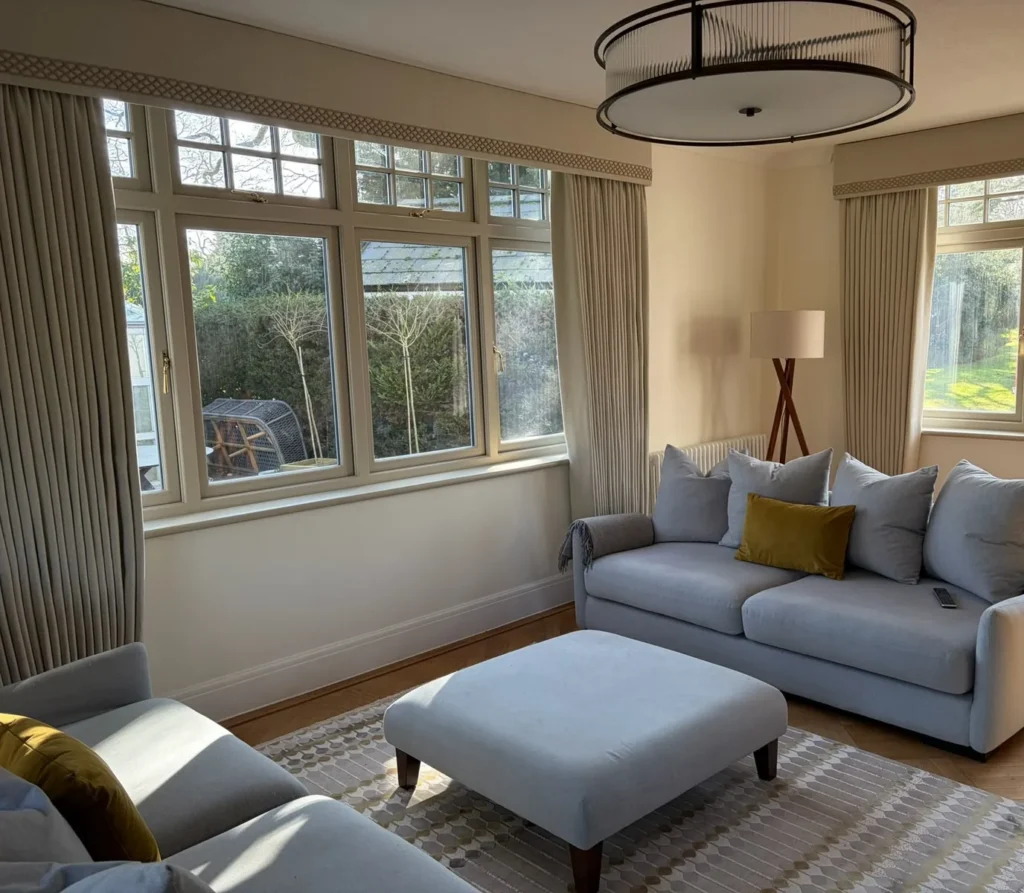
For most living rooms, choose a rug big enough that at least the front legs of your sofa and chairs sit on it, with a clear border of bare floor around the edge. In a larger room, bring all the legs on. Whatever the room, a rug that is too small makes the seating look adrift.
What are the three ways to place a rug?
Designers tend to describe three layouts. Each one suits a different room, so it helps to know them before you look at sizes.
- All legs on. Every sofa and chair sits fully on the rug. This is the most generous layout and gives the seating area a clear edge.
- Front legs on. Only the front legs of the sofa and chairs rest on the rug, and the back legs stay on the floor. It is the layout most people find the most forgiving.
- Floating. The rug sits in the middle of the group and no furniture touches it. It can work in a small room, but it is the easiest layout to get wrong.
How much floor should you leave around the rug?
A border of bare floor frames the rug and shows off the room’s proportions. Guides differ on the exact figure, but many suggest somewhere between about 20 and 45 cm. Smaller rooms suit the narrower end of that range.
- A bigger border makes the rug feel like an island in a large room.
- A very narrow border can make a small room feel crowded.
- Keep the border even on every side where you can, so the rug looks placed rather than dropped.
How do you work out the right size?
Start with the seating, not the room. The rug should relate to your sofa and chairs first and the walls second.
- Decide which layout you want: all legs on, front legs on or floating.
- Look at the width of your largest sofa. The rug should normally be wider than the sofa, so it does not end at the arms.
- Mark out the rug’s footprint on the floor with masking tape or sheets of newspaper.
- Move the furniture to where it will really sit, and check the walkways still feel comfortable.
- Leave the tape down for a day or two and see how the room feels before you commit.
Which layout suits which room?
Use this as a starting point rather than a rule. Room shape, doors and the way you use the space all change the answer.
| Layout | Suits | Watch for |
|---|---|---|
| All legs on | Larger rooms and a seating group set away from the walls | A rug large enough to leave a proper border all round |
| Front legs on | Most medium rooms, and sofas set closer to a wall | Every seat in the group should have its front legs on the rug |
| Floating | Small rooms with a single armchair or a compact seating area | A rug that looks too small for the furniture around it |
What about open-plan rooms and doorways?
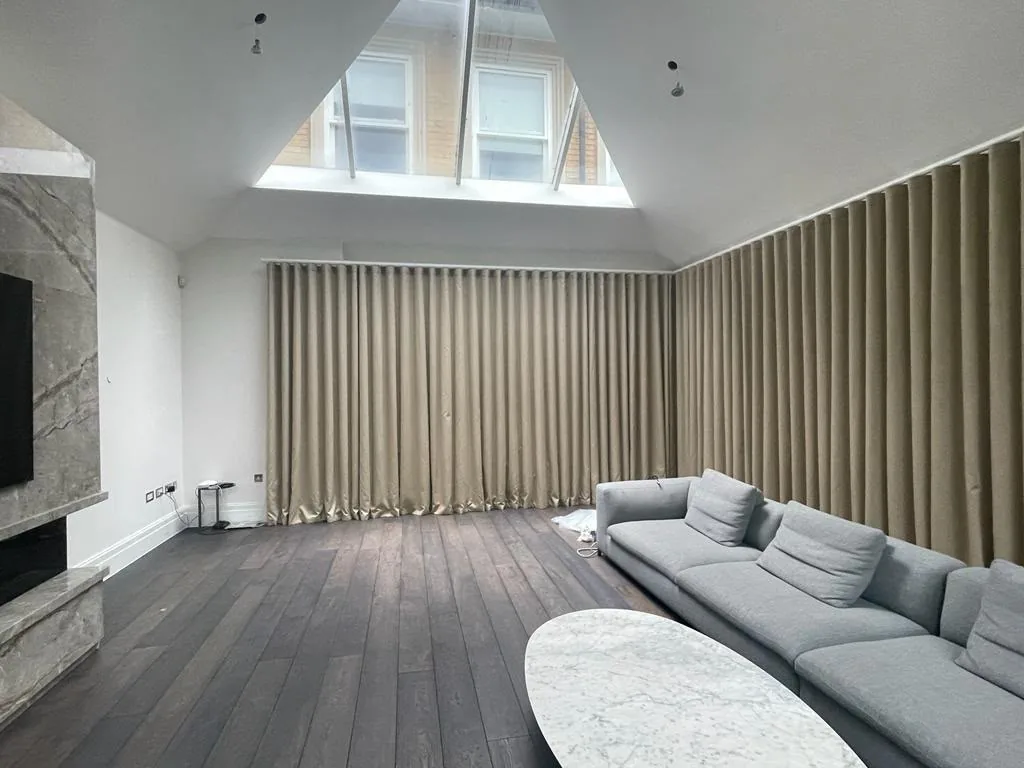
In an open-plan space, a rug can mark out the sitting area from the dining area. Size it to the seating group, not to the whole floor.
Check where doors swing and whether the rug will catch on them. Think about the route people take through the room too, because a rug that interrupts a walkway gets tripped over. Our open-plan living room project shows how one large room can be dressed as a single scheme.
How does a rug sit with curtains and upholstery?
Think of the rug as one layer of the room alongside the curtains and the upholstery. A plain rug lets a patterned curtain or sofa lead, and a patterned rug usually wants calmer fabrics around it. Texture helps too: a flecked or woven rug gives a plain room some depth.
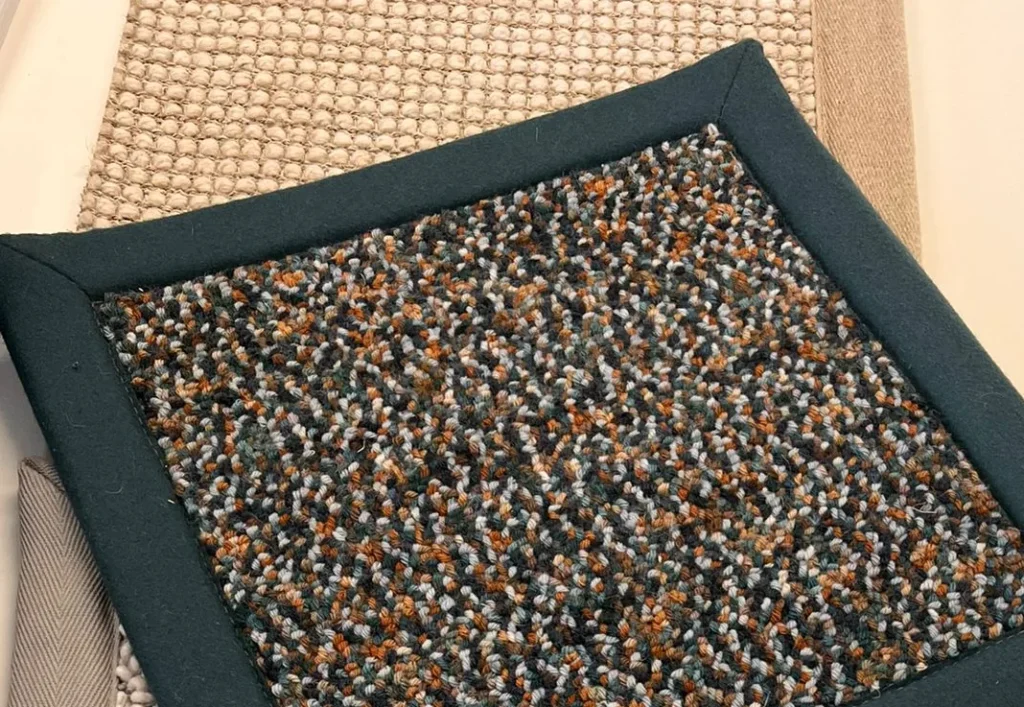
If you are planning the whole room at once, interior design is about choosing colour, fabric and finishes so they work together. Our guide to a mood board shows one way to try a rug beside your fabrics before you decide. If the room still feels cramped, read how to make a small room look bigger.
The curtains matter here as well. Our made-to-measure curtains are cut for the window, so it is worth choosing the rug and the curtain fabric together.