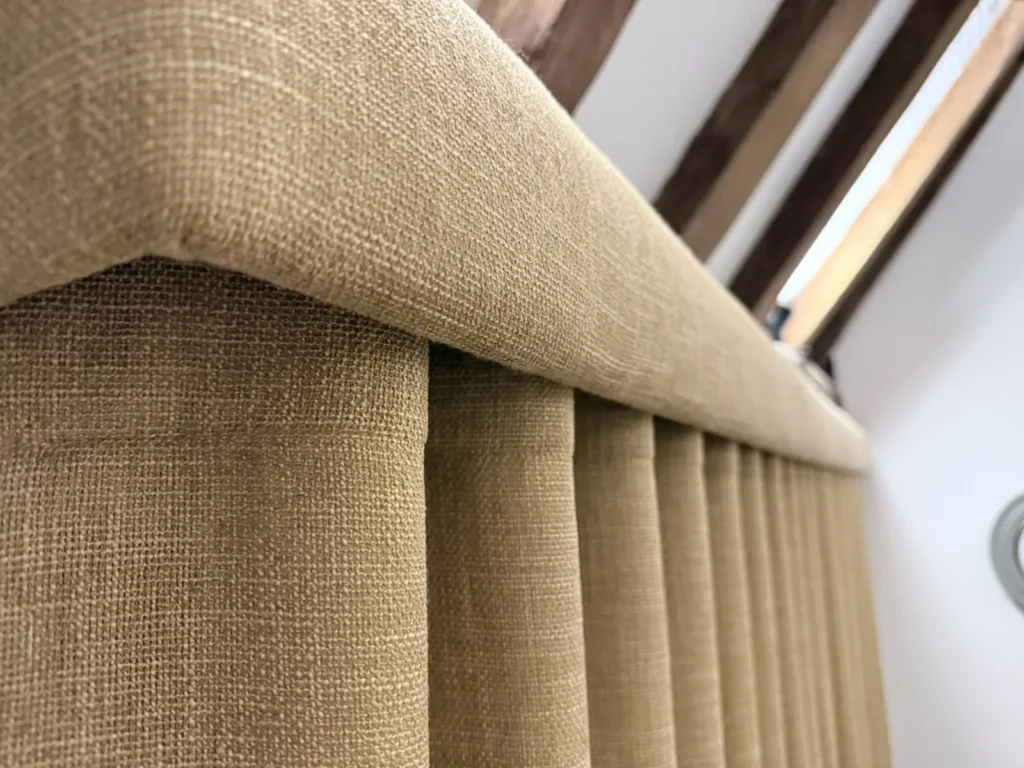

To make a small room look bigger, keep the eye moving upwards and outwards. Hang curtains high and wide so the window looks larger, choose light, soft colours and fabrics, let daylight in, and keep furniture in proportion to the room. A few considered changes work better than a long list of tricks.
Where should you hang curtains in a small room?
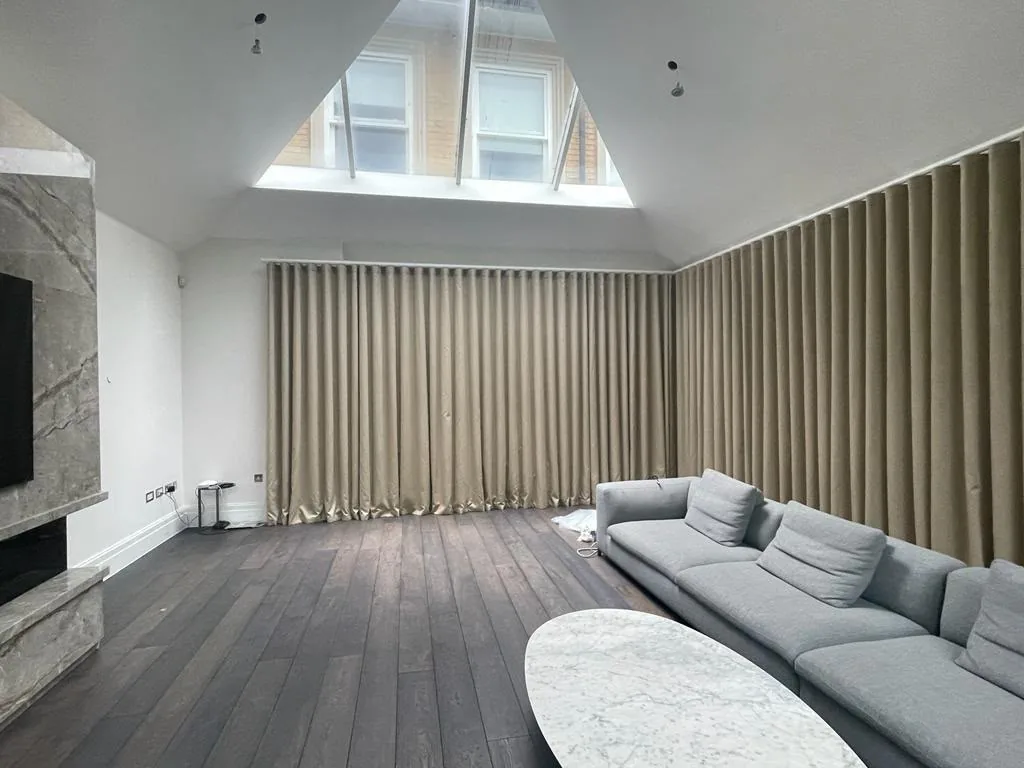
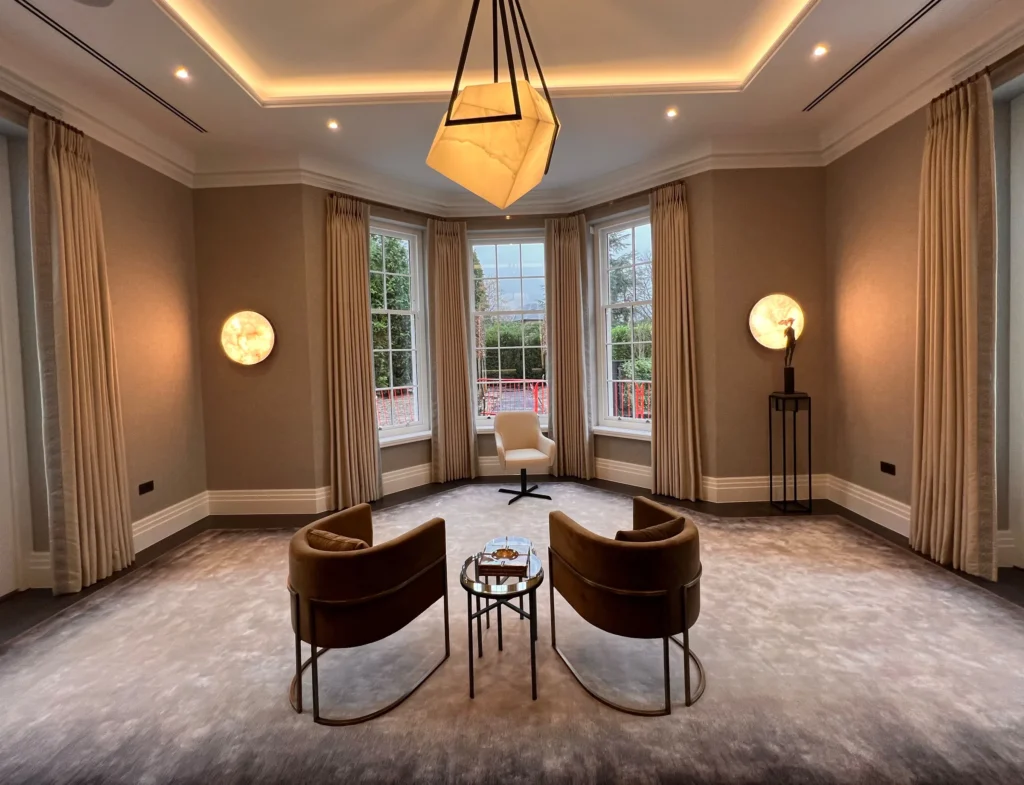
Higher and wider than the window frame. Fixing the pole or track close to the ceiling draws the eye up, so the walls seem taller. Letting the curtains extend beyond the frame on each side means the glass is not covered when they are open, so the window looks wider and more daylight comes in.
Floor-length curtains make a stronger line than short ones that stop at the sill. If you are unsure how to take the measurements, our guide to measuring for curtains and blinds explains it step by step.
Which fabrics and colours make a room feel larger?
Pale, soft colours tend to feel open, and a room that is all one tone has fewer visual breaks. Walls, curtains and furniture in close shades let the eye travel without stopping. Our post on colour drenching looks at how far that idea can be taken.
Fabric matters as much as colour. Think about:
- Plain or small, quiet patterns, which look calmer than large, busy ones.
- Soft, light-coloured weaves that let the window stay the focus.
- Curtains in a shade close to the wall, so they blend in rather than cut the room into sections.
Dark colours are not banned. In a small room they can feel cosy and enclosing, which is a different effect from feeling bigger, so decide which you want.
Can sheer fabrics help?
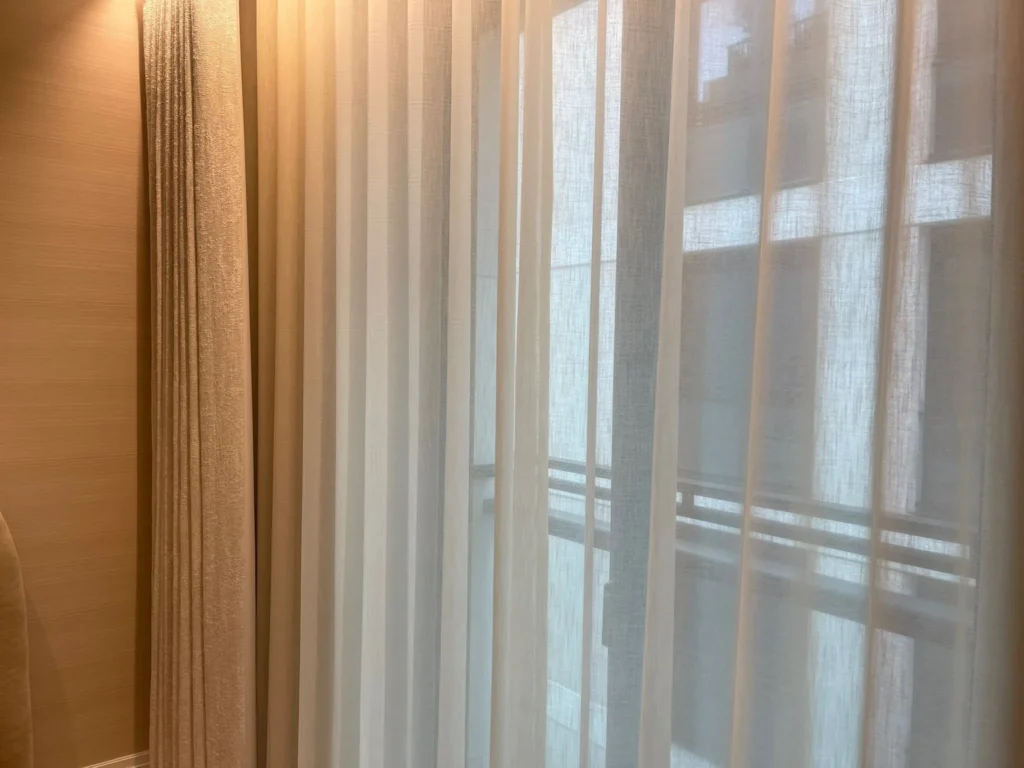
Yes. A sheer lets daylight through while softening the view and giving some privacy, so the window stays bright. Hung from ceiling to floor, sheers also add height. Layering a sheer with a fuller dress curtain gives you flexibility: sheer by day, dress curtains drawn in the evening.
Do curtains or blinds suit a small room better?
Both can work, and the choice depends on the window and how you use the room. Here is a quick comparison.
| Option | What it does for a small room |
|---|---|
| Curtains hung high and wide | Add height and width, and leave the glass clear when open |
| Sheer curtains | Keep the window bright and soften the view |
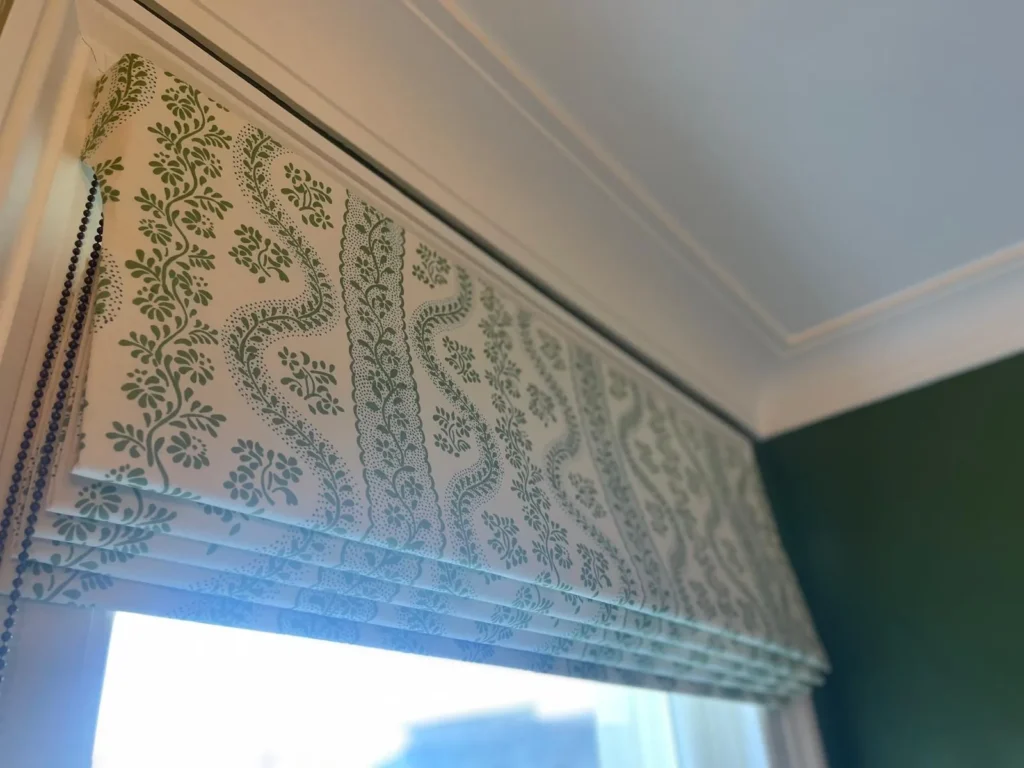
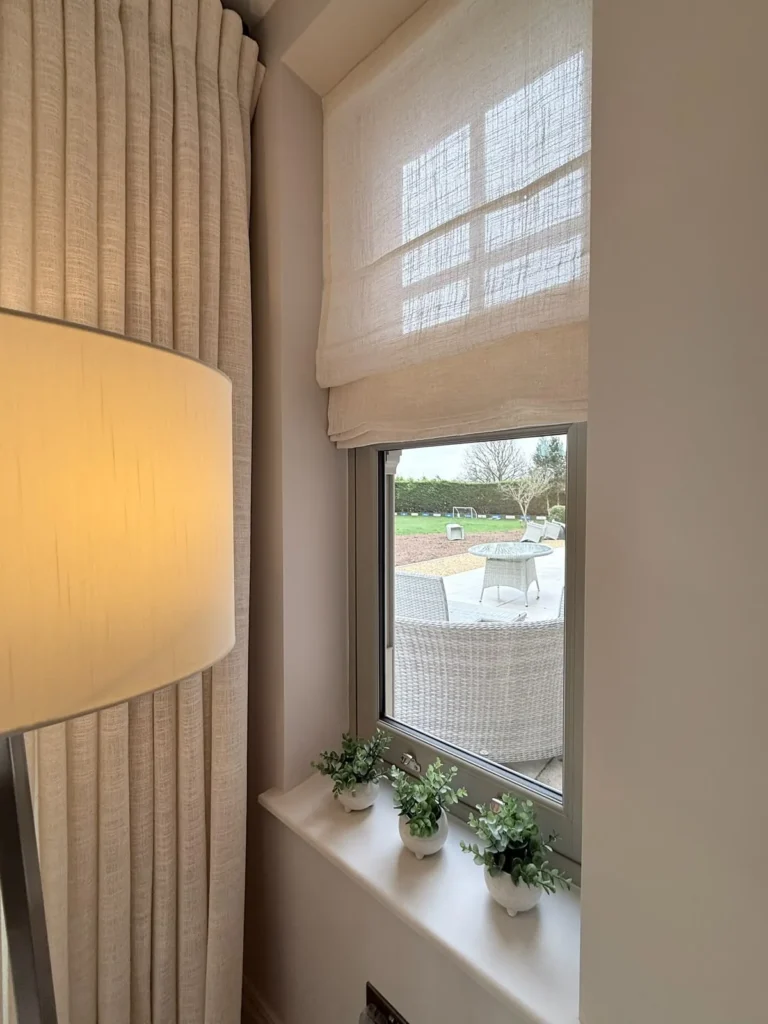
| Roman blinds | Sit neatly within a recess and keep the wall space clear |
| Both layered | Give you a sheer layer and a fuller layer to choose from |
If you are weighing them up, read about Roman blinds made in our workroom alongside our made-to-measure curtains. A Roman blind raised fully lets the window show at its full size.
How do you choose furniture for a small room?
Scale is the thing to watch. A few well-proportioned pieces usually feel more spacious than many small ones, which can look cluttered. Some simple habits help:
- Choose furniture that is in proportion to the room, rather than the largest piece that will fit.
- Leave clear paths between pieces, so you can move through the room easily.
- Pick pieces with visible legs where you can, so the floor appears to continue underneath.
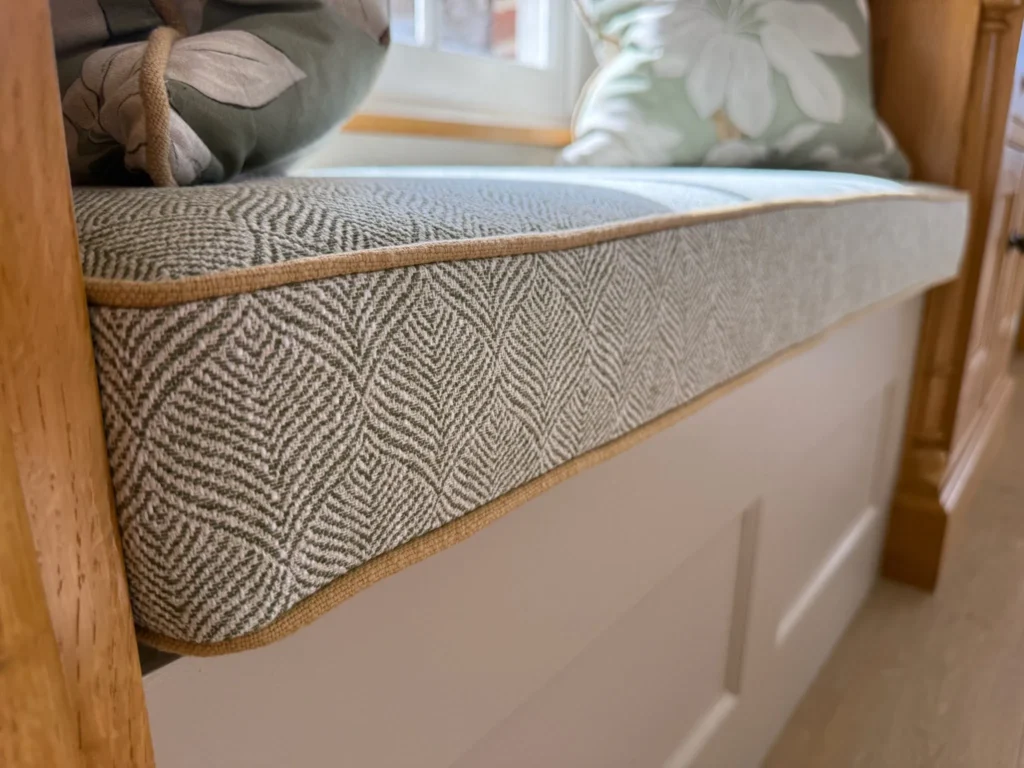
- Keep upholstery and curtains in related tones, so they read as one calm scheme.
What about mirrors and lighting?
A mirror placed opposite or beside a window bounces daylight around the room, which makes it feel brighter and more open. Layered lighting at different heights, such as a lamp as well as a ceiling light, stops corners from falling into shadow. These are general decorating ideas rather than something we make, but they pair well with the soft furnishings above.
Should you keep the clutter down?
A small room shows everything, so edit what stays on view. Keep surfaces fairly clear, give each item a home, and let a few chosen things stand out. Less on show makes the walls and windows look larger.
How do you bring it together?
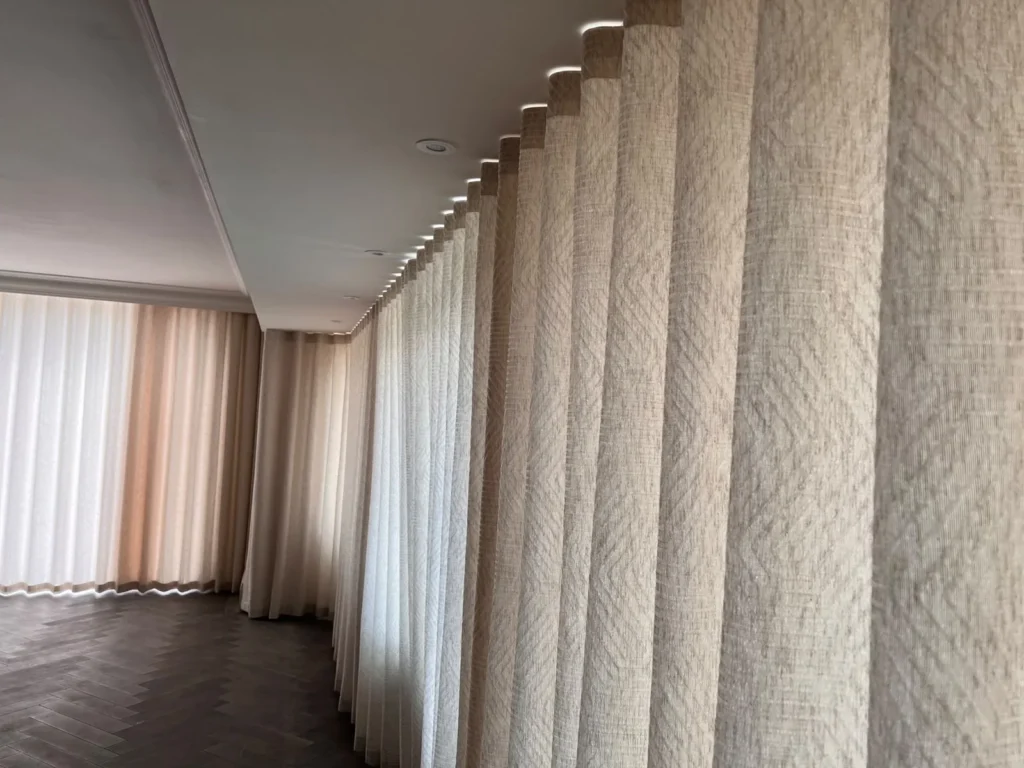
Start with the window, since curtains and blinds have the biggest effect on how a room feels. Then build the colours and fabrics around it. If you want to see how curtains and sheer Roman blinds work in one room, have a look at our wave curtains and sheer Roman blinds in an open-plan living room.
If you would like help pulling a scheme together, our interior design service starts with a conversation about the room. A mood board is a good way to test colours and fabrics before you decide.