
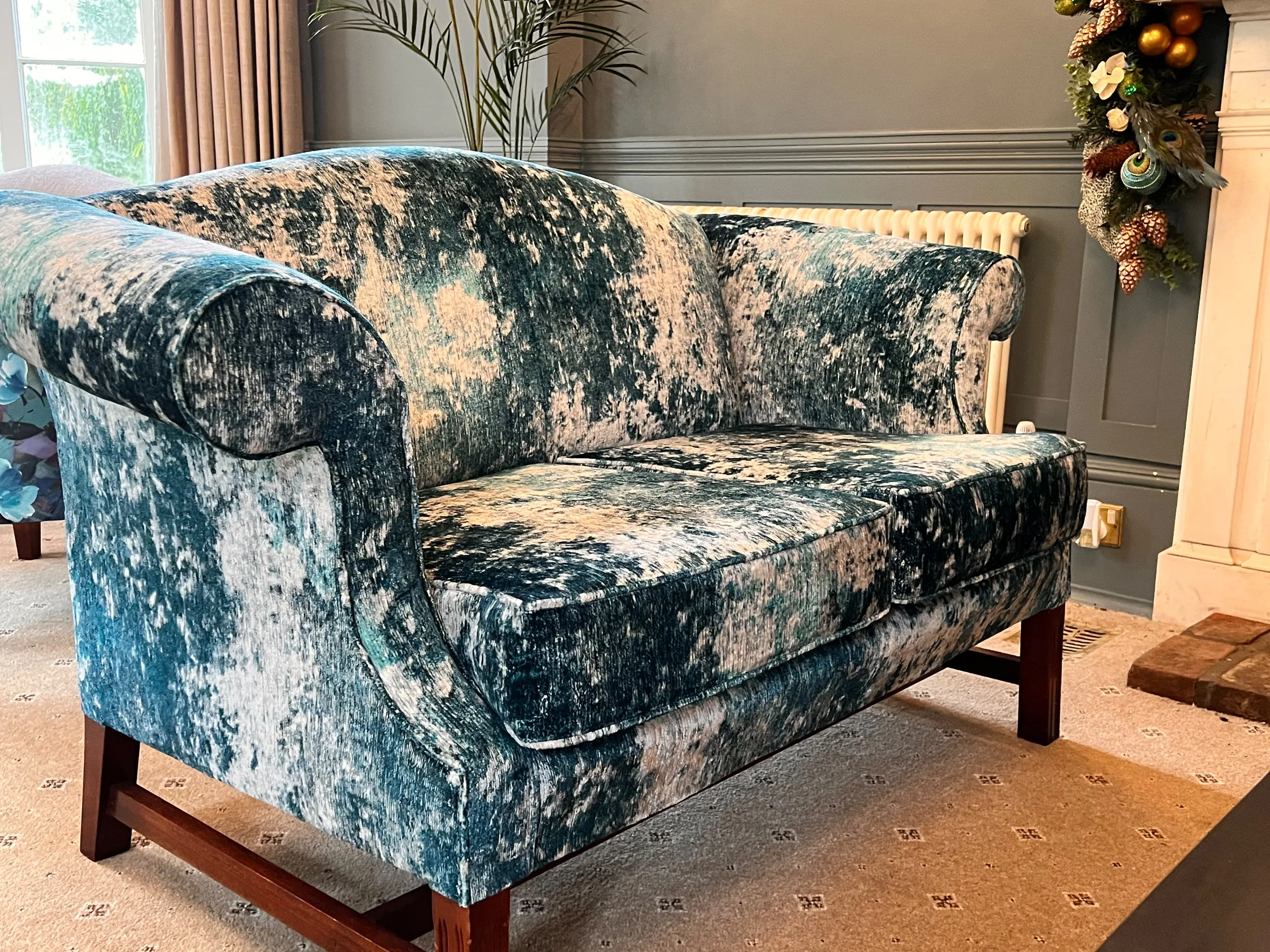
Bouclé is a fabric woven with small, looped yarns that give it a soft, nubbly surface. It looks warm and feels tactile, and it suits calm, quiet rooms. The loops can snag, though, so it is better for some homes and some pieces than others. Here is how to decide.
What is bouclé fabric?
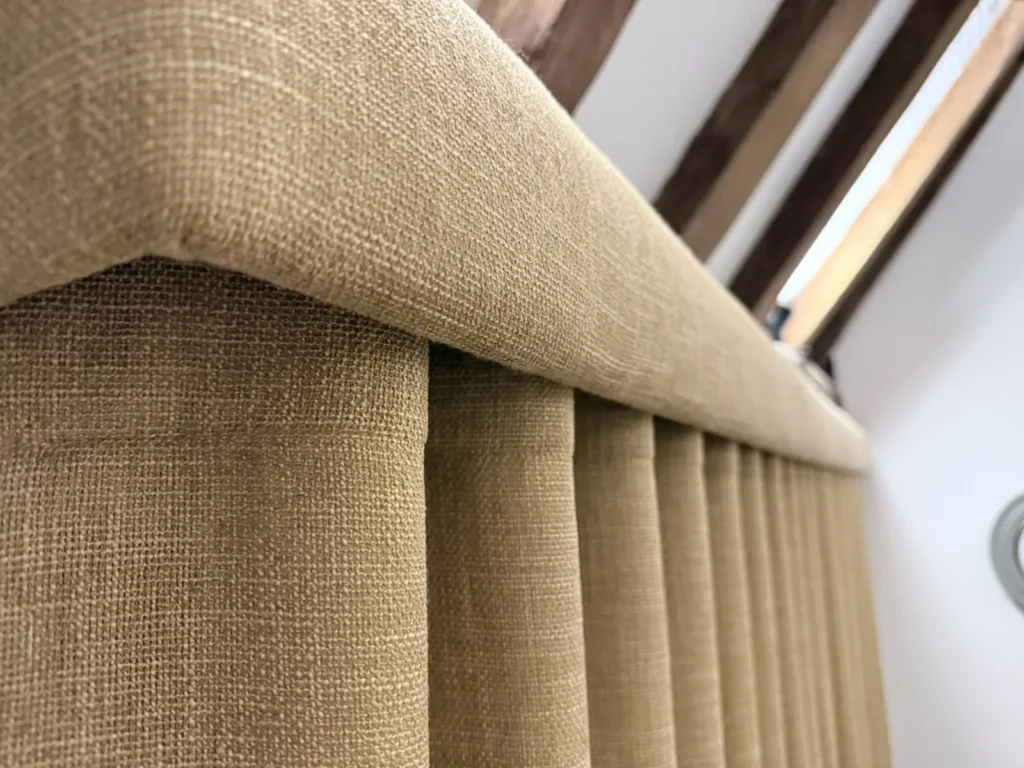
The name comes from the French word for “curled”. The yarn is looped as it is made, so the surface is textured rather than flat. You will see it on armchairs, accent chairs, headboards and cushions, most often in cream and other soft neutrals.
Because the texture does the work, a plain colour in bouclé rarely looks plain. That makes it a good partner for smoother fabrics nearby.
Is bouclé hard-wearing?
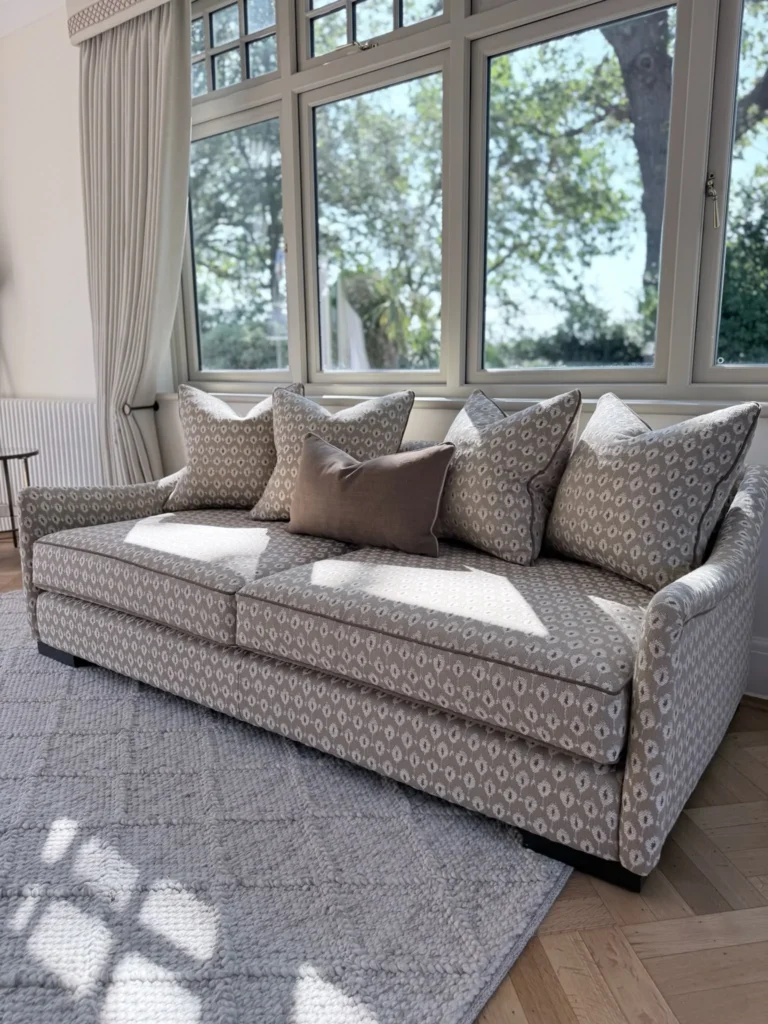
It depends on the yarn, the weave and how the piece is used. The looped surface is the weak point: a loop caught on a zip, a ring or a claw can be pulled out of line. Fabrics with a tighter weave and shorter loops tend to cope better than open, chunky ones.
Before you commit, look at three things:
- the size of the loops: smaller and tighter is usually calmer on a busy chair;
- how firmly the fabric is woven underneath;
- the rub count (Martindale) on the fabric’s specification, which tells you how it is rated for seating.
Is bouclé a good idea with pets?
This is the question we hear most. Cats and dogs with claws can catch the loops, and a pulled loop is hard to hide. Advice online is mixed, and it comes down to the animal and the room.
If your pet loves to scratch or climb on the furniture, a flatter weave or a velvet may suit you better. If your pets are calm and their claws are kept trimmed, bouclé can work well on a chair that sees lighter use.
Where does bouclé suit best?
Bouclé works best where it will be sat in gently and looked at often.
- Accent chairs and bedroom chairs: a good place for a soft texture to stand out.
- Headboards: the surface is not in constant contact, so the loops stay tidy. See upholstery and headboards.
- Cushions: easy to swap and rotate. Our guide to choosing cushions for a sofa shows how texture sits with plain fabrics.
- A family sofa that everyone uses daily: think hard first, and ask for a sample to test.
How do you keep bouclé clean?
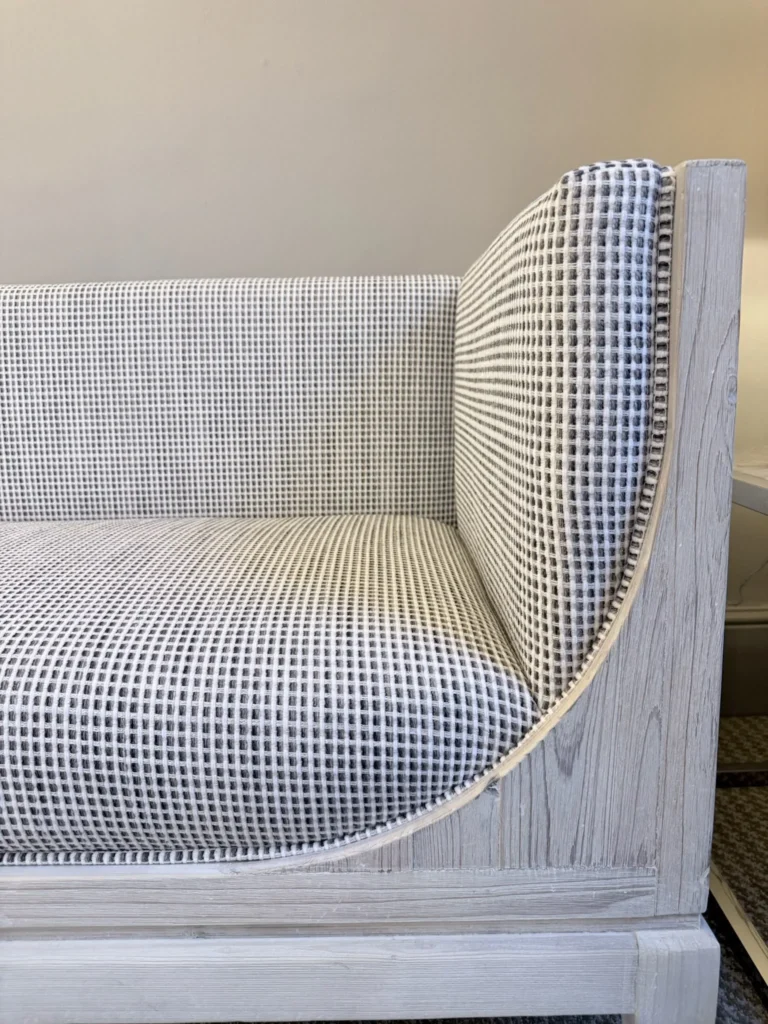
Gentle and regular is the rule. Loops trap dust, crumbs and hair, and lighter colours show marks sooner.
- Vacuum often with a soft upholstery brush.
- Blot spills straight away with a clean, dry cloth. Rubbing pushes the mark into the loops.
- Read the care label before using any cleaner. Codes such as W, S, WS and X tell you whether water, a solvent, either, or vacuuming only is advised.
- If a loop pulls, do not tug it. Trim the loose end carefully with small scissors, or ask a professional.
- For a deeper clean, a professional upholstery cleaner is the safer choice than a home machine.
Bouclé, velvet or a flat weave: how do they compare?
| Fabric | Look and feel | Things to weigh |
|---|---|---|
| Bouclé | Soft, nubbly, textured | Loops can snag; blot, do not rub |
| Velvet | Smooth, with a sheen that changes with the light | Pile can mark and shows brush direction |
| Flat weave | Calm and even | Less texture, easier to keep tidy |
Can an existing chair be re-covered in bouclé?
Often, yes, if the frame is sound. Reupholstery lets you choose a fabric to suit the room and the way the chair is used. We re-cover chairs and sofas in our Howe Street workroom, and you can see an example in our armchairs reupholstered in our workroom.
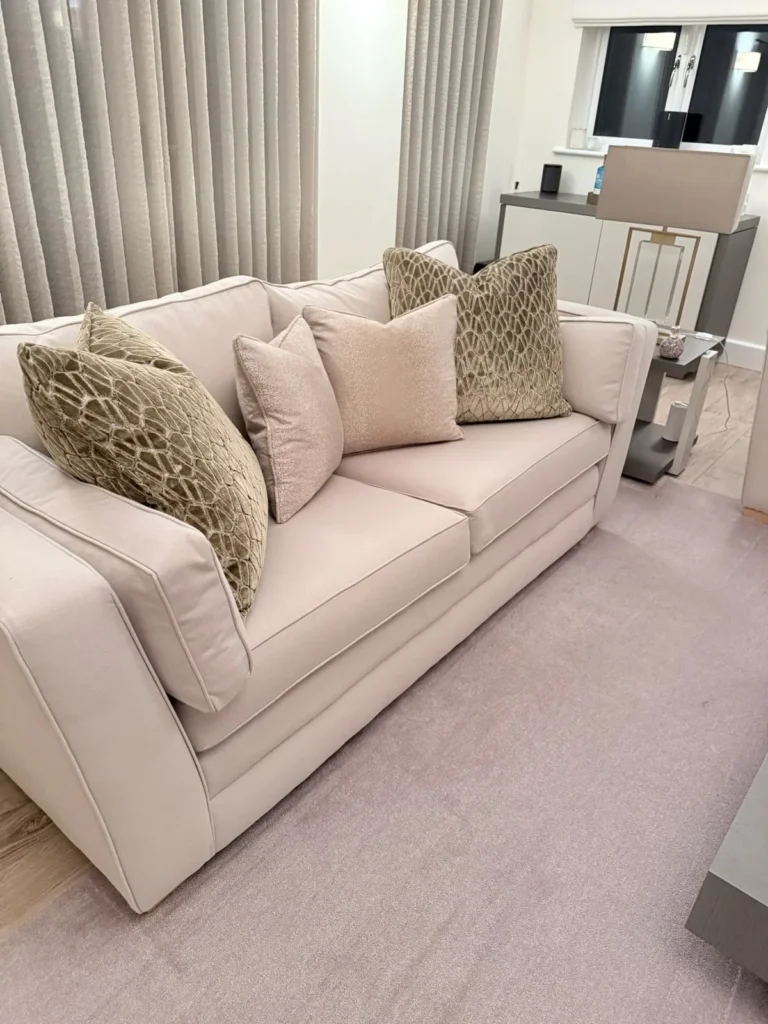
A textured fabric also asks for care with the rest of the room. If you are building a scheme, our guide to choosing a colour scheme is a good place to start.