
A curtain heading is the way the top of a curtain is gathered, and it decides how the curtain looks, how it hangs and whether it suits a pole or a track. The main choices are pinch pleat, Euro pleat, wave, pencil pleat, goblet and eyelet. Each has a different look and a different fit.
What is a curtain heading, and why does it matter?
The heading is the finished top edge of the curtain, where the fabric is pleated or gathered before it meets the pole, track or rings. It shapes every fold below it.
It also affects practical things. Some headings stack back neatly and clear the glass. Some only work on a pole, and some only on a track. Choosing the heading early saves problems later, because it affects the fabric amount, the lining and the fittings.
What is the difference between pinch, double and triple pleats?
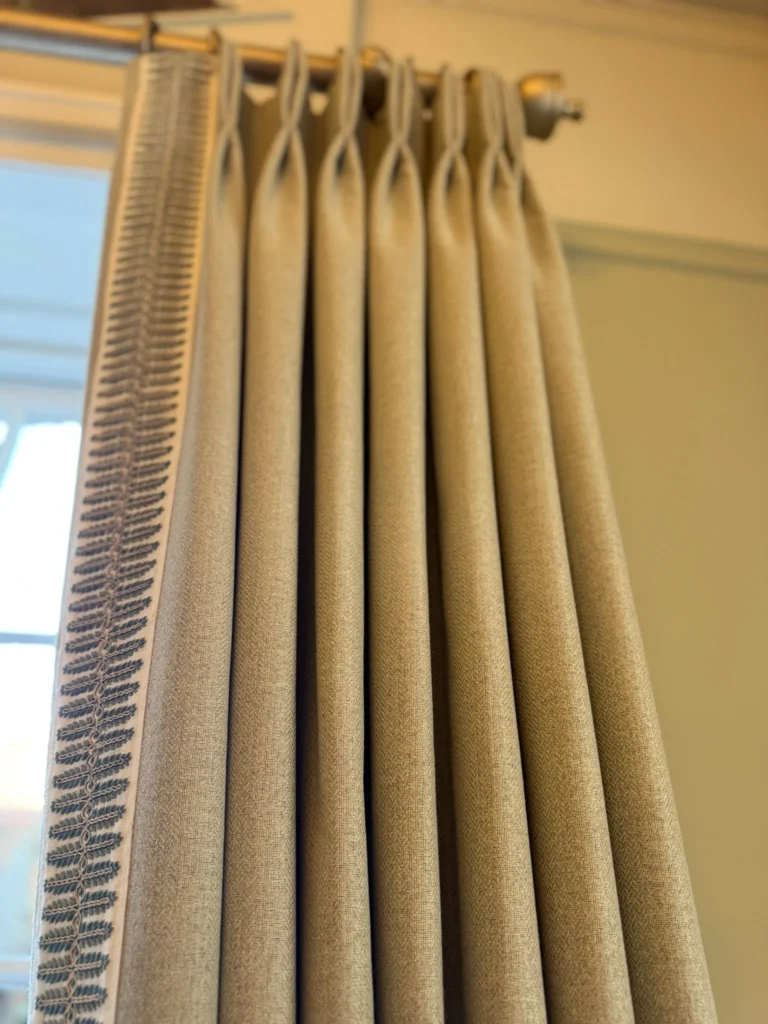
A pinch pleat is a tailored heading in which the fabric is gathered into small, evenly spaced groups of pleats, with flat spaces between them. It is often called a French pleat. A double pinch splits each group into two folds, and a triple pinch splits it into three.
- Look: crisp, structured and formal.
- Hang: neat, even folds that stack back tidily.
- Works with: a pole with rings, or a track.
- Suits: drawing rooms, bedrooms and bay windows.
Pinch pleats show off a pattern well, because the flat spaces between the groups let the print through. You can see them in our dusky pink curtains with printed floral borders.
What is a Euro pleat?
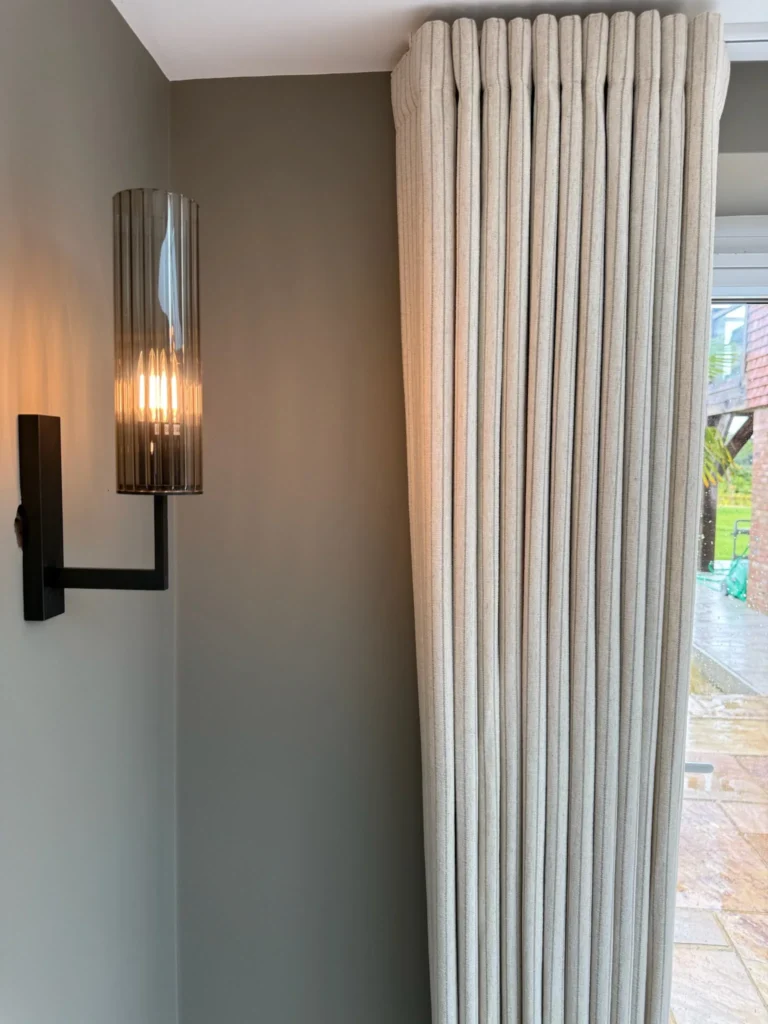
A Euro pleat is a softer relative of the pinch pleat. The fabric is gathered at the very top of the heading, so the folds open out into fuller shapes below. It gives some structure without the formality of a classic pinch pleat.
It is a good middle path for a room that needs a tidy line at the top but a relaxed feel overall.
What does a wave heading look like?
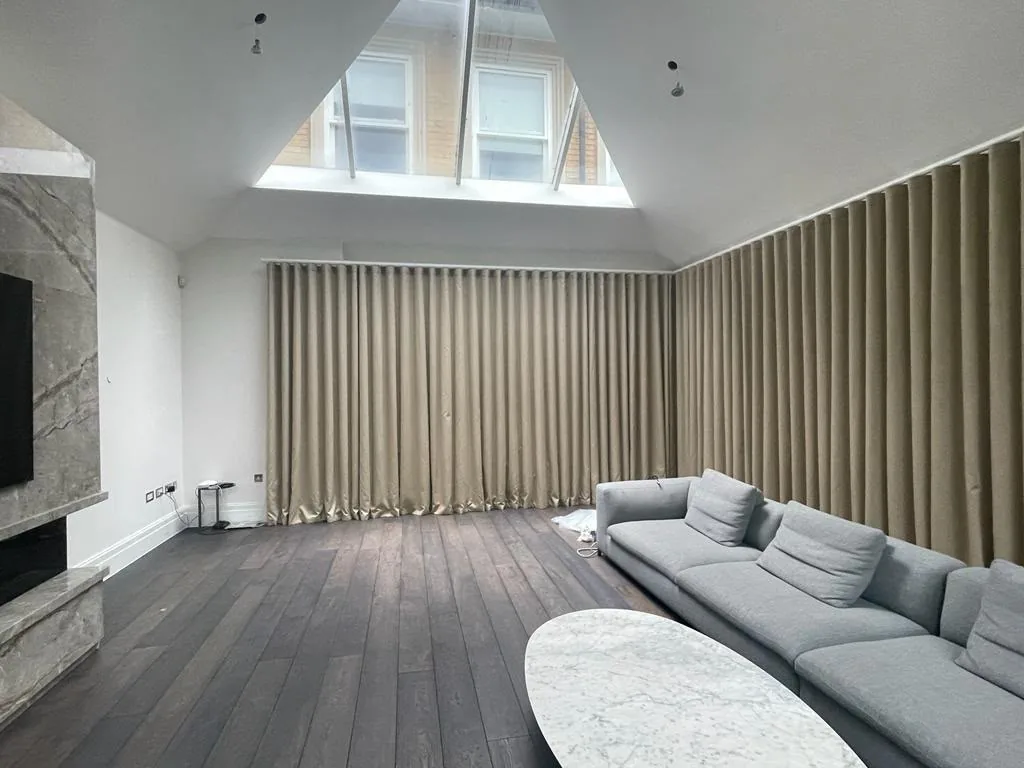
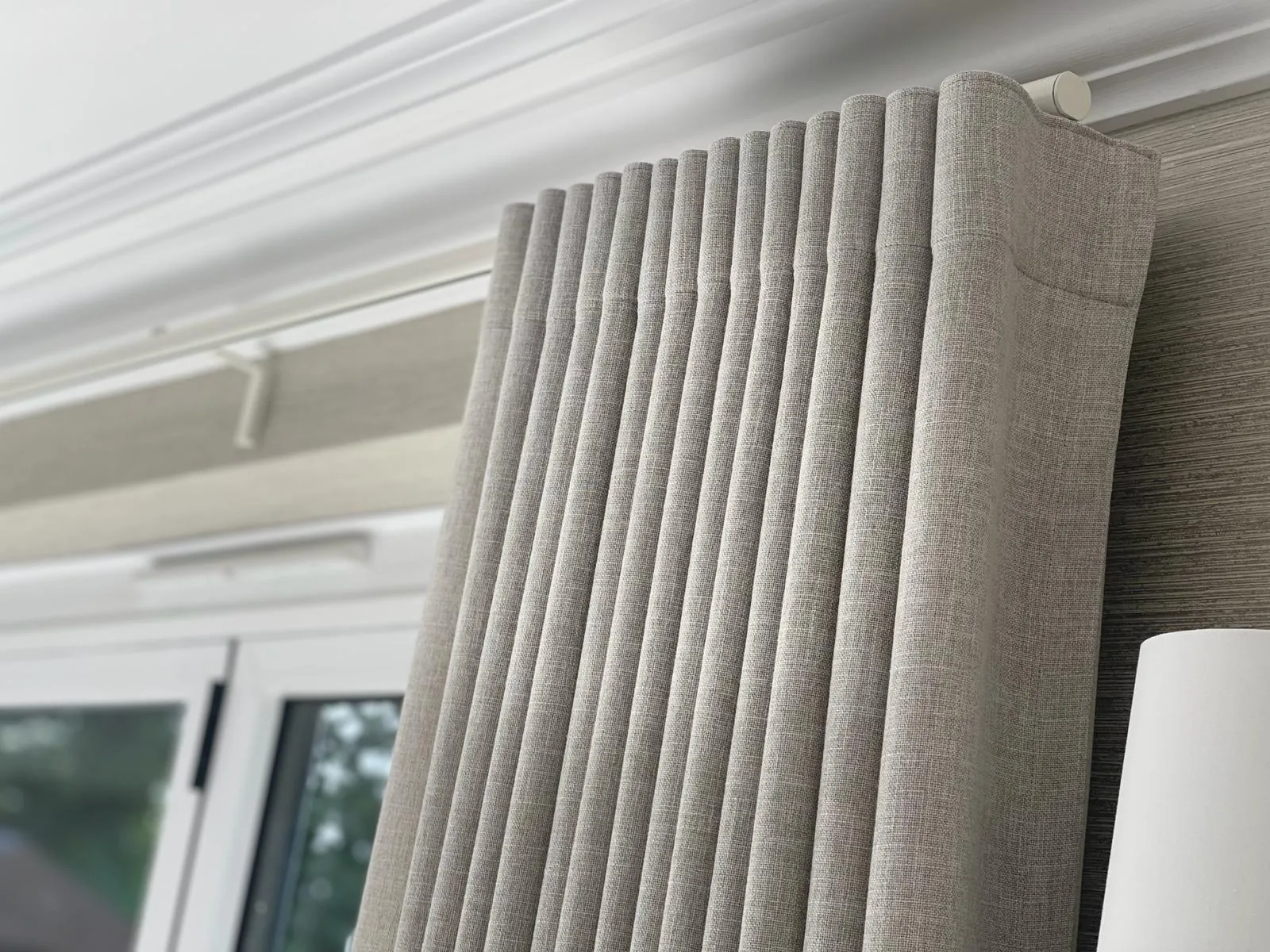
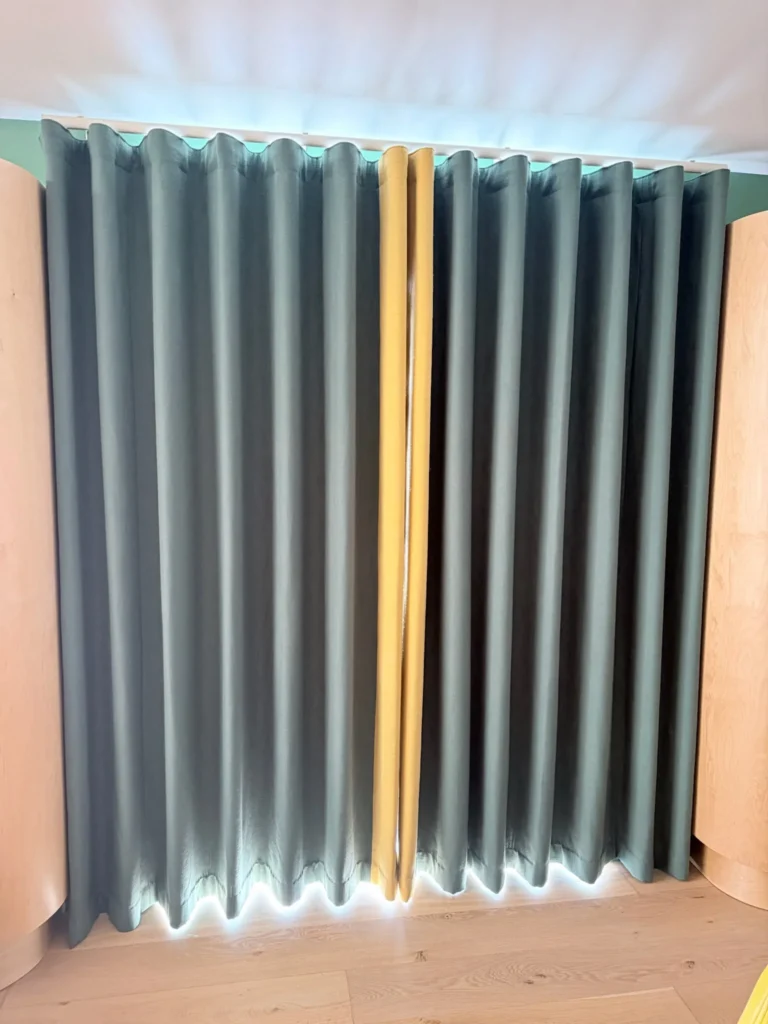
A wave heading, sometimes called a ripple fold, makes soft, continuous S-shaped folds from one end of the curtain to the other. Because it runs on a track, there are no rings and no gaps, and the curtain stacks back slim against the wall.
- Look: clean, calm and contemporary.
- Works with: a track made for wave curtains, not a pole.
- Suits: wide glazing, bifold doors and modern rooms.
Wave is a natural choice for long runs of glass. Our textured wave curtains and wave curtains at bifold doors show how it looks in practice.
Where do pencil pleat, goblet and eyelet fit in?
These three are common in shops and catalogues, so it helps to know how they differ.
- Pencil pleat: a narrow band of gathering across the top, giving a row of small, close pleats. It is simple and works on poles and tracks, but it gives a less tailored fall than a pinch pleat.
- Goblet: each pleat is shaped like a goblet and held with stiffening. It is a formal, sculptural heading that suits a pole.
- Eyelet: metal rings are set into the top of the curtain, and the pole passes through them. The folds are deep and regular, and it needs a pole.
Our workroom makes pinch pleat, wave and Euro pleat headings. If you have another heading in mind, ask us and we will tell you what is possible.
Which headings suit a pole and which suit a track?
| Heading | Look | Pole or track |
|---|---|---|
| Pinch pleat | Tailored and formal | Either |
| Euro pleat | Structured but relaxed | Either |
| Wave | Soft and continuous | Track |
| Pencil pleat | Simple and gathered | Either |
| Goblet | Formal and sculptural | Pole |
| Eyelet | Deep, even folds | Pole |
Details vary between makers and fittings, so check what suits your window before you choose.
How do you choose a heading for your room?
Work through these questions in order:
- Is the room formal, relaxed or modern? Pinch and goblet lean formal, wave leans modern, and Euro sits between.
- Do you want a pole or a track? That narrows the list straight away.
- How much room is there beside the window? A heading that stacks back slim keeps the glass clear.
- Is the fabric patterned or plain? Pleats with flat spaces show a print well, and soft folds suit a textured plain.
- How will the curtain be lined? A lining or interlining adds weight, which some headings carry better than others. Our guide to thermal curtains covers linings.
Whatever you choose, the heading depends on accurate sizes, so read our guide to measuring for curtains and blinds before you order. If you would like to talk the options through, our made-to-measure curtains page explains how we work, and you can tell us about the room and the window.