


Thermal curtains can be worth it, but the lining is only part of the answer. How well curtains hold back the cold depends just as much on fit: full length, hung close to the wall, wide enough to overlap and closed at dusk. A well-fitted lined curtain can do more than a thermal one that hangs badly.
What is the difference between thermal, interlined and standard linings?
The names are used loosely, so it helps to know what each one means. If you are unsure how a particular lining is built, ask the maker to show you a sample.
| Lining | What it is | What it adds |
|---|---|---|
| Standard lining | A plain cotton or cotton-mix layer sewn behind the curtain fabric | Protects the face fabric and gives a neater fall |
| Thermal lining | A lining with a coating or backing on the side facing the window | An extra barrier behind the curtain |
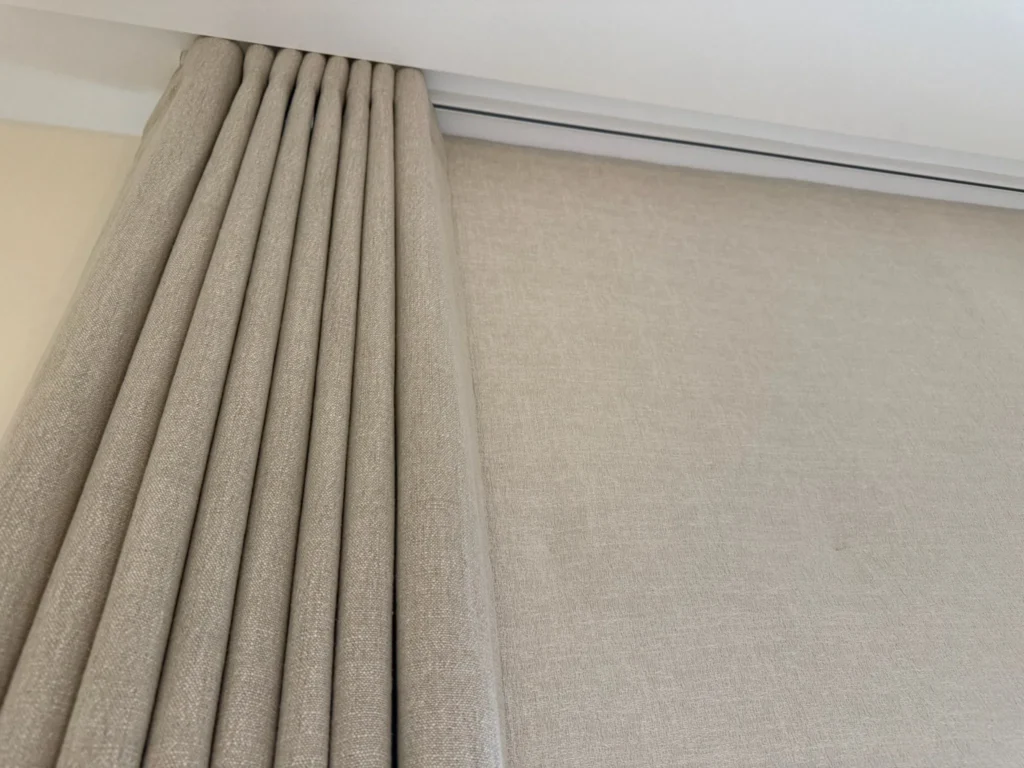
| Interlining | A soft extra layer sewn between the fabric and the lining | A fuller, heavier fall and more thickness |
| Blackout lining | A densely coated lining made to block light | Light control, and an extra layer at the window |
Interlined curtains are something we make in our workroom, and the extra layer is also why they hang so softly.
Is it the lining or the fit that matters more?
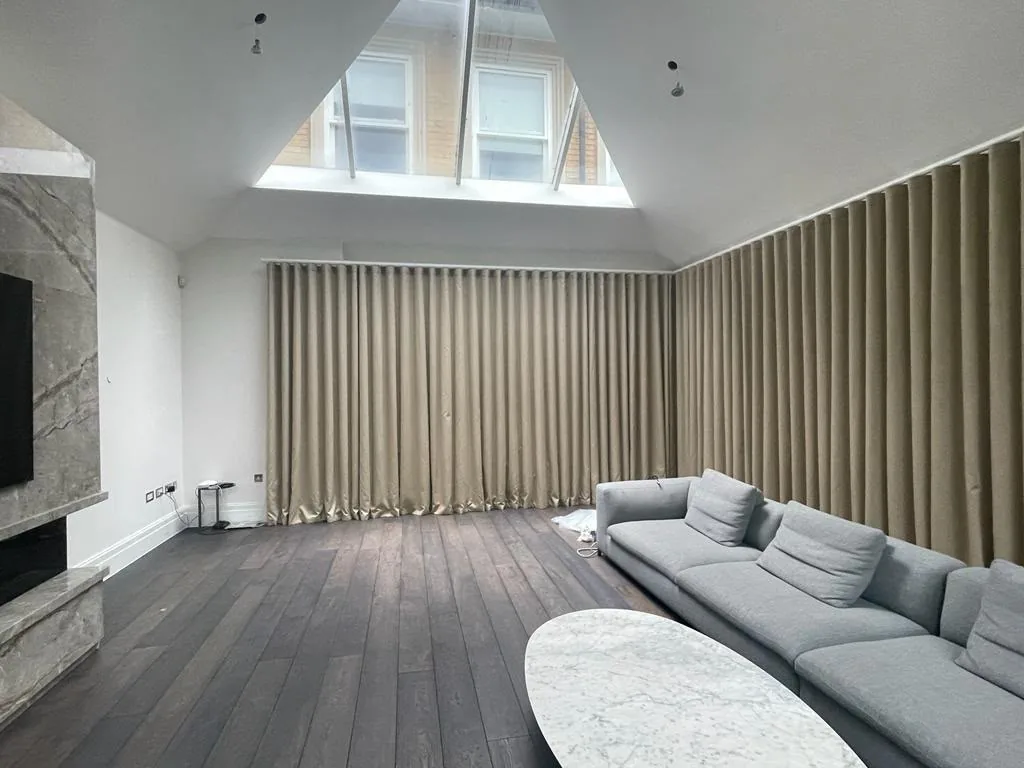
Both count, but fit is the one people overlook. Warm air in a room meets the cold glass, cools and drops, and it can slip out around the sides and under the hem of a curtain that does not seal the window. A heavy lining cannot do much if there is a gap for the air to move through.
Think of a curtain as a second layer in front of the window. It works best when it holds a pocket of still air between the glass and the room.
How should thermal curtains be fitted?
The same few points apply whichever lining you choose:
- Length: to the floor, or very close to it, so cold air cannot flow out beneath the hem.
- Width: wide enough to overlap the window recess or frame at each side, and to meet in the middle when closed.
- Position: hung close to the wall and set well above the window, so the curtain covers the whole opening.
- Fullness: curtains that are generously gathered sit more softly against the wall than flat, tight ones.
- Heading: a pelmet or a close-fitting heading at the top stops air spilling over the curtain.
Getting these right starts with accurate measurements, so it is worth reading our guide to measuring for curtains and blinds before you order.
Do heavier fabrics make a difference?
A thicker fabric adds another layer, so a heavy wool or a thick velvet will usually feel more substantial at the window than a light linen. A closely woven fabric lets less air pass through it than a loose weave.
That said, weight also brings practical questions. Heavy, interlined curtains need a sturdy pole or track and good fixings, and a lighter fabric with a good lining can suit a smaller window better. This is a conversation to have when you choose the made-to-measure curtains for a room.
When are thermal curtains most worth having?
They make the most sense where a window is a clear weak point in the room:
- Large areas of glass, such as a wall of windows or glazed doors.
- Older windows, including sash and single-glazed windows, where air and cold come through more easily.
- Bedrooms, where you sit still for hours and notice a cold wall or window.
- Rooms that face north or east and rarely catch the sun.
- Front doors and hallways, where a curtain across the door can cut down draughts.
In a small, well-glazed room that is warm already, a standard lining may be all you need.
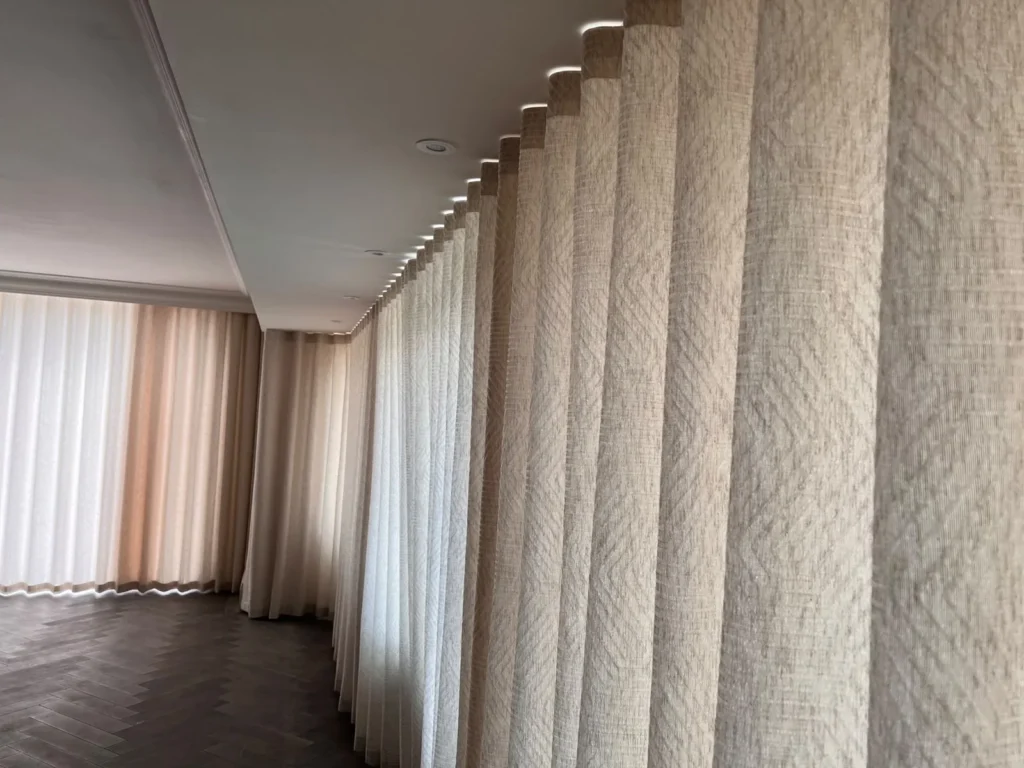
For wide glazing, there is an example of what is possible in our wave curtains at bifold doors project.
What else helps keep a room warmer in winter?
Curtains work best as part of a few simple habits:
- Close the curtains at dusk, before the room loses its warmth, and open them on bright days to let the daylight in.
- Check the window itself for gaps. If you can feel a draught around the frame, draught-proofing it will help the curtains do their job.
- Draw the curtains fully across, so there is no gap in the middle.
- Keep furniture clear of the curtains, so they can close and hang properly.
Should you choose thermal lining for your curtains?
If a window is cold and you want curtains that feel substantial, a thermal lining or an interlining is a sensible thing to ask about. Choose the fit and the fabric first, then the lining that suits the room.
It is also worth thinking about colour while you are at it: our guide on how to choose a colour scheme for a room is a good place to start when you are picking the fabric itself.
If you would like to talk it through, tell us about the room and the windows, and we will advise on lining and weight.