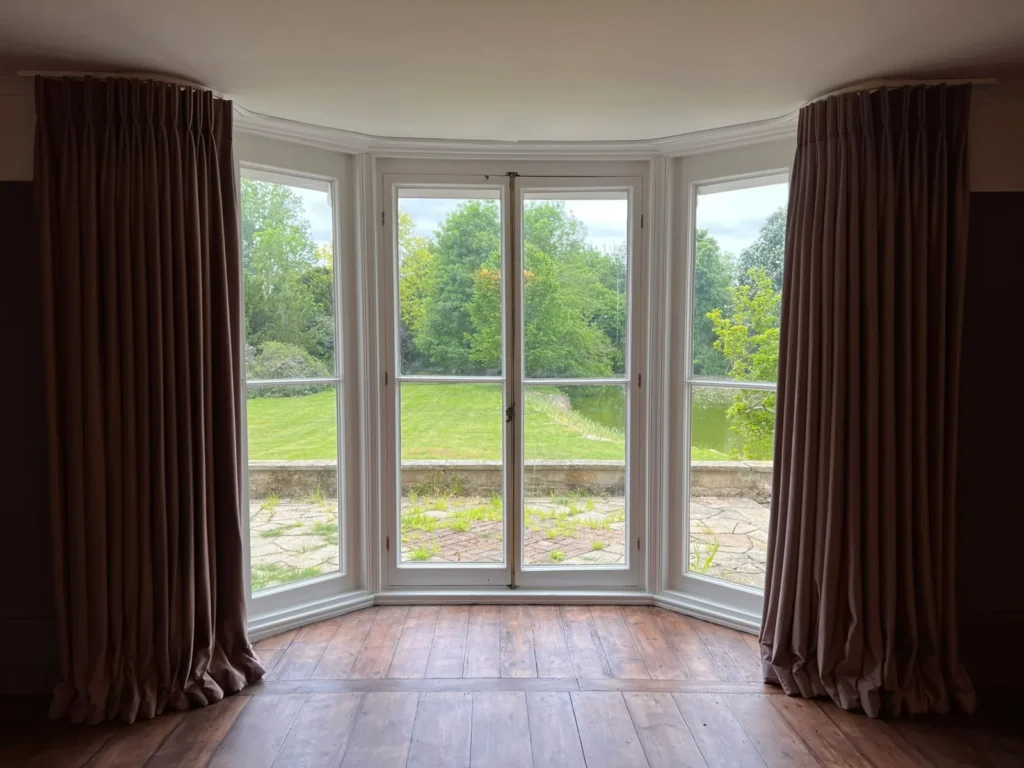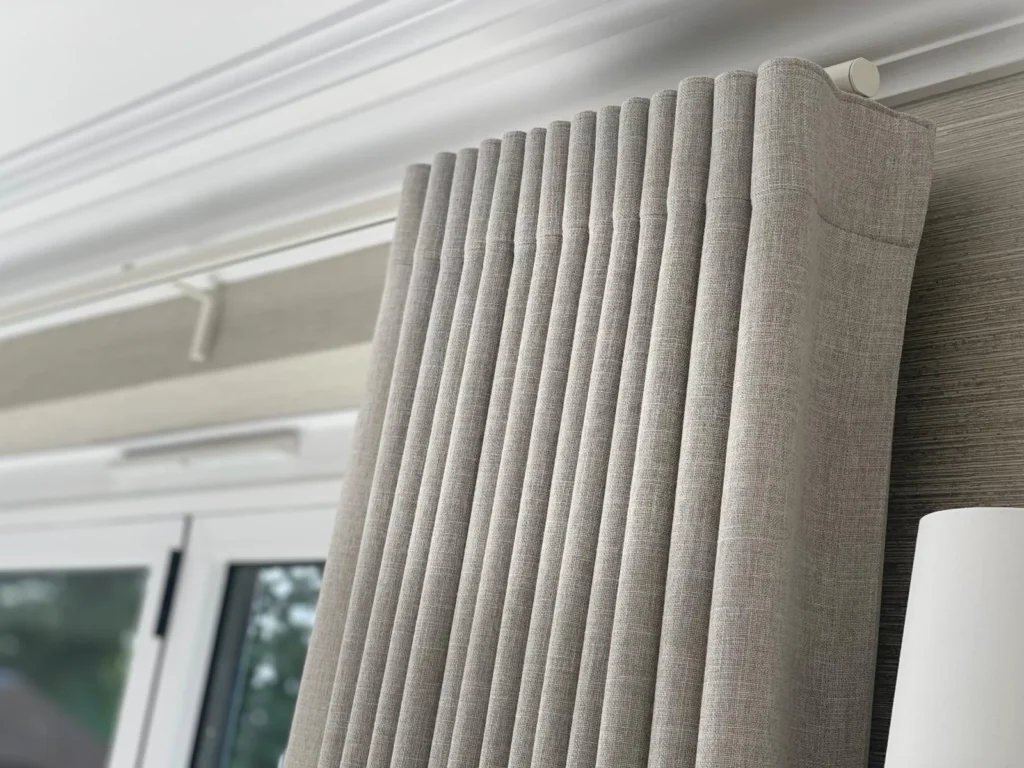


Interlining is a soft extra layer sewn between a curtain’s face fabric and its lining. It gives curtains more body and a fuller, heavier fall. You do not need it for every pair, but it makes the most difference with generous headings, large windows and lighter fabrics that might otherwise hang thinly.
What is interlining made from?
Interlining is a soft, napped cloth, usually cotton or a cotton blend. You never see it from the room, because it sits hidden inside the curtain. Two types are common in workrooms:
- Bump: a thick, soft, padded cloth. It is the heavier of the two and gives the fullest, most rounded fall.
- Domette: a lighter, brushed cotton cloth. It adds body and weight without the bulk of bump, and it comes in different weights.
Suppliers describe weights differently, so the maker should tell you exactly which cloth is going into your curtains.
How does interlining change the way a curtain hangs?
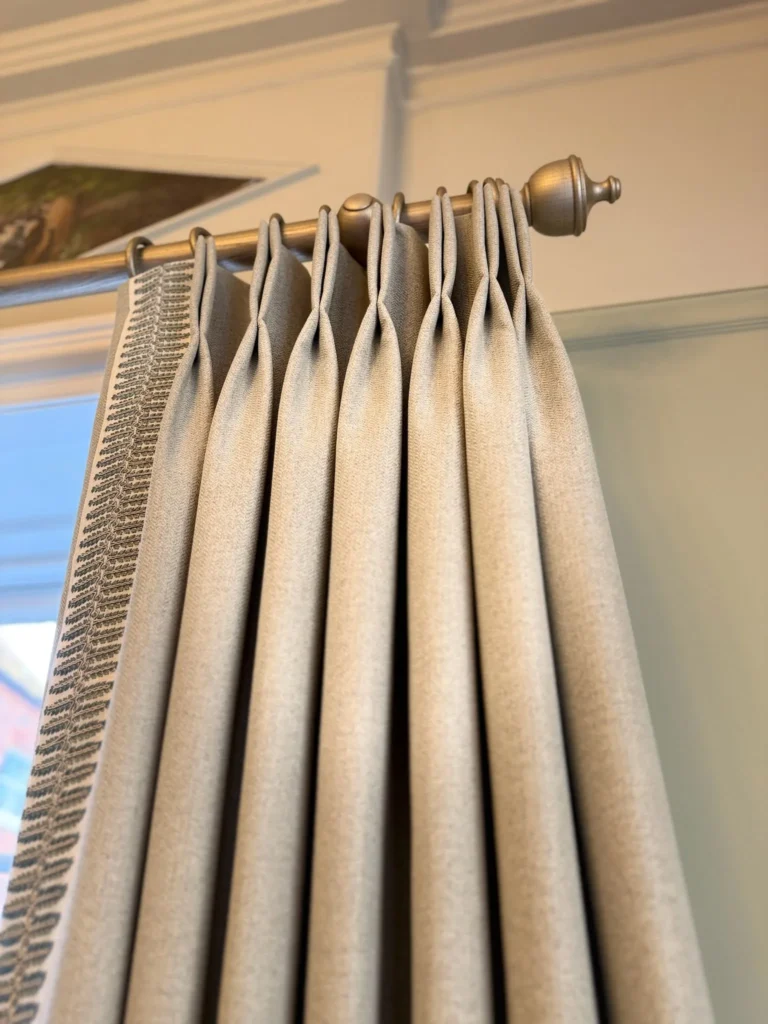
The extra layer adds weight, and weight helps a curtain fall in deep, even folds. It also pads out the fabric, so the folds look softer and rounder rather than flat.
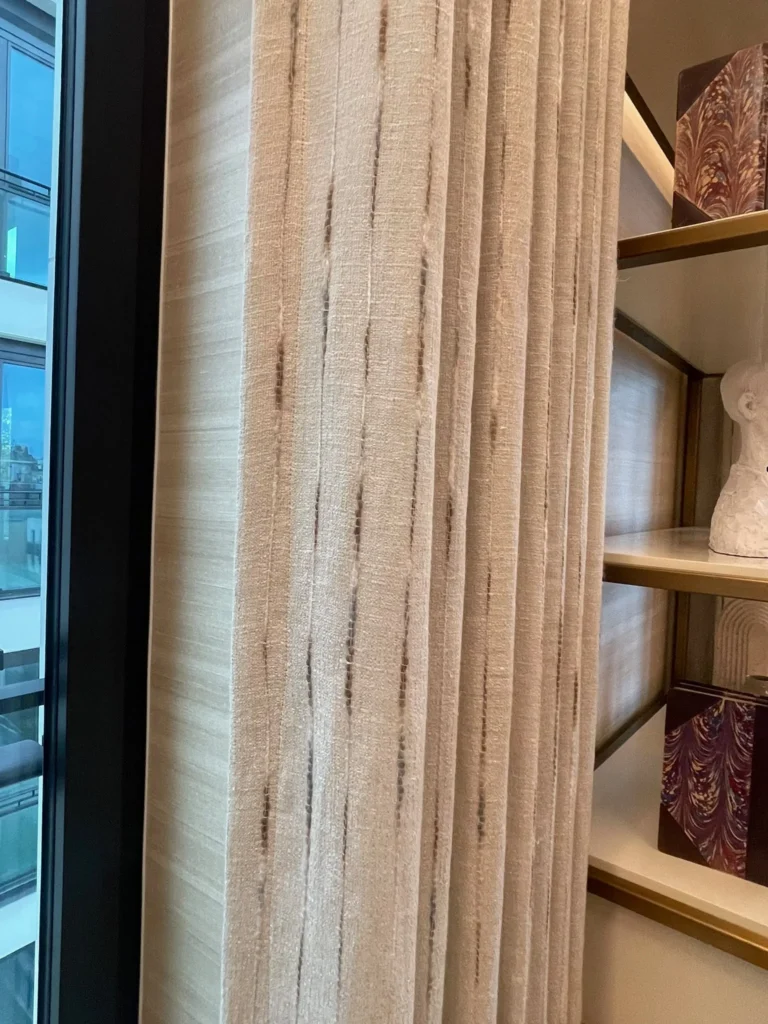
Lighter fabrics gain the most. A fine cloth can look thin on its own, and interlining gives it substance.
Bump or domette: which suits which curtain?
| Interlining | Feel | Tends to suit |
|---|---|---|
| Bump | Thick, soft, heavy | Full-length curtains, deep headings, rooms where you want a generous look |
| Domette | Lighter, smoother | Lighter fabrics, shorter curtains, a softer body without bulk |
The right choice depends on the face fabric, the heading and the size of the window. It is a decision to make with your maker when you choose the fabric.
Which curtains benefit most from interlining?
- Full-length curtains in period rooms, where a generous fall suits the proportions.
- Curtains in lighter or finer fabrics that need more body.
- Large and tall windows, where a lot of fabric is on show.
- Headings that rely on depth, such as double or triple pinch pleats. Our guide to curtain heading types explains how they differ.
Our made-to-measure curtains can be interlined or lined, and we make every pair in our workroom.
When can you do without it?
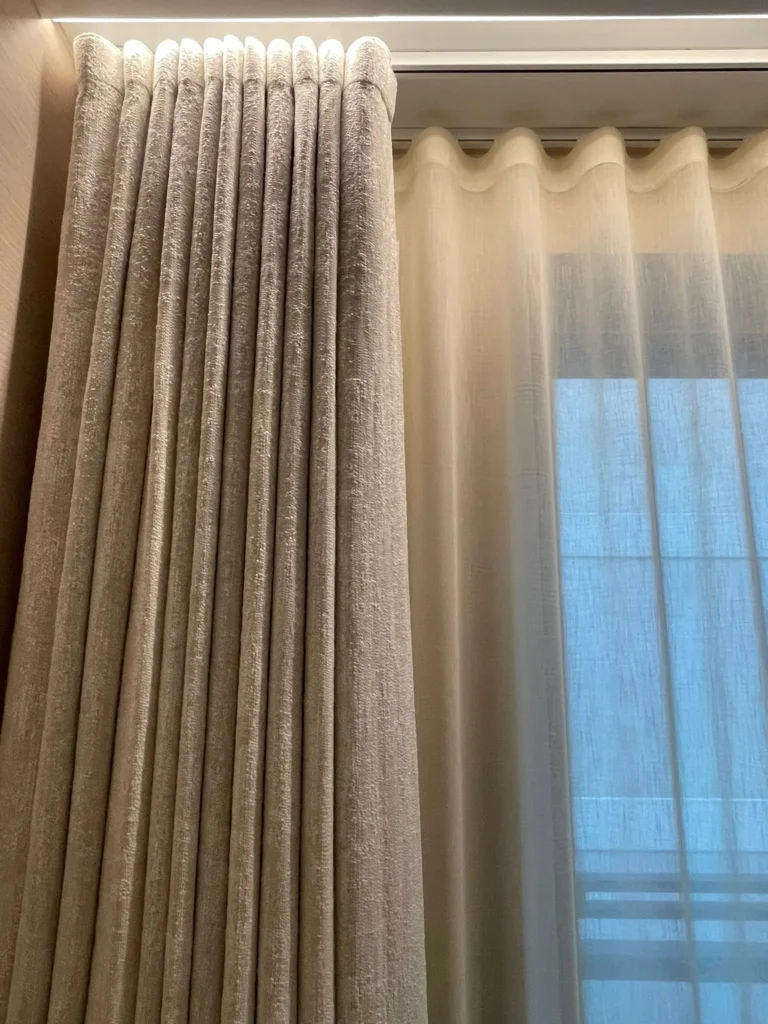
Interlining is a choice, not a rule. A well-lined curtain in a fabric with good weight of its own can hang beautifully without it.
You might also skip it for small windows, simple casual headings, or a curtain that is already thick. For a comparison of the layers behind a curtain, see our piece on thermal, blackout and interlined linings.
What should you plan for with interlined curtains?
Interlined curtains are heavier, so the hardware matters. Think about this before the curtains are made:
- Choose a pole or track that suits the weight of the finished curtain.
- Make sure the fixings go into something solid.
- Allow room for the curtains to stack back, because the extra layer makes them fuller.
- Ask about care. Check the right cleaning method with your maker before you wash anything.
If you are unsure about measurements, our measuring guide is the place to start.
How are interlined curtains made?
Making them takes care. The interlining is cut to size and held in place between the face fabric and the lining, so the layers move together and hang as one. Done well, you never see it.
When the curtains are hung, we dress them, setting each fold by hand so they fall as they should. You can see pinch-pleat curtains finished this way in our floral landing curtains project.
If you are weighing up a new pair, tell us about the room and the fabric you have in mind, and we can talk through whether interlining is right for it.