
Curtains do not have to touch the floor, but they should clearly decide: either just clear it, just kiss it, or pool on it on purpose. A hem that hovers by a few centimetres looks like a mistake. The right length depends on your floor, radiators and how the room is used.
What are the three curtain lengths?
Most curtains fall into one of three lengths. Each suits a different room and a different way of living.
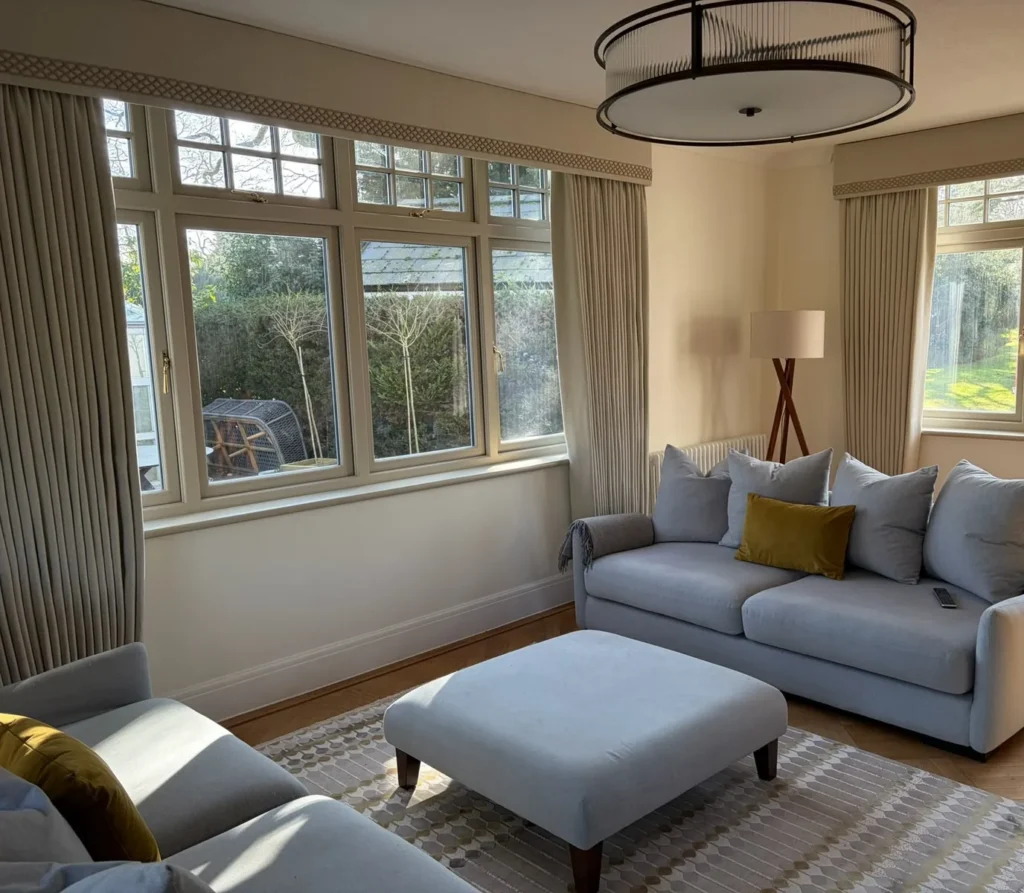
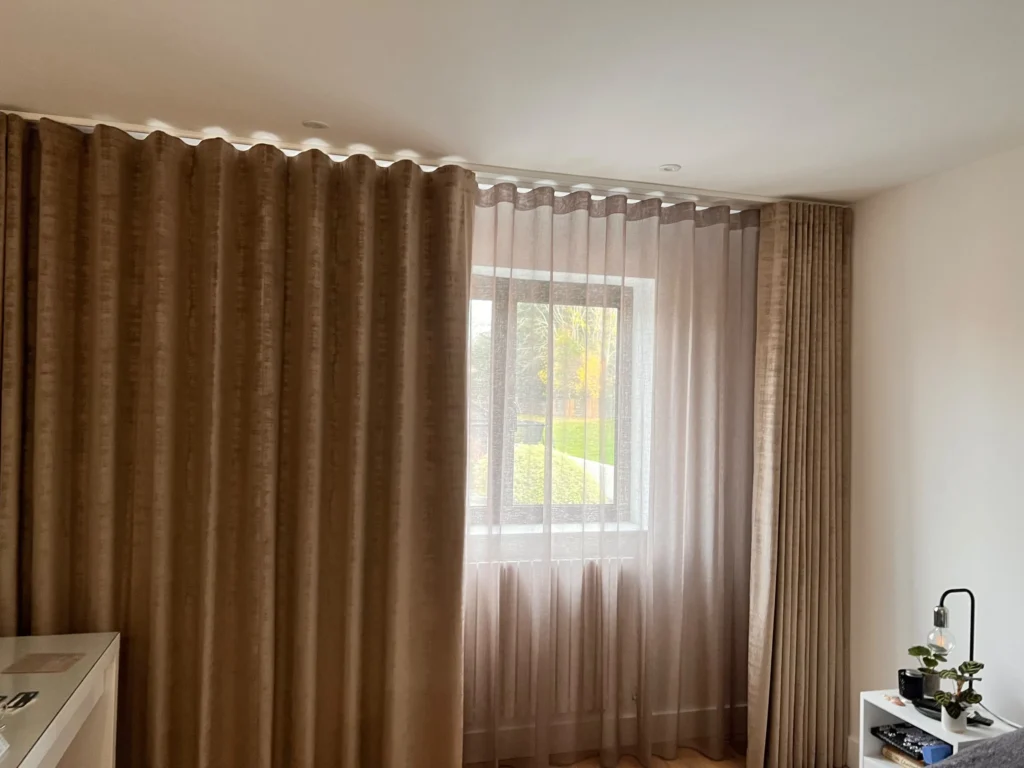
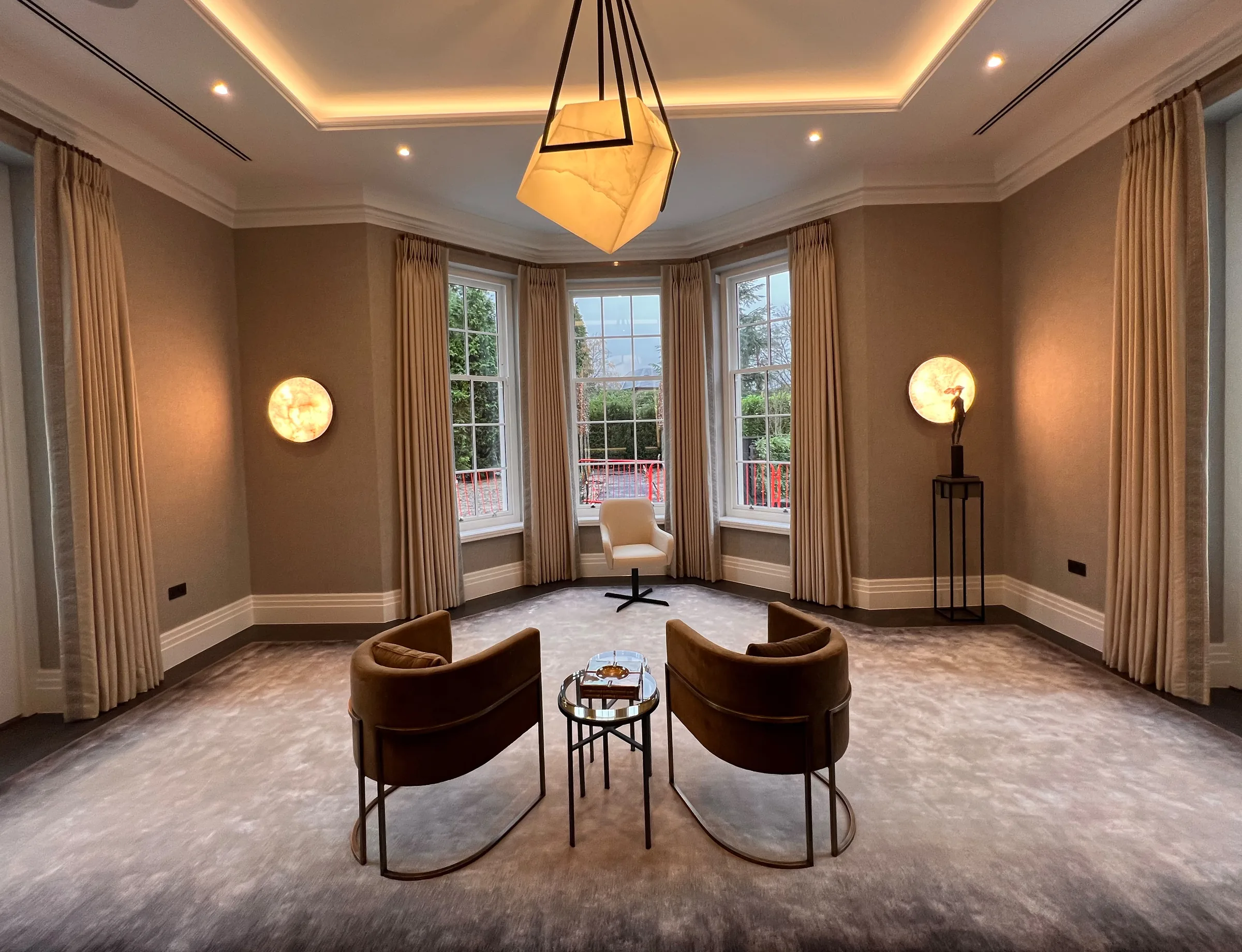
- Clearing the floor: the hem stops a small, even gap above the floor. It is practical where curtains are drawn every day, or where the floor is not quite level.
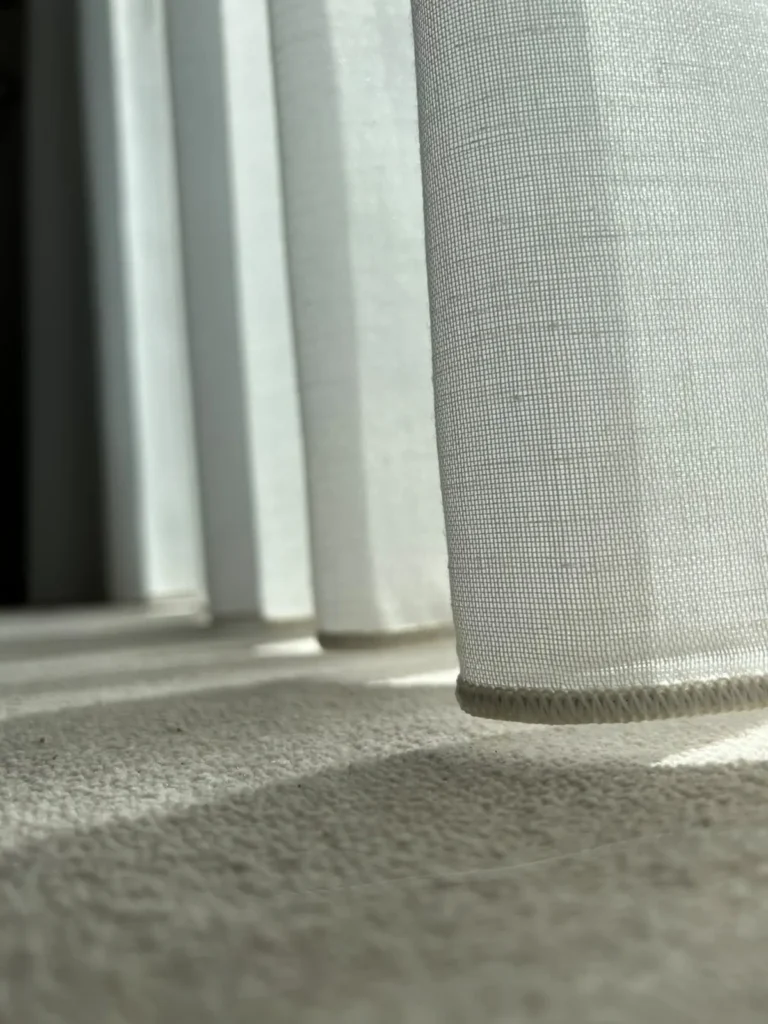
- Kissing the floor: the hem just touches the floor with no fabric lying on it. It looks tailored and is the length most people picture.
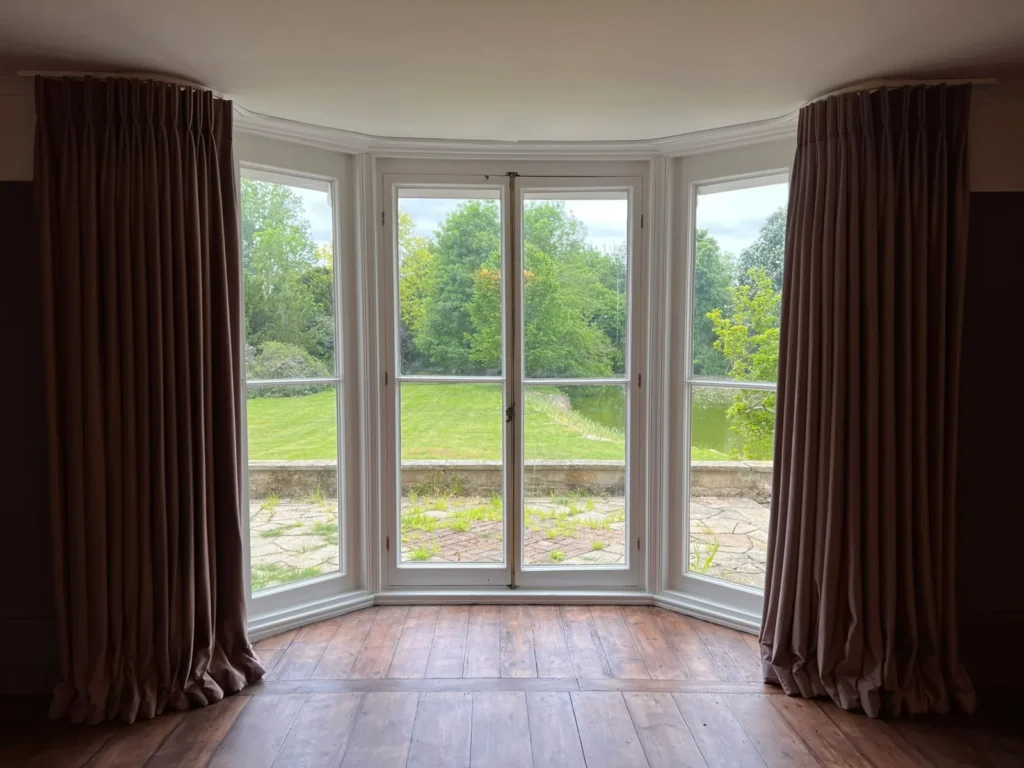
- Pooling: extra fabric rests on the floor in soft folds. It is a deliberate, dressy look that suits curtains which are not moved often.
So, should curtains touch the floor?
They do not have to. What matters is that the length looks intended. A small, even gap reads as a clear decision, while a hem that stops partway down the window tends to look as though the curtains were made for a different room.
A kiss or a small clearance is the safe choice for most rooms. Pooling is the one that needs a reason, so it is worth being sure before you choose it.
Which length suits which room?
There is no single rule, but these pairings are a sensible starting point.
| Room | Usual choice | Why |
|---|---|---|
| Living room | Kiss or clear | A tailored line that still opens and closes easily |
| Bedroom | Kiss, or a soft pool | Curtains are often left drawn, so a fuller look works. See curtains or blinds for a bedroom |
| Kitchen or dining area | Clear, or sill length | Less fabric near the floor and the cooking |
| Glazed or French doors | Clear | The hem must move freely past the doors |
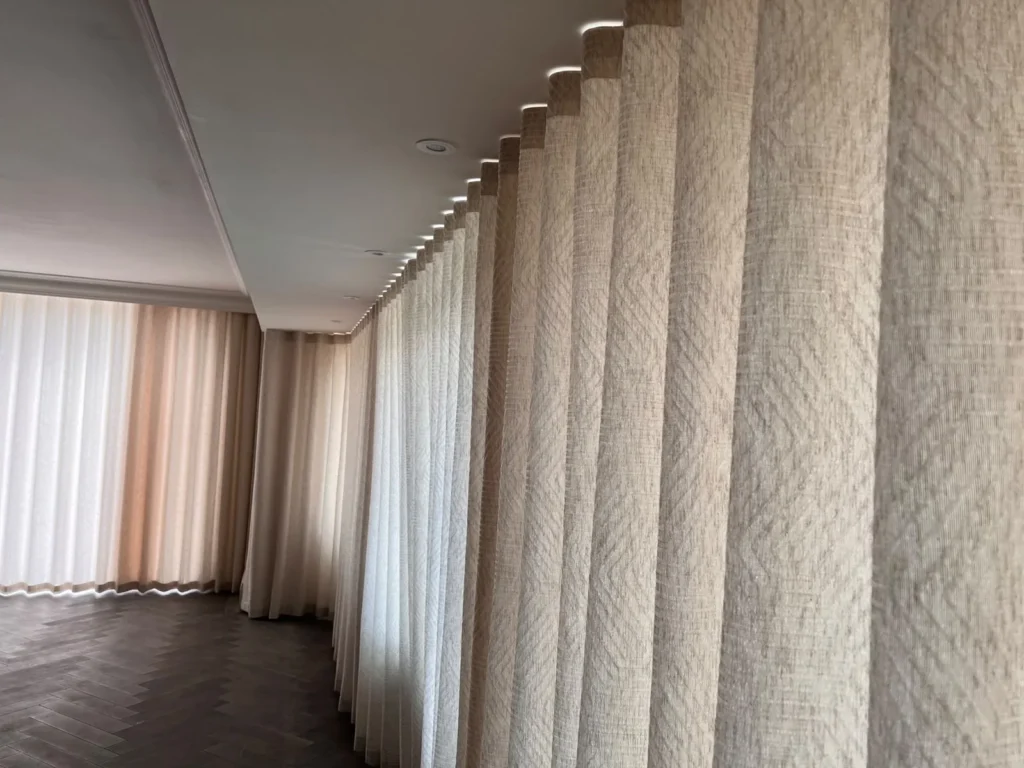
Tall windows show the effect most clearly, as in our curtains for 12ft arched windows, where the length carries the whole look.
What about radiators, sills and uneven floors?
The window itself often makes the decision for you. Think through these before you settle on a length:
- A radiator under the window: choose a length that stops at the sill, or one that leaves the radiator uncovered when the curtains are closed.
- A deep sill or a piece of furniture in front: sill-length curtains avoid fabric catching on whatever sits below. Café curtains follow the same idea.
- An uneven floor: a clearing hem is more forgiving than a kiss, because a hem that touches in one corner will float in another.
Does the floor type change the answer?
It can. A hem that touches a hard floor may gather dust along the edge. On carpet, the pile can catch the hem and pull at it as the curtains are drawn.
Either way, the length is only as good as the measurement behind it. We have a separate guide for that, so see how to measure for curtains and blinds before you decide.
When does pooling make sense?
Pooling asks more of the room than the other two lengths. Check these before you choose it:
- The curtains will stay mostly open or mostly closed, rather than being drawn daily.
- The fabric is full and soft enough to fall in generous folds.
- The floor around the window is not a busy walkway.
If you answer yes to all three, a pool can look rich and relaxed. If not, a kiss gives you the same sense of length with far less fuss.
How do we decide the length?
Every pair of our made-to-measure curtains is cut to the length you choose, so it is best settled before the fabric is cut, not afterwards. The heading, the pole or track and the floor all play a part, and we talk them through with you for each window.