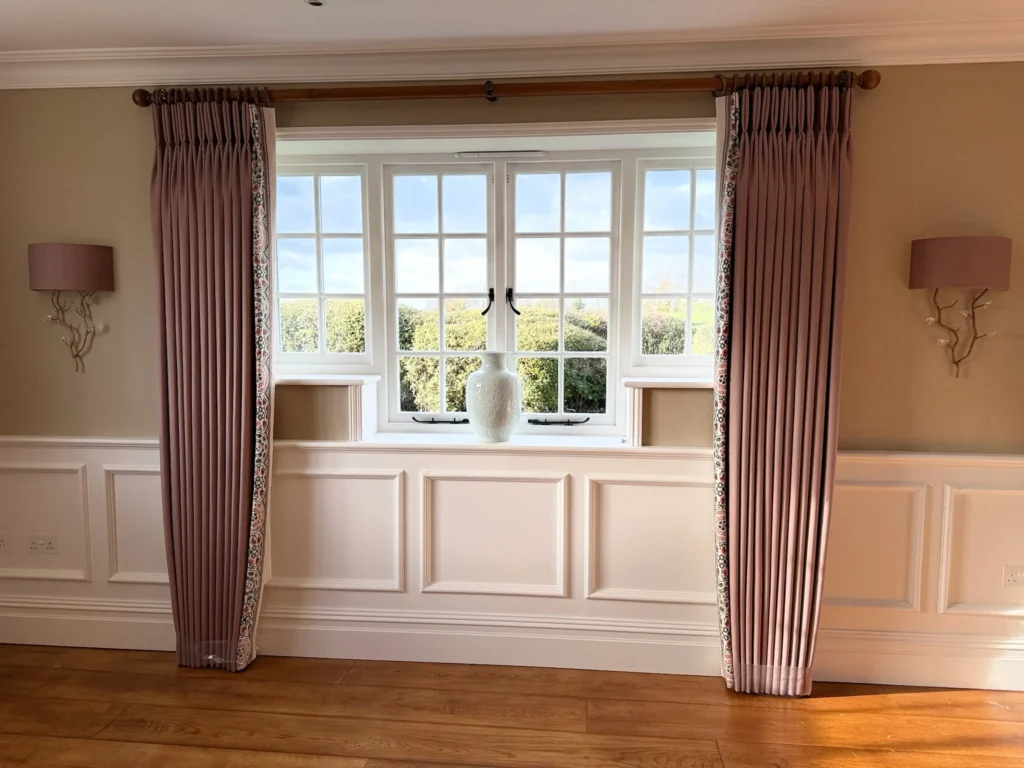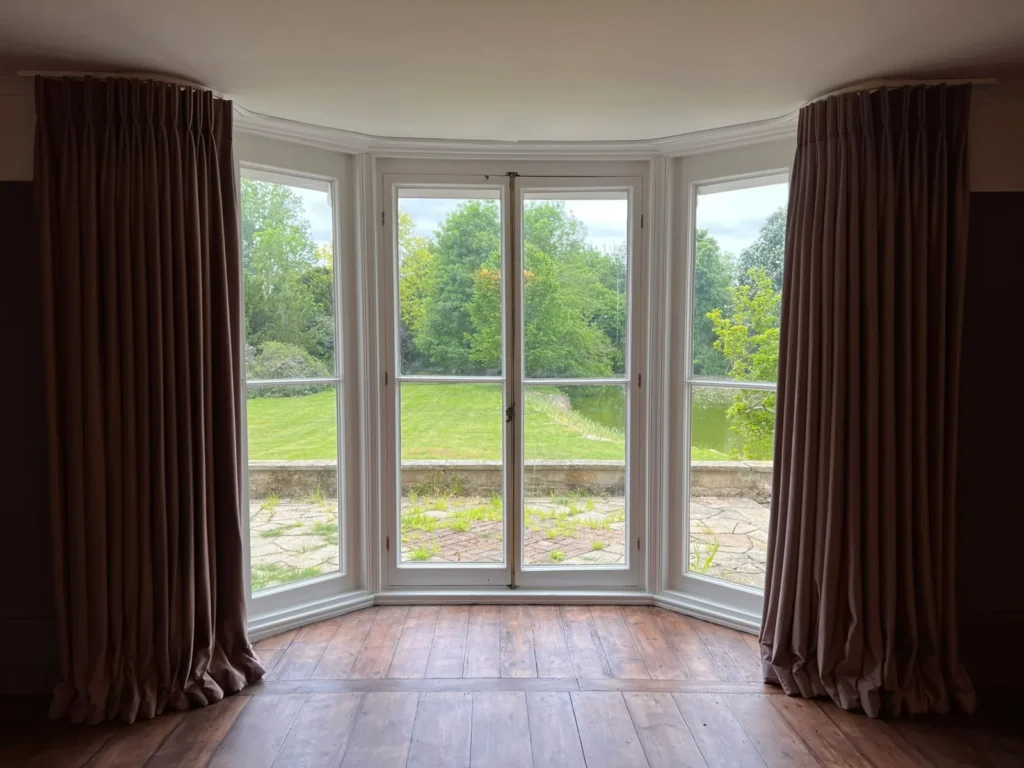


Either can work in a bedroom, and the choice usually comes down to light, layers and the shape of the window. Curtains give softness and a fuller finish. Blinds give a tidy line and suit smaller or awkward windows. Many bedrooms are happiest with both, working together.
What is the real difference between curtains and blinds?
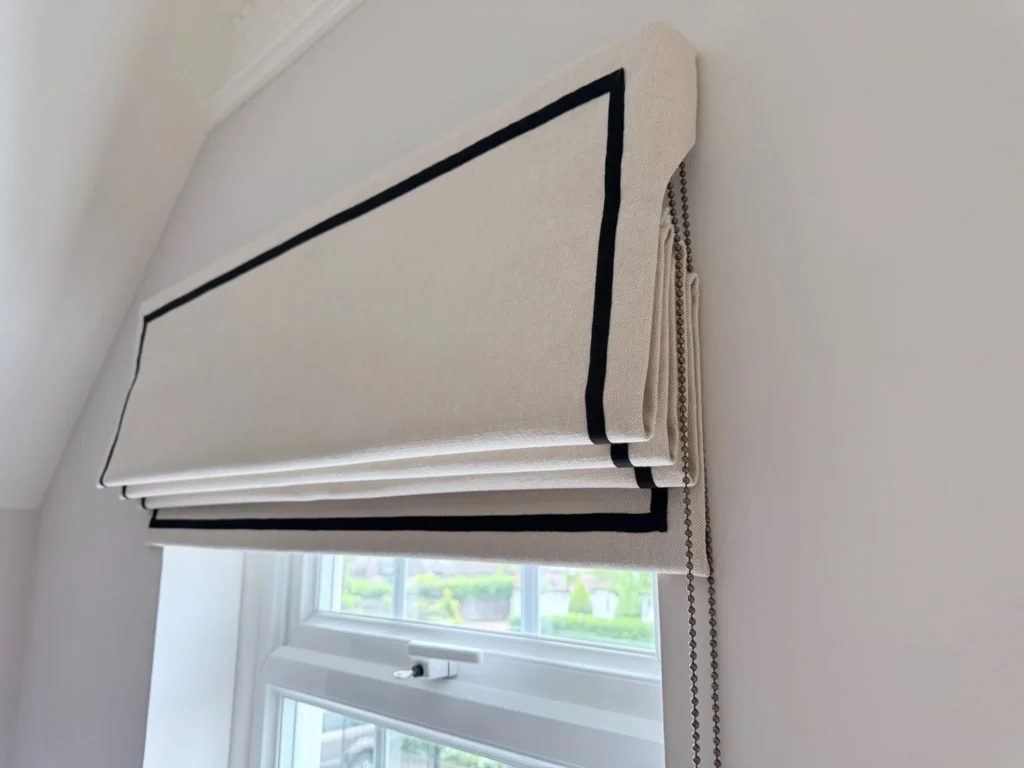
Curtains hang from a track or pole and fall in folds. They add softness to a room and frame the window even when they are open. Roman blinds fold up neatly in the recess or just outside it and leave the wall around the window clear.
In a bedroom, a few things tend to decide it:
- Softness: curtains soften hard corners and echo the bed linen or headboard.
- Tidiness: a blind sits close to the glass and keeps the wall space free for furniture.
- Layers: curtains can carry a lining, while a blind can sit behind them as a second layer.
- Fabric: both can be made up in plain linens or bold prints.
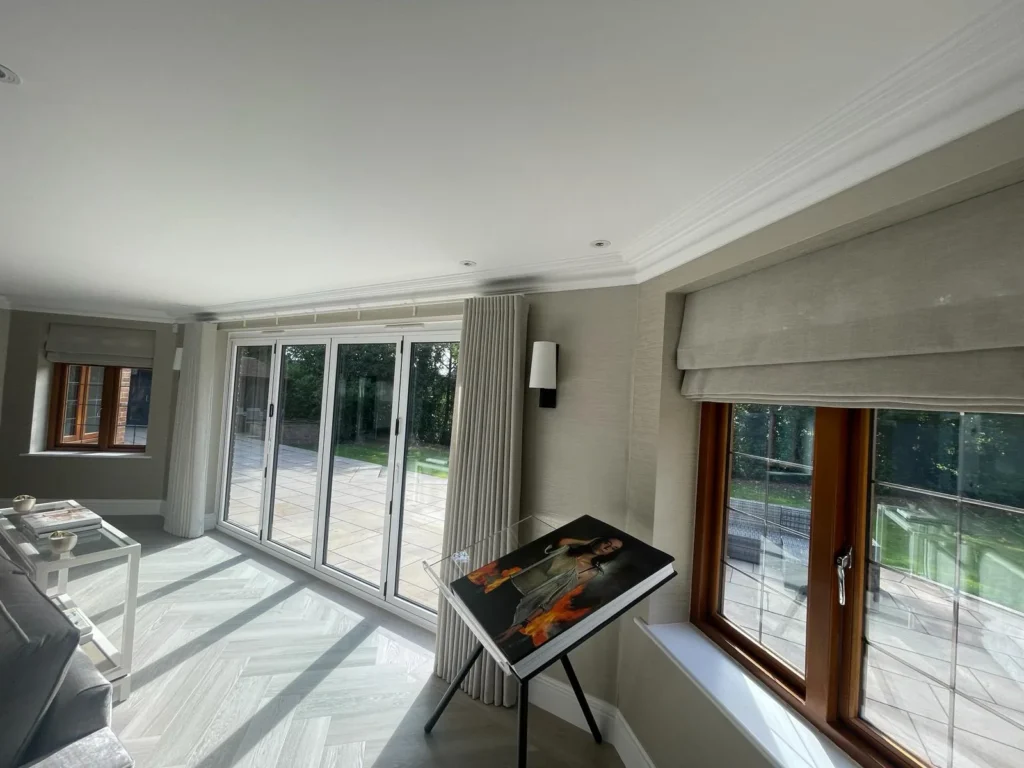
Which suits your window better?
The window often answers the question before you do. A deep recess with a radiator beneath it is a natural home for a Roman blind. A wide window or a wall of glazing usually looks right with curtains, which can stack back and leave the glass clear in the day.
- Small or narrow windows: a Roman blind, or a short pair of curtains hung wide and high.
- Tall windows: floor-length curtains, which add height to the wall.
- Bay windows: a Roman blind in each section, or curtains across the whole bay. Our guide to curtains for bay windows goes through the options.
- Sloping ceilings: a blind fitted to the shape of the glass is often the neater answer.
If you are unsure what to measure, our measuring guide shows what we need to know.
How do you make a bedroom darker?
Many people like a darker room to sleep in. The usual answer is a blackout lining, which is a lining made to keep daylight out. It can be sewn into curtains or added to a Roman blind.
We would not promise a room will be completely dark. Light can still slip round the edges of a blind, or between the curtains and the wall. Curtains that are wider than the window and hang close to the wall leave smaller gaps. A roller blind behind the curtains is another option, and we supply and fit blackout rollers alongside our made-to-measure work.
A lining also gives curtains more body. We explain the extra layer that makes them fall fuller in our post on what interlining is.
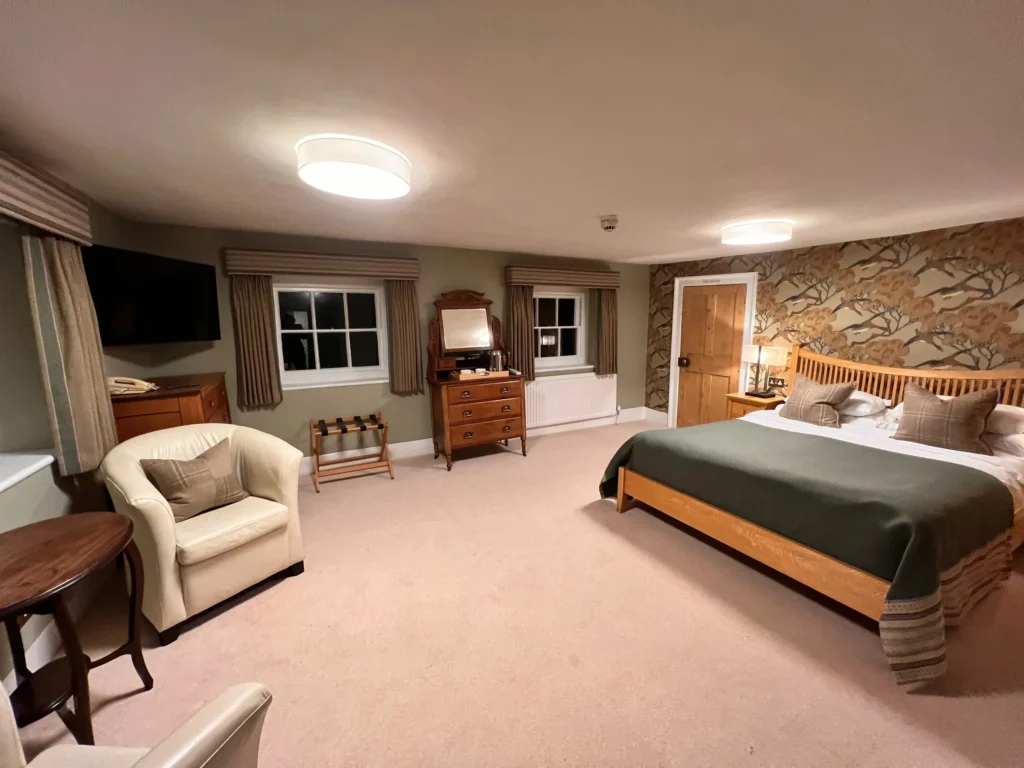
Can you use curtains and blinds together?
Yes, and it is one of the most useful bedroom arrangements. The blind does the practical work close to the glass. The curtains sit in front for softness and for the evening.
- Choose a plain or quiet blind and let the curtains carry the pattern, or the other way round.
- Pick one colour that appears in both, so the layers look planned.
- Allow room on the wall for the curtains to stack back without covering the blind.
You can see the idea in our red-print pinch-pleat curtains and a Roman blind in a bedroom. Our made-to-measure blinds and made-to-measure curtains pages show the range side by side.
How do you choose for style and fabric?
Start from the bed. The headboard, the bed linen and the colour of the walls tell you what the window treatment needs to do. If the bed is patterned, a plain curtain usually rests the eye. If the room is plain, a printed Roman blind or a border can bring in some character.
| Option | Look | Suits |
|---|---|---|
| Curtains | Soft, full, framing the window | Wide or tall windows, larger rooms |
| Roman blind | Neat folds, close to the glass | Recesses, small windows, sloping ceilings |
| Both layered | Soft in front, tidy behind | Rooms where you want light control and style |
Ask to see fabric samples in the room itself, in the morning and in the evening, before you decide.
What should you settle before you order?
A short list will save you changing your mind later:
- How much daylight you want in the room at night and in the morning.
- Whether the window has a recess, a radiator or furniture in front of it.
- Whether you want a track or a pole for the curtains.
- The colour and pattern of the bed linen and headboard.
- Whether you would like a blind, curtains or both.
Every piece is made to measure, so there is no price list. Email us rough dimensions and we will give you a guide price.