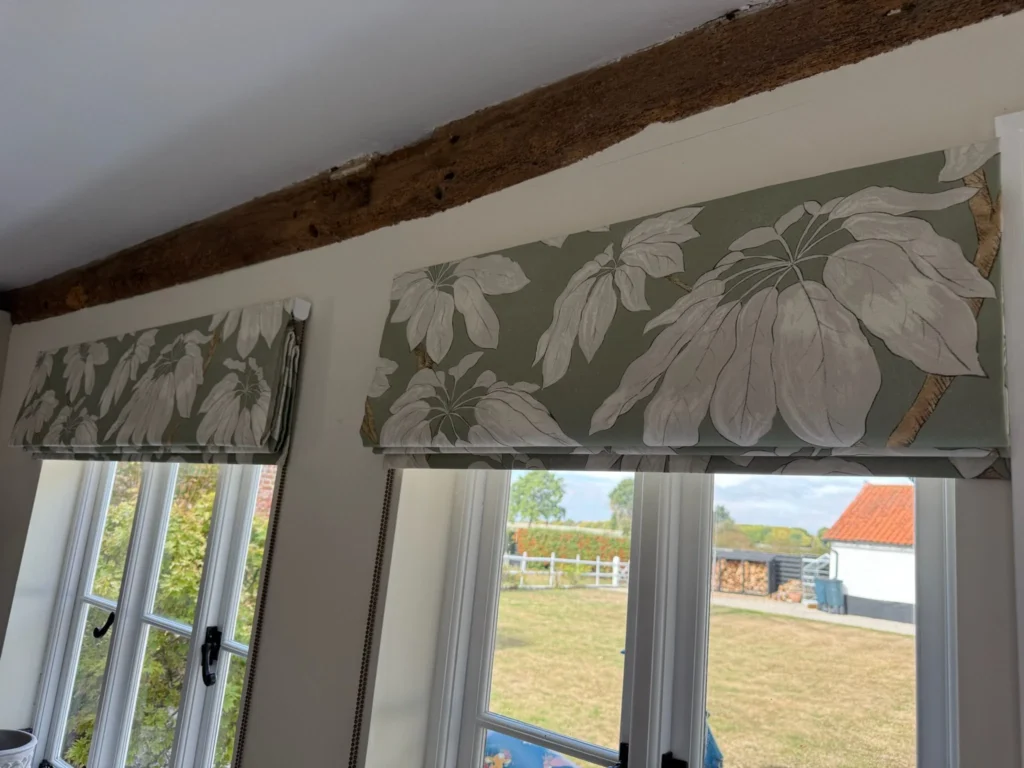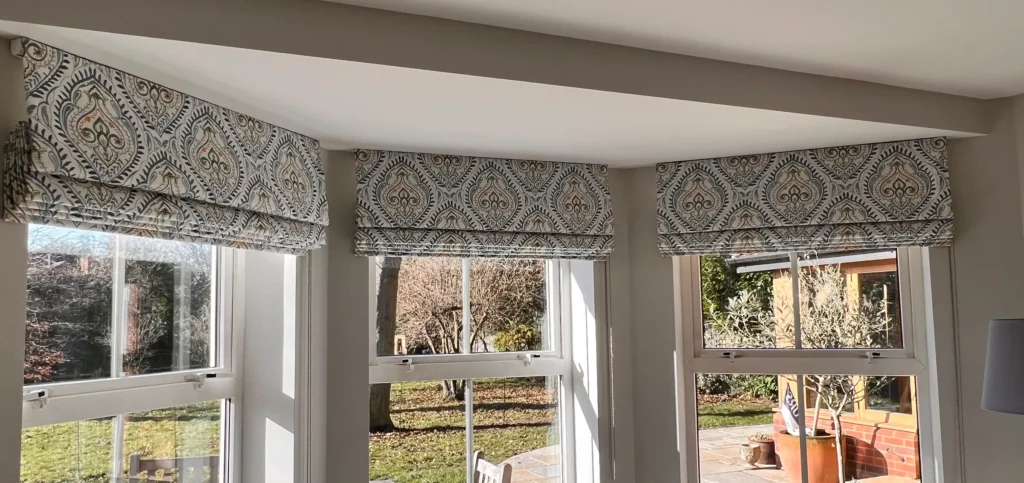


A Roman blind folds up in soft pleats and suits rooms where you want fabric, pattern and a tailored finish. A roller blind rolls flat around a tube and suits a clean, simple line. Which is right depends on the look you want, how much light control you need, and how much space the blind takes when raised.
What is the difference between a Roman blind and a roller blind?
A Roman blind is made from a length of fabric that folds into even pleats as it is raised. A roller blind is a flat piece of fabric that winds around a tube at the top of the window.
That one difference shapes almost everything else: how the blind looks, how it handles light and how much room it needs when it is up.
It also affects who makes it. We make Roman blinds in our own workroom, in the fabric you choose. Roller blinds are supplied, measured and fitted by our team.
How do they look in the room?
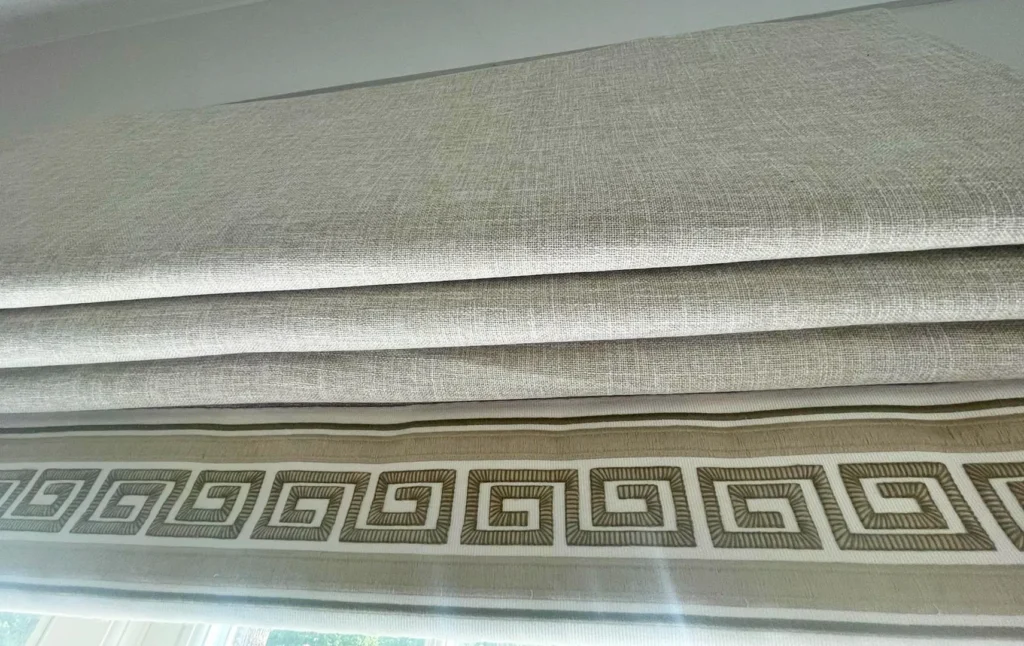
A Roman blind is soft and tailored. It shows off a print, a linen or a border, and it can sit under a pelmet or alongside curtains as part of one scheme.
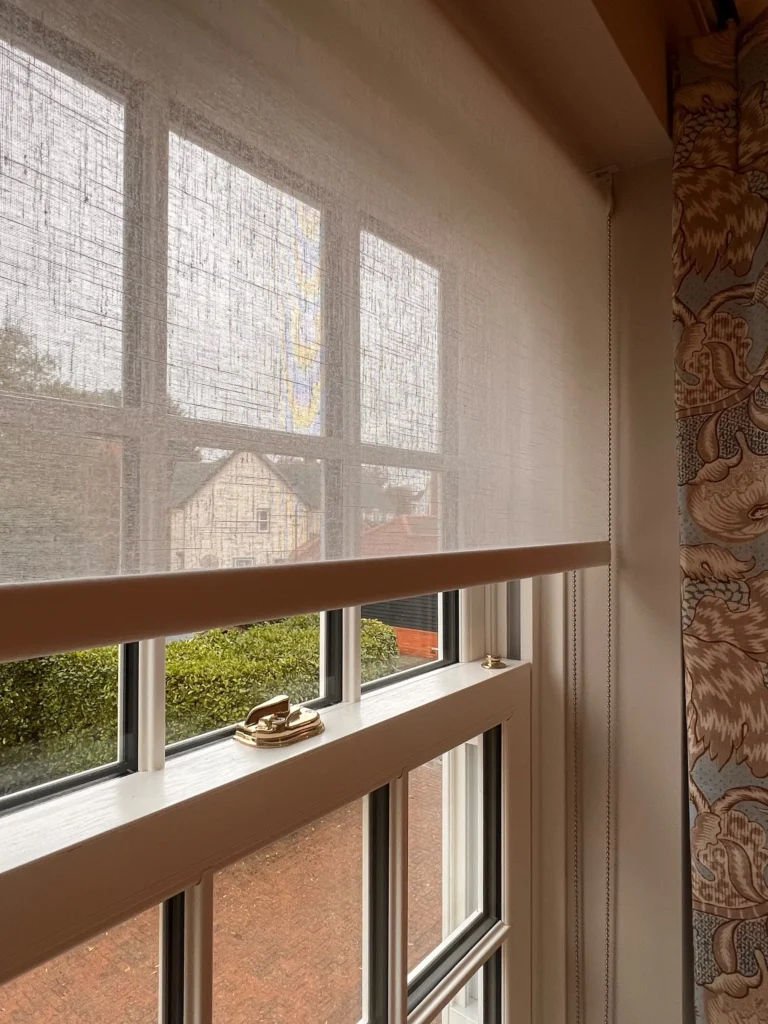
A roller blind is flat and plain, which is its strength. It keeps a window quiet and modern, and it works well where the fabric should not compete with anything else in the room.
- Roman blind: pleated folds, room for pattern, borders and trims.
- Roller blind: a smooth, flat face and a minimal profile.
Which gives better control of light?
Both can be made in lighter or heavier fabrics, so the answer depends on the cloth rather than the blind type. A sheer fabric softens daylight and keeps a view. A heavier or lined fabric cuts more of it out.
A roller blind lies flat in the window, and a Roman blind has folds that can sit slightly away from the glass. Either can be paired with curtains, or with a second blind behind, when a room needs more than one layer. Our guide to curtains or blinds for a bedroom looks at layering in more detail.
How much space does each take when raised?
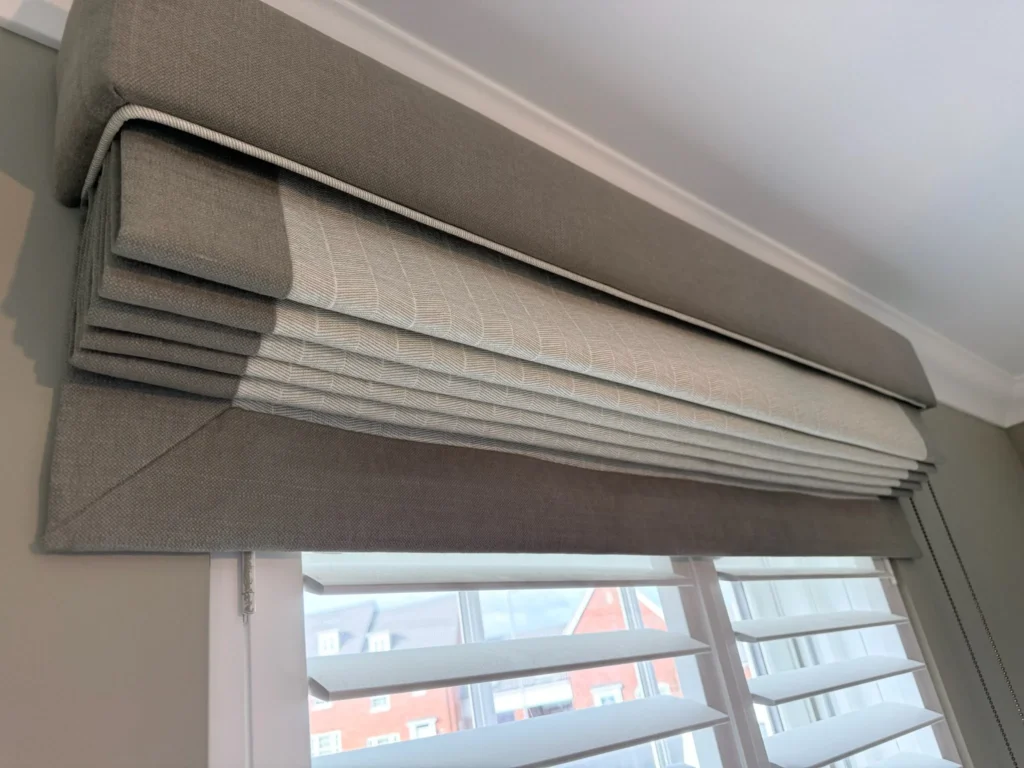
A raised roller blind rolls up tightly and takes up little of the window. A raised Roman blind stacks into a pile of folds, and that pile grows with the length of the blind and the weight of the fabric.
On a tall window the stack is worth planning for. If the blind is fitted inside the recess, the folds can cover some of the glass even when it is up. Fitting it outside the recess leaves the glass clear but needs wall space above the window.
Which suits which room?
These are guidelines rather than rules, and plenty of rooms suit either.
| Room | Often a good fit | Why |
|---|---|---|
| Living room | Roman | Fabric and pattern can match the curtains |
| Bedroom | Either, often layered | A roller behind curtains or a Roman blind |
| Kitchen | Roller or a simple Roman | A flat, plain face is easy to live with |
| Study | Either | A matter of look and glare |
| Modern extension | Roller | A slim line beside wide glazing |
For care, our note on how to clean Roman blinds explains what to do and what to avoid.
Can I have both in one home?
Yes, and many homes do. Roman blinds in the rooms where fabric matters, and roller blinds where a plain finish suits better, can sit happily together. Keeping the colours related ties them to one scheme.
You can also motorise either type. Our page on motorised curtains and blinds explains the options, hardwired or rechargeable.
What should I decide before ordering?
A few questions settle most choices:
- Do you want the fabric to be a feature, or to stay out of the way?
- Will the blind sit inside the recess or outside it?
- Is it on its own, or layered with curtains or a second blind?
- How much of the window should stay clear when it is raised?
When you are ready to measure, our measuring guide shows what to take for each blind type. You can see finished work in Roman blinds made in our workroom, and our made-to-measure blinds page covers every type we make and fit.