
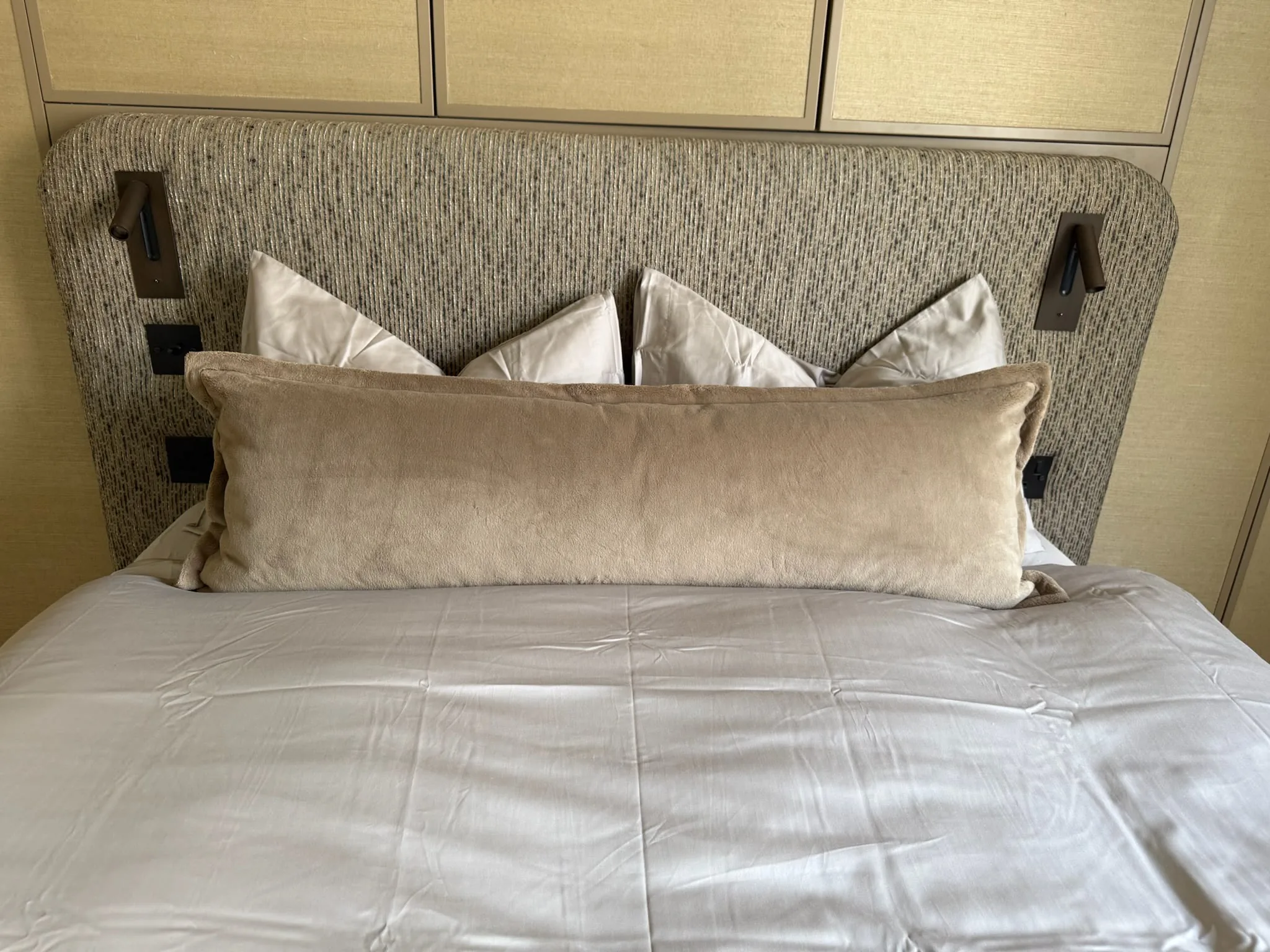
Start with a dry clean: vacuum the headboard with a soft brush attachment, then check for a care label before any liquid goes near it. Blot spills rather than rubbing, and test any cleaner on a hidden patch first. Some fabrics, such as velvet, should never be soaked.
How often should you clean an upholstered headboard?
Dust settles on a headboard just as it does on a sofa, and the fabric sits close to where you rest your head. A light vacuum every week or two keeps it fresh and stops dust working into the weave.
Use a soft brush attachment on a low setting, and work from the top down so loosened dust does not land on a part you have just cleaned. Take extra care along any buttons, piping or channels, where dust gathers.
- Vacuum gently, with the brush attachment rather than the bare nozzle.
- Go over buttons, seams and piping slowly.
- For velvet, brush in the direction of the pile.
What does the care label on the fabric mean?
Many upholstery fabrics carry a cleaning code, and it tells you what the fabric can take. If you can find a label on the headboard, or paperwork from when it was made, check it before you reach for a cloth.
| Code | What it usually means |
|---|---|
| W | Water-based cleaners only |
| S | Solvent-based dry-cleaning products only, so no water |
| WS | Either water-based or solvent-based cleaners |
| X | Vacuum or brush only, with no liquids at all |
If there is no label, treat the fabric as vacuum only until you know more. The maker of the headboard can often tell you what fabric was used.
How do you remove a stain from a fabric headboard?
Act while the mark is fresh, and keep the fabric as dry as you can. A headboard is slow to dry, and damp can mark the fabric or reach the padding behind it.
- Blot the spill with a clean, dry white cloth. Press, do not rub, because rubbing spreads the mark.
- Test your cleaner on a hidden patch, such as the back or the lower edge, and leave it to dry fully to check for colour change.
- If the code allows water, mix a little mild liquid detergent into lukewarm water and dab the stain with a barely damp cloth.
- Dab again with a cloth wrung out in clean water to lift the detergent.
- Leave the headboard to dry in the open air, away from direct heat.
If the code is S or X, or you are unsure, stop there and ask a professional upholstery cleaner.
Does the fabric change how you clean it?
Yes. Weave, fibre and finish all matter. Velvet should not be saturated, and its pile can show marks from rubbing. A tight plain weave usually copes with a little more than a loose, textured one. Wool and some delicate fabrics often suit vacuuming only.
Our guide to cleaning a velvet sofa covers pile direction and spills in more detail, and the same care applies to a velvet headboard. If you are choosing a fabric with easy care in mind, performance fabrics and when to use them is worth a read.
Can you take the cover off a headboard?
Some headboards are made with a removable cover, and some are fixed. A fixed cover is stapled or stitched over the padding and has to be cleaned where it sits. A removable one follows the same care instructions as the fabric, so a label that says no washing still means no washing.
When we make a headboard, it is made to the size of the bed and finished in the fabric chosen for the room. If you would like to know how yours was built before you clean it, tell the maker or ask us.
When is it better to re-cover a headboard?
Cleaning suits routine care and fresh marks. Re-covering suits a headboard that is worn, stained all over or simply no longer right for the room, provided the shape and padding underneath are sound.
- Clean it when marks are small, recent and the fabric allows it.
- Call a professional cleaner when the code is S or X, or the stain is large.
- Re-cover it when the fabric has worn, faded or stained beyond cleaning.
- Start again when the shape or padding is tired as well.
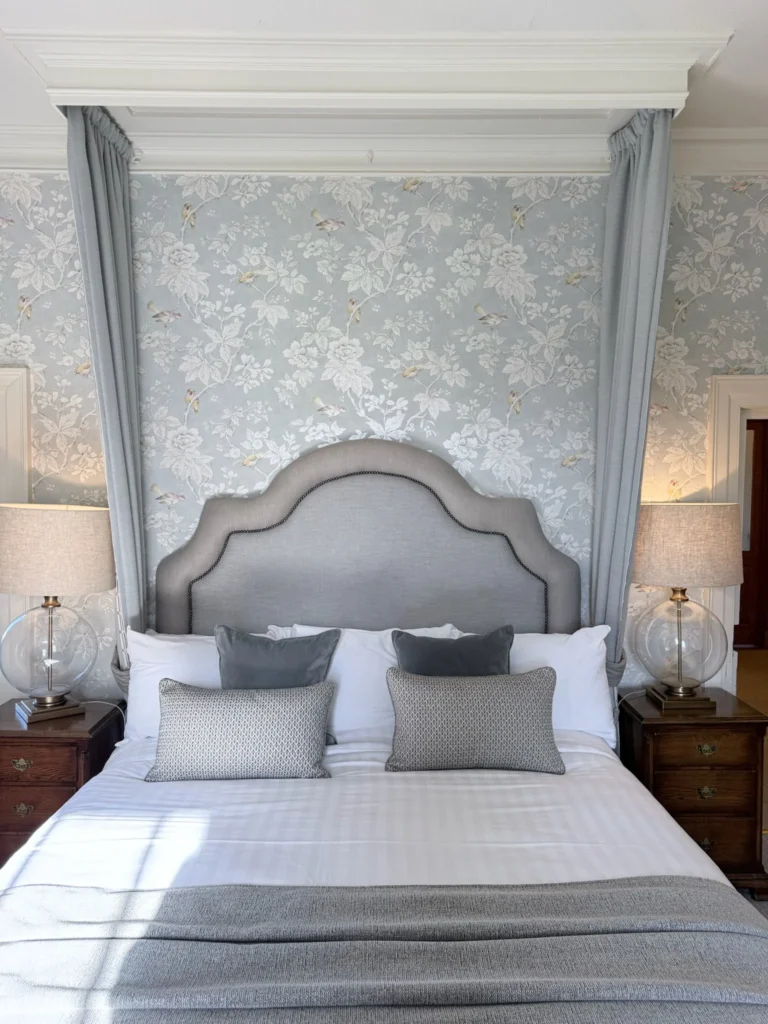
Headboards are part of our upholstery and headboards work, all done in our Howe Street workroom. You can see one in a shaped headboard and a floral bed valance. Email us a photo and rough dimensions and we can talk through what suits yours.