
The right blinds for a conservatory depend on where the sun comes in. Roof glass needs shade from heat and glare, which a pleated or tensioned roof blind usually provides. Side windows suit Roman, roller or pleated blinds. Choose by how you use the room, then settle the fabric and how the blinds will be operated.
What does a conservatory need from its blinds?
A conservatory is mostly glass, so it behaves differently from the rest of the house. It can be bright and warm on a sunny afternoon and noticeably cooler on a winter evening. Blinds are there to manage both.
Before you look at fabrics, think about how the room is used. A dining room needs shade at mealtimes. A home office needs glare kept off the screen. A sitting room wants a softer look in the evening.
- Which direction do the windows and roof face?
- When is the room used, and does the light cause a problem then?
- Do you want to see the garden with the blinds down, or close the room off?
- Can you reach every window and the roof comfortably?
Should the roof and the side windows have different blinds?
Often, yes. The roof takes the most direct light, and it is the hardest place to reach. Side windows are easier to dress and can be treated more like the windows in any other room.
Roof blinds are usually held on tensioned wires, so the fabric stays flat across a sloping or flat glass roof instead of sagging. We supply and fit rooflight blinds, and we are happy to talk through what suits your roof.
For the sides, you have a wider choice, covered below. The aim is for the two to look as though they belong together, so keep the colours related even if the types differ.
Which type of blind works on the side windows?
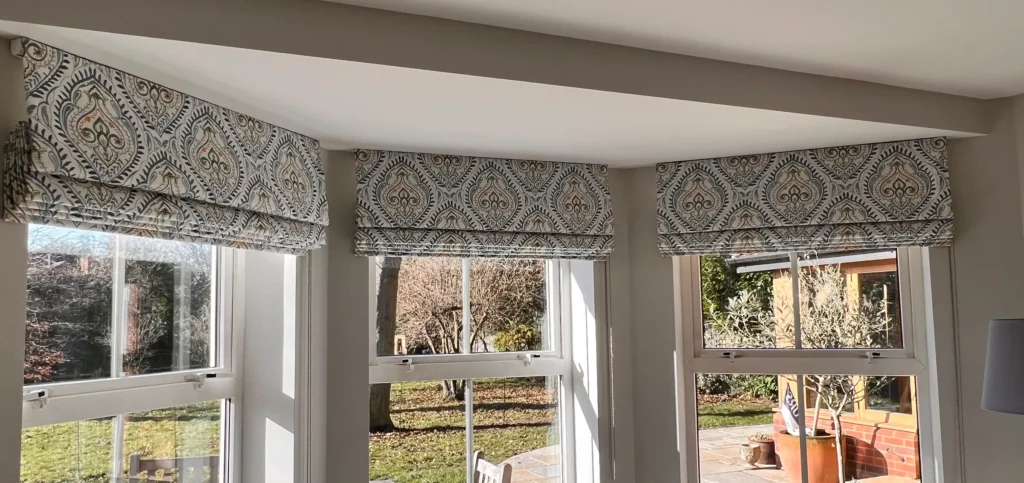
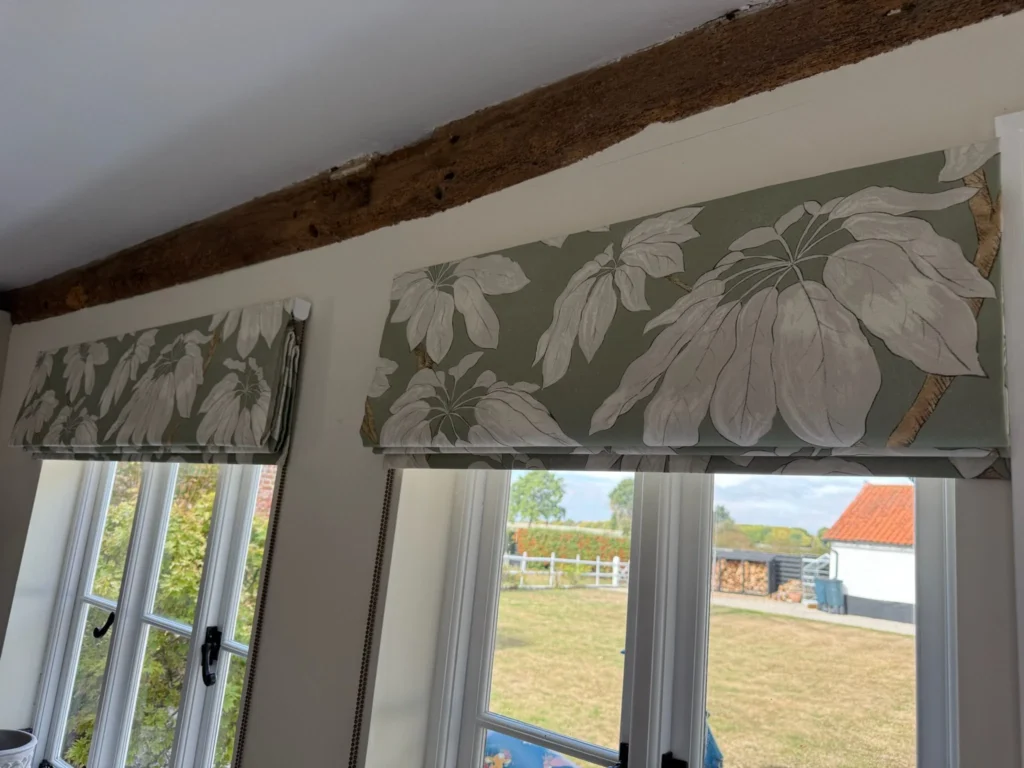
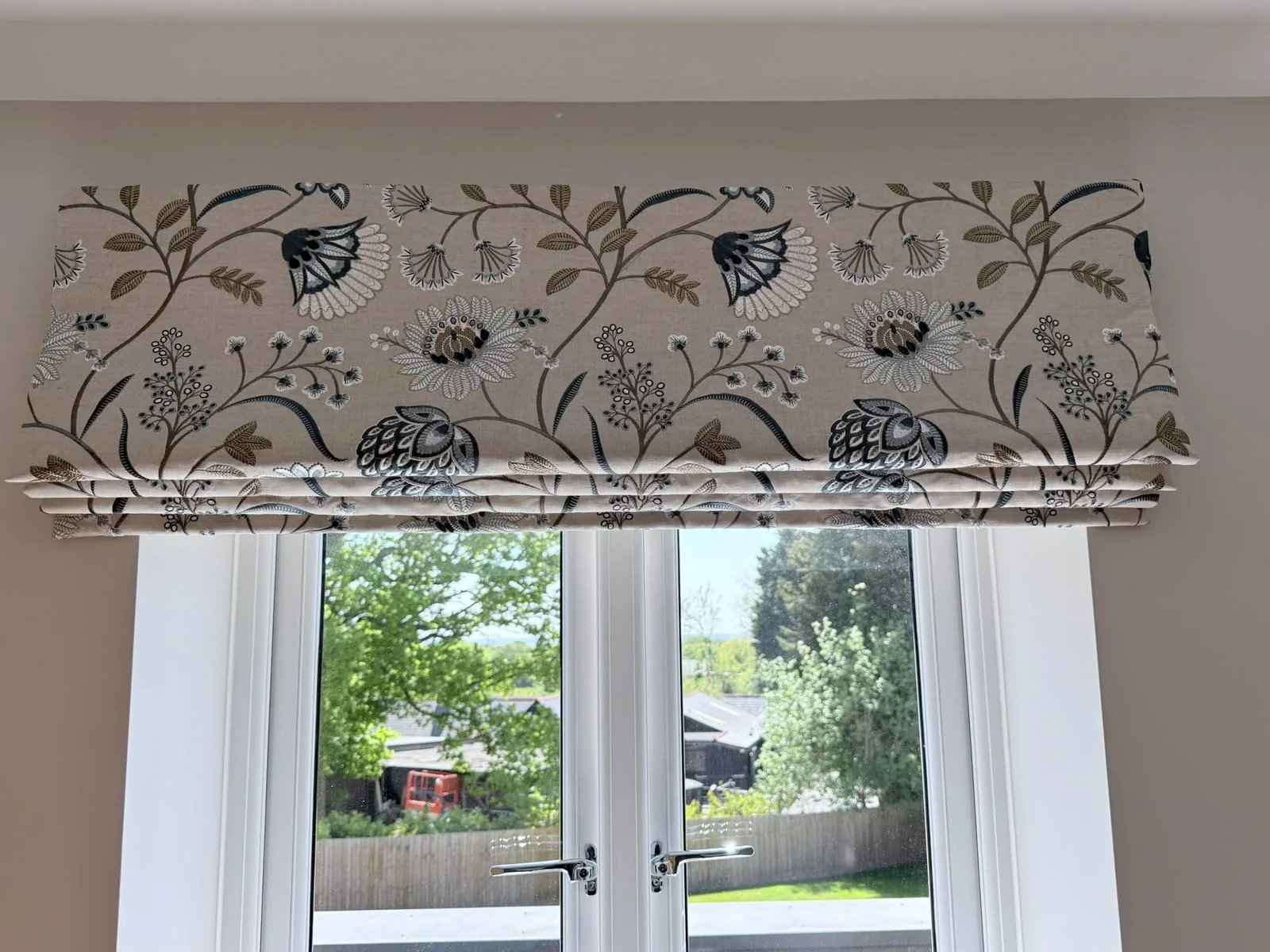
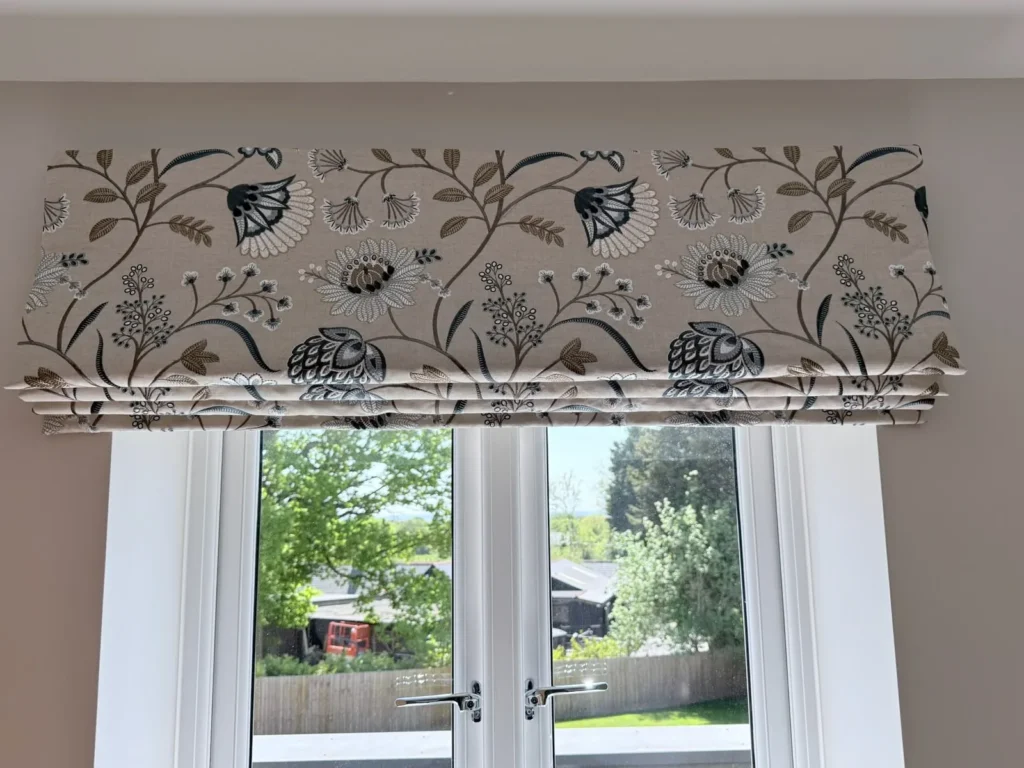
Here is how the main options compare. We make Roman blinds in our workroom, and we supply and fit roller and pleated blinds.
| Blind | What it does well | Worth knowing |
|---|---|---|
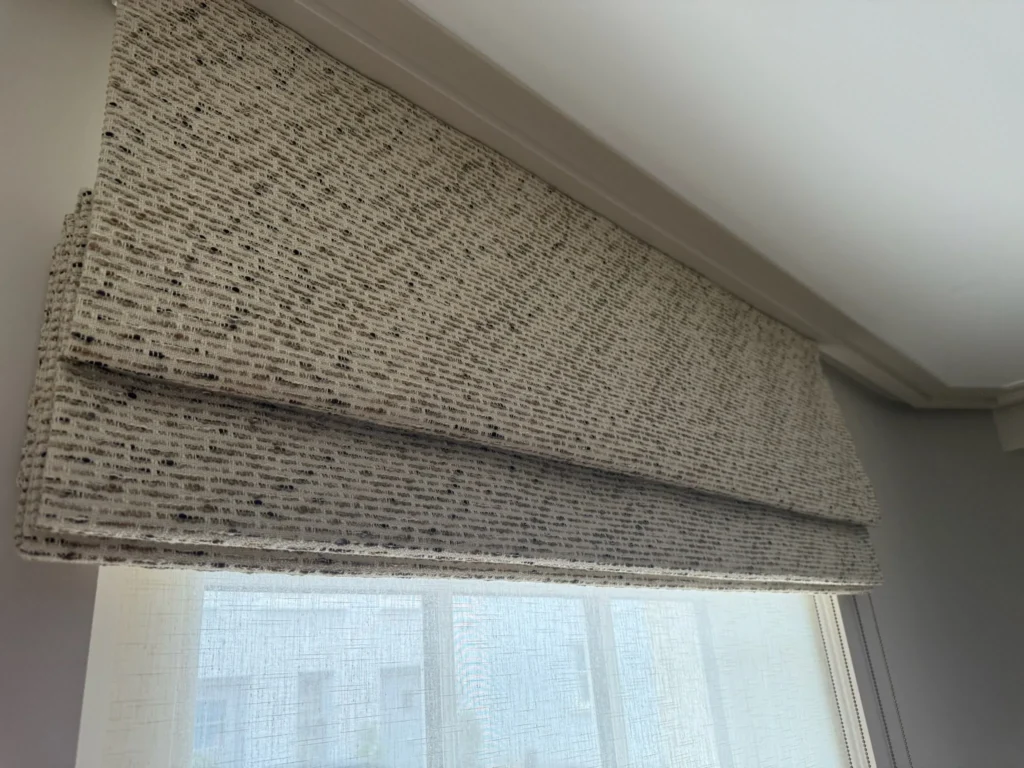
| Roman | Soft folds, a finished look, plenty of fabric choice | Stacks at the top when raised, so it covers a little glass |
| Roller | A slim, clean line, including sheer and privacy fabrics | Plainer in appearance than a Roman blind |
| Pleated | Folds into a very small stack | Fabric choice is narrower than for a Roman blind |
If you are weighing two of these, our comparison of Roman and roller blinds goes into more detail. You can see our full range on the blinds page.
How do you manage heat and glare?
Fabric and lining make most of the difference. Some blind fabrics have a reflective backing designed to keep the sun’s heat out, and others are built in layers to hold warmth in. Makers publish specifications for these, so ask to see them rather than relying on how a fabric looks.
A few habits help in any conservatory:
- Shade the roof first, because that is where most of the sun arrives.
- Choose a fabric that filters light if you want to keep the garden view.
- Use a denser fabric on the windows that face the afternoon sun.
- Close blinds on cold evenings to add a layer between you and the glass.
Curtains can help in winter as well. Our guide to thermal curtains explains what actually keeps a room warm.
Can you layer blinds with curtains in a conservatory?
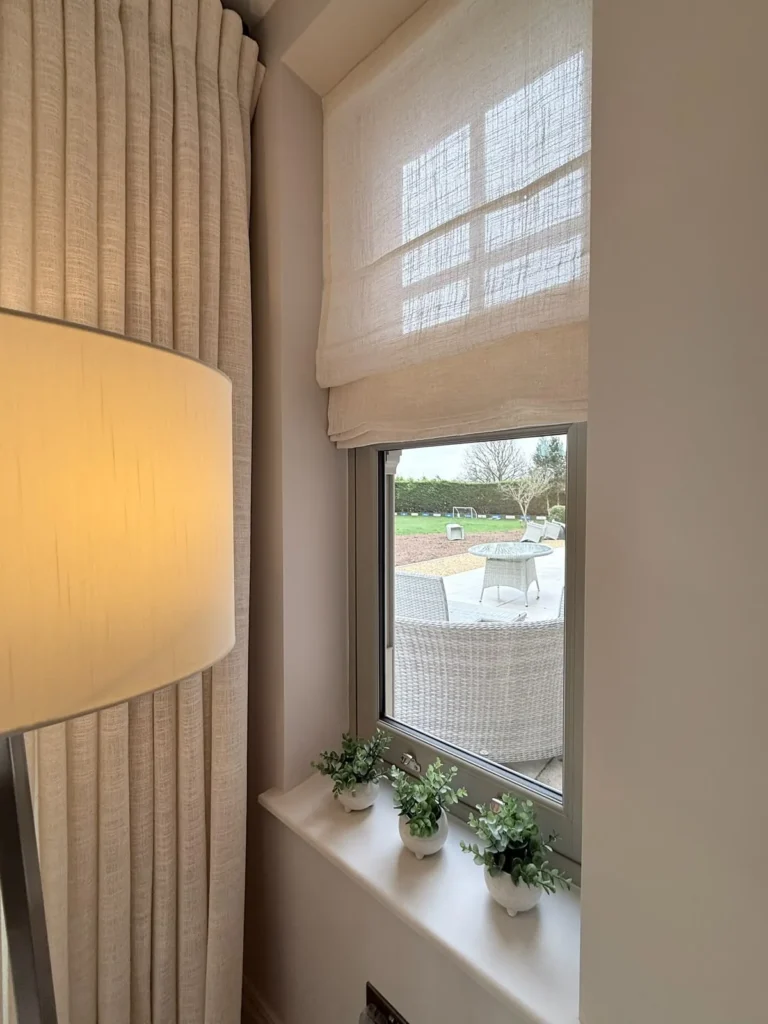
You can, and it often works well where the conservatory opens onto the house or has doors to the garden. A sheer blind softens the light by day, and curtains at the doors give you a way to close the room at night.
A project that shows the idea is our wave curtains at bifold doors. It is a different room, but the thinking carries over to any wall of glass.
Is it worth motorising conservatory blinds?
For roof blinds, often. They are hard to reach, and a blind you can raise and lower from a remote or an app is one you will use. Motorising also suits wide windows and any blind that is awkward to operate by hand.
Plan this early, because power has to reach the blind. Our motorised curtains and blinds page explains the options, from hardwired systems to rechargeable ones.
What should you decide before ordering?
Work through these in order and the choice gets simpler:
- Decide what the room is for and when you use it.
- Choose the roof blind first, then match the side windows to it.
- Pick fabrics that suit the light, using sample swatches in the room.
- Decide whether any blinds should be motorised.
- Have everything measured precisely. Our measuring guide shows what to prepare.
If you would like help with a conservatory, you can discuss your project with Sharen or Suzanne.